


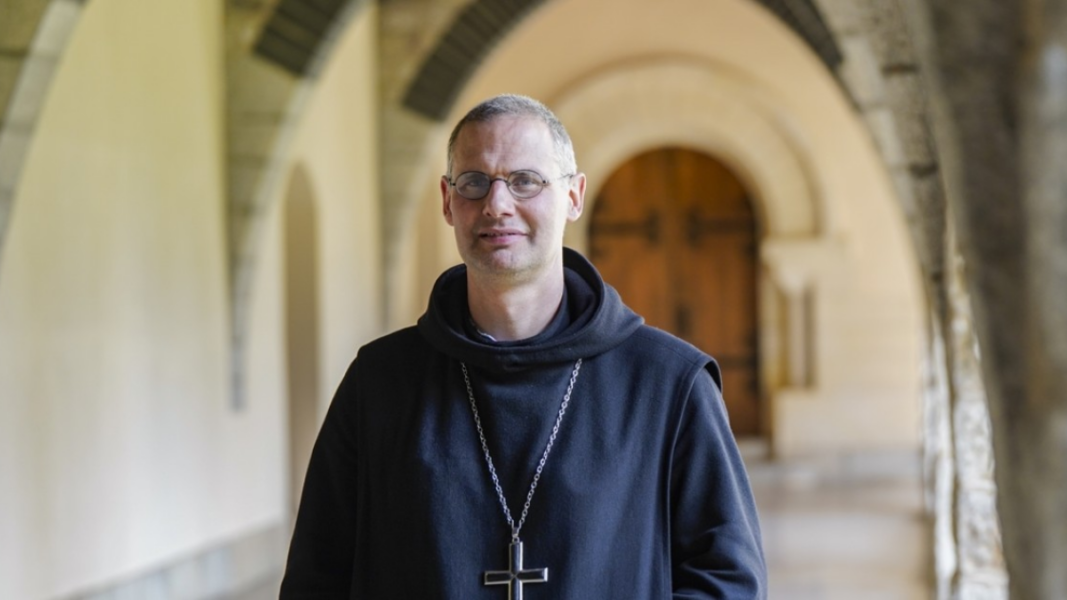
The abbot of Solesmes, Dom Geoffroy Kemlin, has sent a letter to Pope Leo XIV with a concrete proposal to end the liturgical division in the Church. According to Rorate Caeli, the Benedictine suggests integrating the ancient rite into the current Roman Missal as a way to restore unity.
The initiative arises in a context of persistent tensions between the faithful attached to the traditional rite and those who follow the missal reformed after the Second Vatican Council. Kemlin, who presides over the Benedictine Congregation of Solesmes, proposes a solution that avoids both imposition and rupture.
A proposal to overcome the liturgical division
In his letter, dated November 12, 2025, the abbot acknowledges that the differences between the Novus Ordo and the Vetus Ordo are not merely accidental, but affect the way of praying and the very understanding of the liturgy. For this reason, he considers it unrealistic to expect that the faithful attached to the ancient rite will naturally adopt the missal of Paul VI.
Far from proposing a reform of the new missal to make it resemble the ancient one—which, in his view, would generate more divisions—Kemlin suggests a different path: incorporating the traditional rite into the current Roman Missal. In this way, both uses would coexist in a single liturgical book.
As he explains, this integration would allow the reformed missal to remain intact, while making room for the ancient rite with minimal adaptations, such as the possibility of using the vernacular language or including new Eucharistic Prayers.
Unity without uniformity
The abbot insists that his proposal seeks to restore unity without imposing uniformity. In his opinion, many faithful attached to the traditional liturgy do not act out of ideology, but because they find in it a profound spiritual experience that they do not find in the reformed rite.
Coexistence within a single missal would also allow for the unification of the liturgical calendar and avoid the current fragmentation. For Kemlin, this solution would facilitate welcoming diverse sensitivities without excluding anyone or generating new conflicts.
An experience lived in Solesmes
In an interview given to the French radio RCF Sarthe on March 16, 2026, the abbot explained that his proposal arises from the concrete experience of his own congregation, where communities coexist that celebrate both according to the ancient rite and the new one.
He himself has lived both realities: he entered the abbey of Fontgombault, linked to the traditional rite, before moving to Solesmes, where it is celebrated according to the conciliar reform. This coexistence, he assures, has demonstrated that liturgical diversity can be lived in peace.
“The liturgy is made to unite, not to divide,” he states. For this reason, he considers it urgent to take a step that allows overcoming a fracture that, in his view, causes suffering in the Church.
A path different from that of Benedict XVI and Francis
Kemlin distinguishes his proposal from previous solutions. While Benedict XVI’s Summorum Pontificum expanded the use of the ancient rite by placing it alongside the new one, it did not succeed in reducing tensions. For his part, Traditionis Custodes, promulgated by Pope Francis in 2021, sought to limit that use to «preserve unity,» but it has not closed the debate either.
In contrast to both approaches, the abbot proposes an organic integration into a single missal, thus avoiding the parallel coexistence of two separate forms.
Awaiting a response
The Benedictine abbot acknowledges that his proposal is only a starting point and that it is up to the Holy See, the bishops, and the Dicastery for Divine Worship to discern its viability.
Nevertheless, he is convinced that the Church needs to address this issue with realism and a spirit of communion. In his view, only an inclusive solution will allow healing a division that affects liturgical life and, ultimately, the visible unity of the Church.