


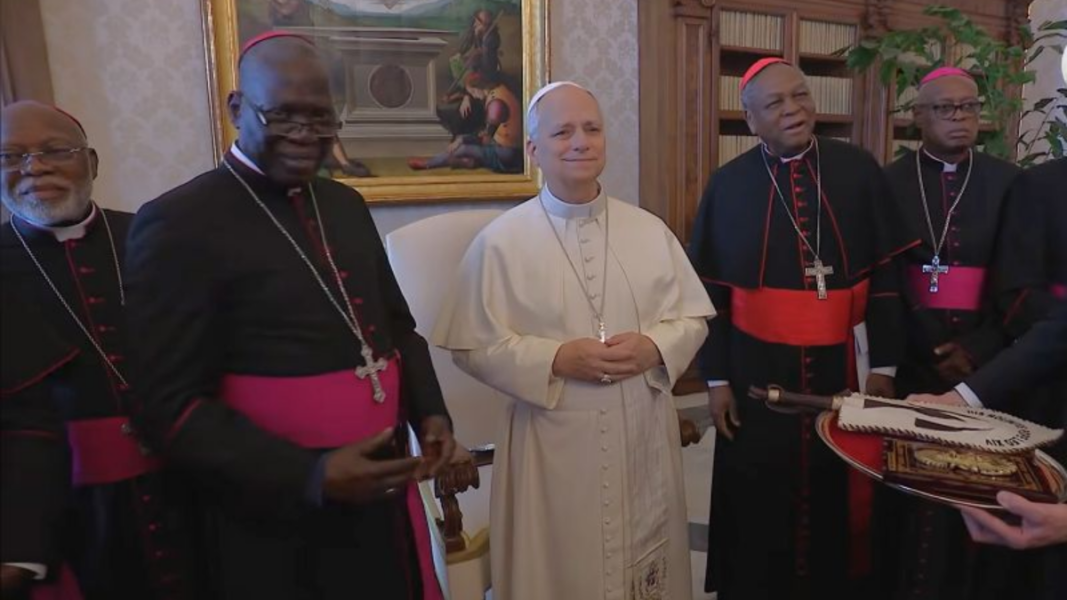
The bishops of Nigeria recently concluded their ad limina visit to the Vatican to convey to Pope Leo XIV the grave situation facing Christians in the African country, marked by violence, insecurity, and discrimination.
During the meeting, held between March 1 and 16, the prelates described their visit as an opportunity to bring to the pontiff “the cry of his people” and to counter what they consider “false narratives” spread by government authorities about religious persecution in the country.
A Church under pressure amid violence
According to data from the organization Open Doors, Nigeria accounts for 72% of Christian murders worldwide, and in 2024 it was the country with the highest number of homicides and kidnappings of the faithful. This situation has been described by the bishops as a persistent reality that severely affects their communities.
Archbishop Matthew Ndagoso explained that, in addition to the written reports previously sent to Rome, the bishops personally exposed the Pope to the magnitude of the crisis: widespread violence, insurgencies, and pastoral difficulties on the ground.
For his part, the Archbishop of Lagos, Adewale Martins, noted that Pope Leo XIV showed special attention to the problem and committed to giving international visibility to the situation.
Response to the government’s denial of persecution
The statements by Nigeria’s First Lady, Oluremi Tinubu, who recently denied that there is a genocide against Christians, were also addressed by several bishops during their stay in Rome.
Cardinal Peter Okpaleke emphasized that, beyond the terms used, the reality is that “many people are dying.” In the same vein, Archbishop Lucius Iwejuru Ugorji denounced that the country’s Constitution presents a bias favorable to Islam and that Christians suffer exclusion and discrimination.
Likewise, Ugorji warned about the actions of Fulani militias that have displaced numerous communities, noting that these groups act with greater freedom due to the lack of an effective response from the authorities.
Archbishop Ndagoso categorically rejected the denial of persecution: in some dioceses, he explained, Christians constitute a minimal minority and have suffered discrimination for more than a century, both in access to employment and in institutional representation.
The canonization cause of Iwene Tansi is ongoing
During their visit, the bishops also debunked information that appeared in the Nigerian press about an alleged stagnation in the canonization cause of Blessed Iwene Tansi, beatified by St. John Paul II in 1998.
Archbishop Valerian Okeke assured that the process is proceeding normally and that the Church is awaiting the necessary miracle for his canonization. In this regard, he insisted that there is no concern about the timelines of the process.
Appeal ahead of the 2027 elections
Before traveling to Rome, the bishops held their plenary assembly and issued a statement on the general elections scheduled for 2027.
In it, they emphasized the need for political leaders to prioritize the common good over particular interests. They also demanded that the authorities fulfill their constitutional duty to guarantee the security of all citizens.
Source: EWTN