


ABC, which is not exactly known for being a scourge of the Vatican, today shamelessly publishes a news story that, if true—and there’s no reason to doubt it, because the Church itself seems to have decided to publicize it—cruelly portrays the state of affairs: private sponsors are being sought to finance the Pope’s visit, with a minimum fee of half a million euros and an explicit reward in the form of a personal meeting with the Pontiff.
It’s not a hostile leak. It’s not an anticlerical campaign. It is, as everything indicates, an offer launched naturally, almost with pride, like someone presenting a cultural sponsorship program or a VIP box at a Champions final. The Church, which for centuries preached the gratuity of grace and the radical equality of souls before God, now appears organizing access to the Successor of Peter with criteria typical of a marketing department.
The problem is not just aesthetic, though it is that too. It is theological, ecclesial, and deeply scandalous. Because here we are not faced with a discreet donation, nor with the silent support of benefactors, something that has always existed. We are faced with the institutionalization of a system in which closeness to the Pope—the visible symbol of the Church’s unity—is, de facto, conditioned by economic capacity.
Half a million euros as the entry threshold. The figure is not anecdotal: it is a filter. It defines who can access and who cannot. And it turns what should be a sign of communion into a privilege reserved for an economic elite. Meanwhile, the ordinary faithful—that one who fills parishes, supports modest collections, and transmits the faith in silence—watches as a Church consolidates in which some enter through the main door and others, simply, do not enter.
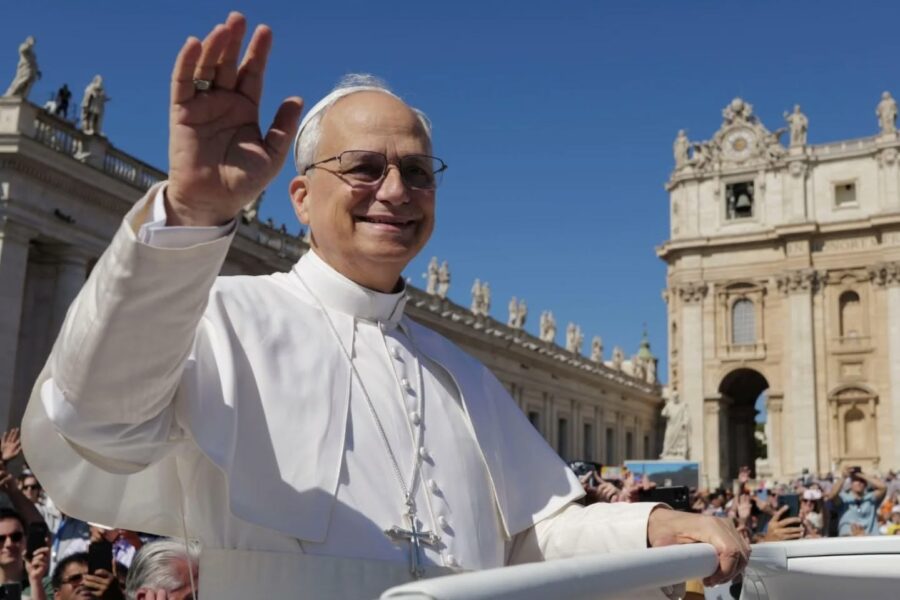
The scene that is being prepared is predictable. We will see carefully framed photographs of the Pope smiling, shaking hands, blessing with his presence businessmen and millionaires of the worst kind, many of them without the slightest real connection to the life of the Church, but with ample capacity to sign a check. And those images will circulate as proof of closeness, as if they were not, in reality, the staging of a growing distance.
It will be said that it is necessary to finance events, that logistics cost money, that someone has to pay. All that is true. But not everything is valid. Not everything can be done without consequences. Because when access to the Pope is publicly associated with a specific figure, what is eroded is not only the image, but the very credibility of the institution.
For centuries, the Church has been accused—often unjustly—of selling what is not for sale. Today, there is no need to exaggerate. It is enough to read ABC.