


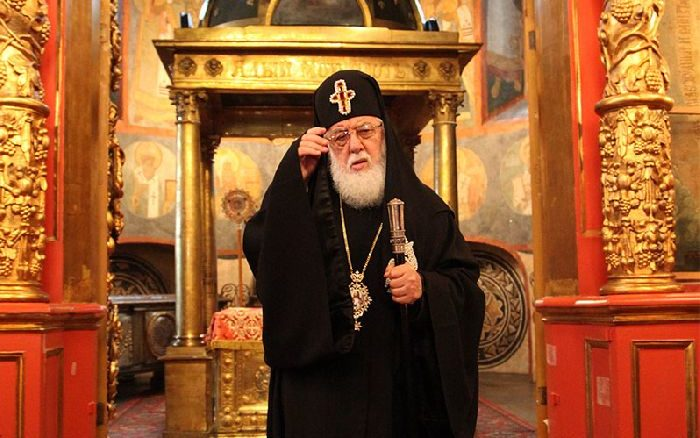
Ilia II, Catholicos-Patriarch of All Georgia and leader of the Georgian Orthodox Church for nearly half a century, passed away on Tuesday, March 17, at the age of 93 in Tbilisi, after being hospitalized for a severe hemorrhage, according to the Georgian Patriarchate.
Death after a sudden deterioration
The news, disseminated by the patriarchate and reported by Vatican media, states that the patriarch had been admitted to intensive care at the Caucasus Medical Center due to a severe gastric hemorrhage. Just hours earlier, public prayers had been requested for his critical condition.
The patriarchate expressed its “great sorrow” and “deep regret” over the death of the man who has been for decades one of the most influential religious figures in the country.
For Wednesday, a session of the Holy Synod of the Georgian Orthodox Church is scheduled, followed by the funeral rites, with a procession from the patriarchal residence to the Holy Trinity Cathedral in Tbilisi.
Nearly five decades at the helm of the Georgian Church
Born in 1933 in Vladikavkaz, in North Ossetia, under the name Irakli Ghudushauri-Shiolashvili, Ilia II was elected primate of the Georgian Orthodox Church in 1977.
Since then, he served as Catholicos-Patriarch of All Georgia, Archbishop of Mtskheta-Tbilisi, and Metropolitan of Abkhazia and Pitsunda, consolidating his leadership during a period marked by significant political and social changes in the country.
His long pontificate made him a reference figure not only in the religious sphere but also in Georgian public life.
A key figure in relations with the Catholic Church
During his ministry, Ilia II held various meetings with Roman pontiffs, in a context of rapprochement between the Catholic Church and the Orthodox Churches.
In 1980, he made a historic visit to the Vatican, where he met with St. John Paul II, marking the first encounter between a Georgian Catholicos-Patriarch and the Bishop of Rome. That gesture was seen as a significant advance in ecumenical dialogue.
The two met again in 1999 in Tbilisi, during John Paul II’s apostolic journey to Georgia.
Years later, in 2016, Ilia II received Pope Francis in the Georgian capital. On that occasion, both religious leaders emphasized the need to strengthen ties between the Churches in a world marked by the search for unity, peace, and mercy.
A legacy marked by stability and continuity
The death of Ilia II opens a new stage for the Georgian Orthodox Church, which will have to elect its successor in a context different from the one that marked the beginning of his patriarchate.
After nearly fifty years of leadership, his figure leaves a mark linked to institutional continuity, the weight of tradition, and a constant presence in the country’s religious life.