


By Francis X. Maier
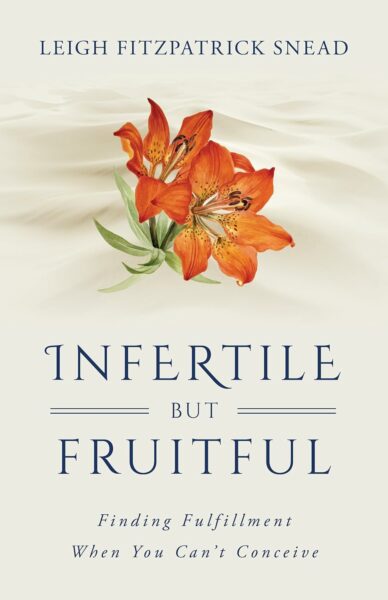
I’ll get straight to the point. Leigh Snead’s new book, Infertile but Fruitful, is one of the best personal testimonies I’ve read in the last decade. It’s a «simple» story in the best sense: concise, intimate, totally frank, and memorable. It spoke, directly and beautifully, to my own family, as it will to many others. I’ll return to it in a moment. But first, some helpful background.
In a general sense, a culture’s fertility rate hints at its character. It also suggests its health. Begetting and raising children is a serious matter. It demands sacrifices. But for anyone with a generous spirit, it also creates love and hope, and confidence in a meaningful future, because the instinct to «be fruitful and multiply» (Genesis 1:28; 9:1) is engraved in the human species.
Rejecting that has consequences. And here’s an example. The minimum replacement rate for a population is 2.1 children per woman over her lifetime. The total fertility rate in Western Europe was around 2.66 in the early 1960s. It had fallen to 1.46 by the late 1990s. It continued to decline to a historic low of 1.34 in 2024. That’s a 50 percent drop in fertility in just two generations. European Muslims typically have somewhat higher fertility on average, but the overall story is, nonetheless, a massive and sustained collapse in birth rates across the continent.
As for the United States: in the early 1960s, its fertility rate was around 3.5, notably higher than Europe’s at the time, because the American postwar Baby Boom was larger and lasted longer. But the subsequent decline was sharper. The U.S. total fertility rate fell to 1.59 by 2024. Thus, the net fertility decline over the last six decades is, in fact, greater for the United States than for Europe in absolute terms.
What caused the collapse? The factors are fairly obvious: easy access to contraception and abortion; more women in higher education and the workforce; rising cost of living; a consumption-driven economy; and the decline of religious beliefs.
Christianity strongly encouraged permanent marriages and large families. As Europe secularized, that moral pressure disappeared. Today, most children grow up seeing small families as the norm. Their own fertility adjusts downward accordingly. What makes this reality so hard to reverse is that a modernity rooted in the sovereign self and its material appetites has taught many of us to value these features.
The end result is the loss of meaning in a culture, an aging population with rising healthcare costs, sustained by an ever-shrinking workforce. The economic response needed to demographic decline is immigration, filling the labor gap with working-age people from regions with higher fertility. But the kind of mass immigration needed to offset low fertility often provokes a bitter political backlash. This creates constant friction between economic need and grassroots popular anxiety that has impacted the life of nearly every Western nation.
Enough with the social data. How does all this relate to Infertile but Fruitful?
One of the (wonderfully) ironic responses to all the above is the number of women today, many of them believers, who deliberately choose to have large families. Once again, fertility—the longing to be part of bringing new life into the world—is inherent to the human being. That can mean children, or a life of service to others in celibacy.
But everyone, without exception, has the need to be fruitful, and ignoring that need deforms the heart. Our own daughter is the mother of seven. For my wife Suann, some of the hardest years of our marriage were those first eight or ten in which she couldn’t conceive or had multiple miscarriages; this, while friends around her gave birth to one child after another.
Husbands can provide love and support. But they can never fully understand the suffering and sense of loss that a woman feels, at a cellular level, who longs to have a child but cannot. Especially when the inability to conceive turns out to be permanent.
Which brings us back to Leigh Snead’s moving and beautiful book. Snead writes without pretensions or false piety. Her style is simple, intimate, and direct, and for that reason, all the more effective. Infertile but Fruitful: Finding Fulfillment When You Can’t Conceive is a kind of confession. It’s the chronicle of a talented woman who assumes that having a child will be easy, but instead grows—year after year, failure after failure—more committed to her marriage and her faith, precisely because of what she desires but seems never able to have.
Over the years, Snead and her husband try everything to conceive, from NFP [Natural Family Planning] to professional medical assistance. They discover that much of the latter is morally unacceptable—IVF [In Vitro Fertilization]—and therefore they cannot resort to it. But even licit medical help proves fruitless.
Worse still, no clear biological reason for the problem is found. As a result, one of the strengths of the author’s story is the very practical «lessons learned» section with which each chapter ends; plainly put, the things that experience has taught her and the advice she offers to other women walking the same difficult and uncertain path of Calvary.
She writes that,
[A]s the idea that I might really never get pregnant took hold of my imagination, the cross of infertility stood out sharply against the story I had been telling myself about what my life would be like, about what my motherhood would be like. Infertility was my cross. And with the same fervor with which I had been asking God to give me a baby, somehow I found the gift of extraordinary grace, and I carried it… and our entire lives became more fully centered on Christ than on pregnancy.
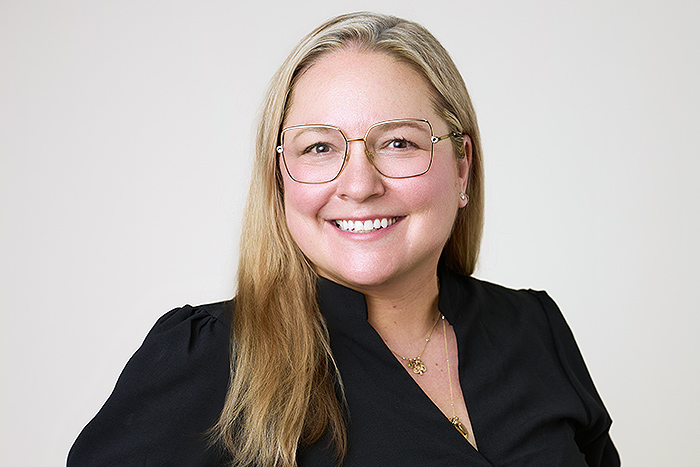
We too easily forget that God never abandons the faithful soul. Today Snead is very much a mother; mother of four treasured children, all adopted and two of them with special needs. Thus, the lesson of the author’s story is simply this: fertility is of the spirit even more than of the flesh. It is the will and courage to love.
About the author
Francis X. Maier is a senior fellow in Catholic studies at the Ethics and Public Policy Center. He is the author of True Confessions: Voices of Faith from a Life in the Church.