


By Michael Pakaluk
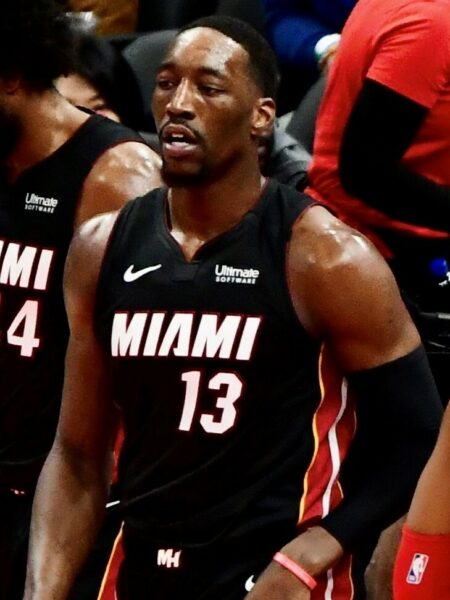
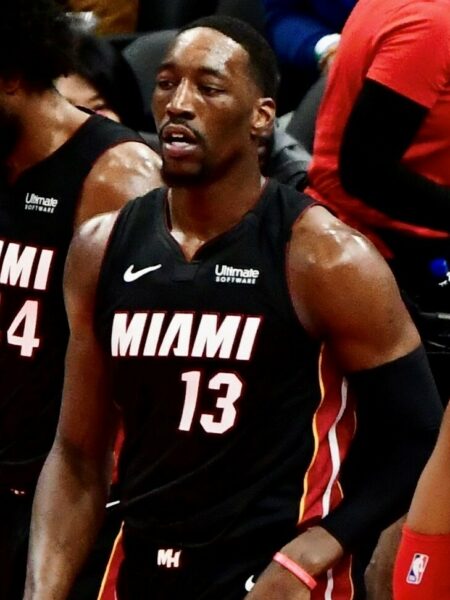
The New York Times reported the words, but the Wall Street Journal did not. Two days ago, when Bam Adebayo was asked to describe the moment he scored 83 points in an NBA game, surpassed only by Wilt Chamberlain’s 100 points, he said: «Man, I wish I could relive it twice. I attribute it to God, to my family, to my teammates, to this crowd.»
A joker commented that, right after God, he should have credited the Washington Wizards, the team that was supposedly defending him.
But credit must also be given to Bam. The first question most sports commentators ask is: «How did you feel?» According to the classical view of the passions, this is like asking someone to describe the agitation of their insides, whether of their viscera or their heart. «Describe to me what your guts felt like when you did this.»
Who cares? But Bam, sensibly, externalized the question and turned first to God.
Others attributed the merit to Bam’s hard work, recounting the long hours he spent practicing as a child. Others highlighted the fact that he had just surpassed Kobe Bryant’s record of 81. But Bam passed over the four species of pride identified by Pope St. Gregory. He attributed his excellence to God, not to himself. He did not claim to have deserved it. He did not exaggerate it. And he did not make comparisons with others.
Like all of us, he will need to battle pride later on. But right at that moment, when the spotlight was on him and the cameras were rolling, he spoke with humility.
You will have noticed that athletes usually thank God first. Fernando Mendoza, the 2025 Heisman Trophy winner and quarterback who led Indiana to the college football championship, said under the lights: «This moment is bigger than me. [sic] First, I want to thank God.»
Bravo for Mendoza, who is said to be a devout Catholic. By mentioning God first, beyond his intention, he actually magnified himself. If he had said out loud what many think privately at such a moment—»First, I want to revel in how great I am»—he would have lowered himself in the eyes of others, and rightly so.
«I am a man of faith. I believe in a Creator. I believe in Jesus. Ultimately, I think that’s what defines me most.» These were the words of Scottie Scheffler after winning the 2024 Masters, another athlete who avoids the four species of pride.
The interviewer then pressed him about his feelings. Scottie refused to introspect about his insides and instead changed the subject, returning to the objective message he wanted to convey: «It’s hard to describe the feeling. I think what defines me most is my faith. I believe in one Creator, that I have been called here to give my best, to compete and to glorify God.»
I have taught many athletes and can report that the conflict some find between sports and studies is a false conflict. Practicing a sport seriously can make an athlete a better student. In the same way, practicing some sport seriously should make us better Christians.
How do other winners compare to athletes? In the last three years of Oscar winners, spanning nearly 70 speeches, only two honorees referred to God, but the way they did so fell short of the athletes’ way.
Last year, Adrien Brody, upon taking the stage to receive the Best Actor award (for The Brutalist), said: «Thank you, God. Thank you for this blessed life.» But even then, he did not exactly give credit to God for his achievement.
And two years ago, Da’Vine Joy Randolph (Best Supporting Actress, The Holdovers) began with «God is so good. God is so good.» And she closed with «I ask God to be able to do this more than once,» which sounds more like greed than gratitude.
Already in 2015, a Huffington Post writer wrote an essay about how Oscar winners no longer thank God. Reviewing nearly 1400 acceptance speeches, Carol Kuruvilla discovered that Steven Spielberg was the most thankful, with 42 mentions. Harvey Weinstein came in second. (Res ipsa loquitur). Meanwhile, God received only 19 mentions, and many of them were bizarre or off-key:
I would like to thank the Academy, first of all… And God, for indulging me in this little moment. (Mel Gibson, Braveheart, 1995)
I want to thank my mom and my dad; I want to thank my wife Keisha, my children, my ancestors who continue to guide my steps, and God, God who believes in all of us. (Forest Whitaker, 2006)
Thank you, God, for giving us Harvey Milk. (Dustin Lance Black, 2008)
And so began this journey in which I could truly understand that the hand of God, or a power higher than myself, «the forces,» as Sidney Poitier calls them, were committed to taking my life to a plane and level that I had not even imagined. But I surrendered to those forces, and literally said within me: «Thy will be done.» (Oprah Winfrey, 2011)
The comparison speaks for itself. These celebrities mention a god, perhaps, and gods, but they do not give glory to God before themselves.
The Nobel Prizes, as expected, abstain from bizarre statements, but also from giving credit to God. Even the only recent exception (Jon Fosse, Literature, 2023) had to qualify his reference: «Thanks to the Nobel Foundation for organizing everything so well. Thanks to the Swedish Academy for awarding me the Nobel Prize in Literature. And thanks be to God.» Note that it was not: «I wish to thank God, source of all wisdom and of the intelligent order we see in creation.»
But later he boasted about it, saying on a podcast: «I had the pleasure of provoking a lot of people by thanking God when I gave my speech at the banquet.»
Bam and Scottie did not credit God to provoke anyone. They gave credit where it was due. And they moved on.
About the author
Michael Pakaluk, Aristotelian scholar and Ordinarius of the Pontifical Academy of St. Thomas Aquinas, is Professor of Political Economy at the Busch School of Business at the Catholic University of America. He lives in Hyattsville, Maryland, with his wife Catherine, also a professor at the Busch School, and their children. His collection of essays, The Shock of Holiness (Ignatius Press), is now available. His book on Christian friendship, The Company We Keep, is available from Scepter Press. He contributed to Natural Law: Five Views (Zondervan, last May), and his most recent book on the Gospels appeared in March with Regnery Gateway, Be Good Bankers: The Economic Interpretation of Matthew’s Gospel. You can follow him on Substack at Michael Pakaluk.