


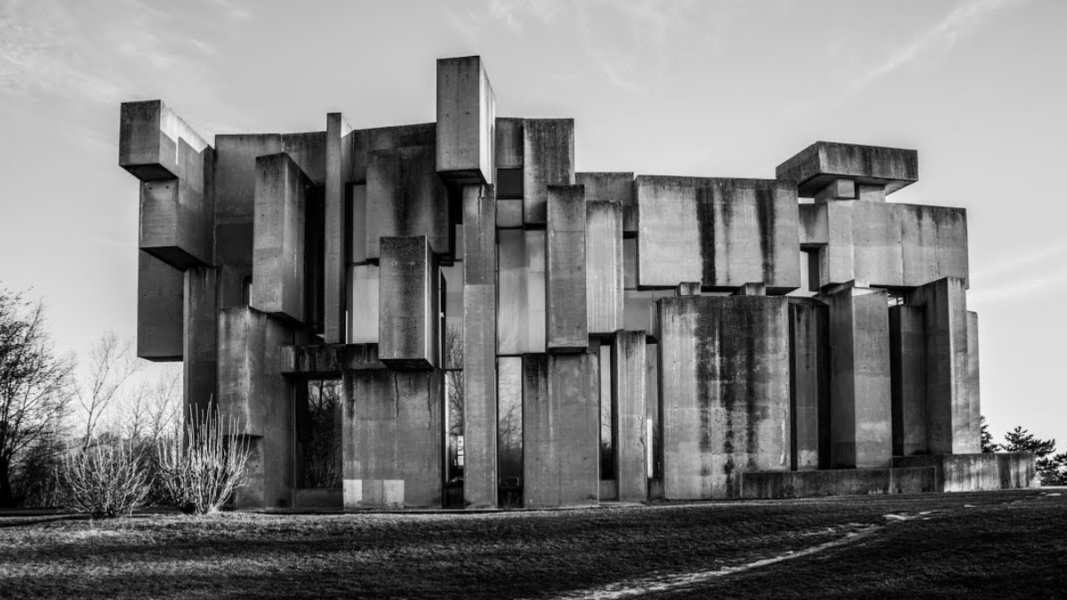
In many Western cities, a scene repeats that perplexes not a few faithful: churches built in recent decades that barely distinguish themselves from auditoriums, cultural centers, or administrative buildings. The debate on the aesthetics of contemporary temples periodically returns to ecclesial discussion, and recently it has been reignited by the artist and professor David Clayton in an article published in New Liturgical Movement.
The issue, however, is not limited to an aesthetic preference. For specialists in sacred art, the loss of beauty in some modern temples reflects a deeper change in the way of conceiving the liturgy, sacred space, and the relationship between faith and culture.
When architecture stops expressing the sacred
For centuries, Christian architecture was oriented toward expressing a theological reality. From early Christian basilicas to Gothic cathedrals or Roman Baroque, temples sought to reflect a worldview in which beauty, proportion, and symbolism directed the gaze toward God.
The orientation of the building, the hierarchy of the liturgical space, the presence of sacred images, or the use of light were part of a spiritual language that helped the faithful understand that they were in a place dedicated to worship.
In many contemporary temples, however, that symbolic logic has taken a backseat. The result is buildings in which functionality or architectural experimentation has taken precedence over the expression of religious mystery.
The impact of modern architectural currents
Twentieth-century architecture was marked by currents such as functionalism or brutalism, which advocated the elimination of ornamental elements and a conception of the building centered almost exclusively on its utility.
When those principles are applied to the religious sphere, the temple can end up resembling a conference room more than a space for prayer.
Not a few consider that this phenomenon has contributed to the loss of the sense of the sacred in liturgical spaces.
A break with the Christian artistic tradition
Another element often pointed out in this debate is the break with the Christian artistic tradition. For centuries, the Church developed its own visual language that integrated architecture, sculpture, painting, and music into a coherent whole.
That heritage was not simply decorative. It served to transmit the faith, spiritually educate the faithful, and express the centrality of the liturgy.
When that continuity is broken, temples lose their symbolic identity and become religious buildings hardly distinguishable from other public spaces.
Rediscovering beauty in the liturgy
In recent years, various architects, artists, and liturgists have insisted on the need to recover the relationship between beauty, art, and worship.
As Clayton explains, this does not imply simply reproducing past styles, but rediscovering the principles that guided Christian architecture for centuries: the centrality of the altar, orientation toward God, symbolic language, and the ability of art to elevate the spirit.
The rediscovery of beauty in temples could also become a form of evangelization amid growing secularization.