


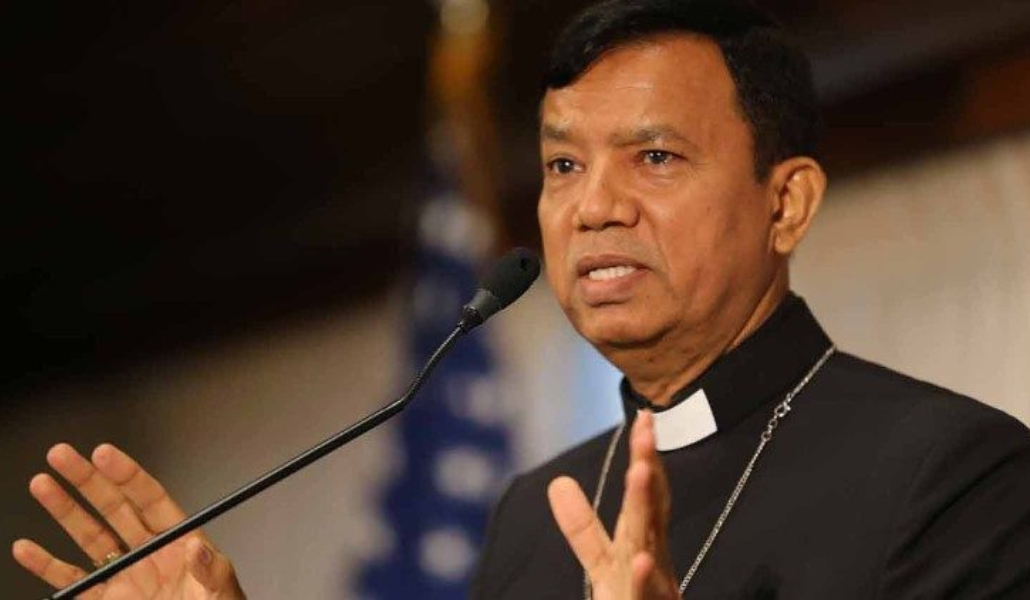
The recent appointment of Monsignor Sebastian Francis Shaw as Apostolic Vicar of Quetta by Pope Leo XIV has once again brought to the table an uncomfortable issue for the Church in Pakistan: the lack of clarity surrounding the investigations that led to his departure from the governance of the Archdiocese of Lahore in 2024.
A transfer that does not dispel the doubts
On March 10, the Holy See announced the reorganization of two important ecclesiastical jurisdictions in the country: Capuchin Bishop Khalid Rehmat was appointed Archbishop of Lahore, while Shaw, until then the titular of that archdiocese, took over the Apostolic Vicariate of Quetta.
From a canonical perspective, the move can be presented as a simple change of see. However, the prior context makes it difficult to interpret it as an ordinary transfer.
In August 2024, the Vatican appointed an apostolic administrator for Lahore after two investigations were conducted, the results of which were forwarded to Rome. The reports circulating at the time spoke of allegations of inappropriate sexual conduct and possible financial irregularities. However, the Holy See never published a detailed report or an official explanation.
The result was a long period of uncertainty. For months, Shaw ceased to exercise governance of the archdiocese, but neither a formal dismissal nor a public sanction was announced.
An archdiocese marked by confusion
The situation generated bewilderment among the clergy and the faithful of Lahore. In the liturgy, the archbishop’s name was no longer mentioned in the Eucharistic Prayer, a sign that he no longer exercised pastoral governance. At the same time, his image continued to appear in some ecclesiastical spaces and diocesan media.
This type of ambiguity is not a minor problem. When a diocese experiences a governance crisis, institutional clarity is essential to preserve the trust of the faithful.
However, in this case, silence prevailed. Neither the conclusions of the investigations were explained nor was the prelate’s status publicly clarified for more than a year.
A controversy that came from afar
Shaw’s figure had already generated controversy before the 2024 investigation. In 2017, he was harshly criticized for allowing Maryam Nawaz, daughter of former Prime Minister Nawaz Sharif and a prominent figure in Pakistani politics, to deliver an election speech inside Lahore Cathedral.
For many Catholics in the country, that decision was a grave error in mixing a sacred space with partisan struggle.
The controversy damaged the public image of the archdiocese and highlighted the delicate relationship between the Church and politics in a country where Christians constitute a small minority.
A transfer that seems like a discreet exit
Shaw’s new assignment—the Apostolic Vicariate of Quetta—can be interpreted as a compromise solution.
It is not a complete rehabilitation, as he does not return to the archdiocese he governed. But neither has any formal sanction been announced. In practice, the transfer allows the episode to be closed without the content of the investigations being made public.
This type of decision is not unusual in ecclesiastical administration. However, it inevitably raises a question: can the Church regain the trust of the faithful without offering clear explanations when crises erupt?
The need for transparency
The Church in Pakistan faces enormous challenges: social discrimination, violence against religious minorities, and constant pressure on Christian communities. In that context, the credibility of its institutions is especially important.
That is why, when controversies arise that affect ecclesiastical leadership, transparency should not be seen as a threat, but as a way to strengthen the trust of the people of God.
The transfer of Monsignor Shaw may have resolved an immediate administrative problem. But as long as the circumstances surrounding his departure from Lahore are not fully clarified, the sense of uncertainty will continue to weigh on one of the most delicate recent episodes of the Church in Pakistan.
Source: EWTN News