


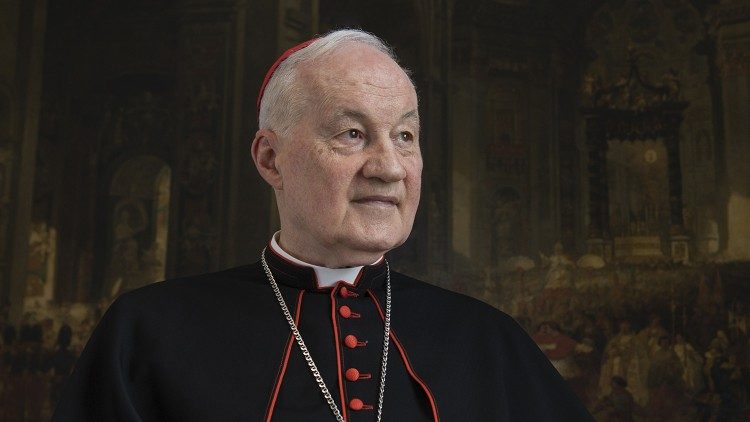
The civil defamation lawsuit initiated by Canadian Cardinal Marc Ouellet against Paméla Groleau continues to unfold in the Quebec Superior Court with new statements and testimonies presented during the hearings. The prelate, who seeks to defend his reputation after the public accusations made in 2022, claims 100,000 Canadian dollars for the damage that, according to him, those statements would have caused to his honor.
The trial began on March 2 in Montreal and aims to determine whether the complainant committed defamation by including the cardinal’s name in a class action lawsuit against the Archdiocese of Quebec for alleged abuses committed over several decades.
Read also: Cardinal Ouellet sues for defamation the woman who accused him in 2022
A civil process, without criminal charges
The case is not a criminal proceeding and no criminal charges have ever been filed against the cardinal. The court must decide solely whether the accusations made by Groleau, which refer to alleged behaviors that occurred between 2008 and 2010 when Ouellet was Archbishop of Quebec, constitute defamation or not.
During her previous testimony, the woman stated that in one of the encounters the cardinal would have slid his hand down her back to the upper part of her buttocks. Ouellet has firmly rejected these accusations since they became public.
New testimonies during the hearings
During the most recent sessions of the trial, new witnesses summoned by the complainant’s legal team have appeared. According to the British weekly The Catholic Herald, two women recounted experiences before the court that they consider inappropriate behaviors by the cardinal in previous decades.
One of them, Mélissa Trépanier, stated that she had known the cardinal since her adolescence and that for years she considered him a kind of “spiritual father.” In her testimony, she recounted an episode that occurred in 2014 during a meeting in which her fiancé was also present.
As she explained, when saying goodbye, the cardinal tried to give her money by placing a 50-dollar bill inside the neckline of her sweater during a hug. The woman stated that the gesture left her paralyzed and that she tried to push the cardinal’s hand away.
Ouellet himself has acknowledged placing the bill, although he maintains that it was a clumsy gesture without sexual intent, describing it as a “clumsy mistake.”
Another account from over thirty years ago
Another witness, 84-year-old Marie-Louise Moreau, recounted an episode that allegedly occurred in 1992, when Ouellet was rector of the Grand Seminary of Montreal. According to her statement, while she was preparing items for Mass, the then-priest positioned himself behind her and placed his hands on both sides of her body.
The woman stated that he pressed his pelvis against her body for a few moments, preventing her from moving. According to her account, she finally managed to pull away and leave the place. She explained that she remained silent for decades and decided to speak after learning of the accusations made by Groleau.
The defense questions the relevance of the testimonies
The cardinal’s lawyers have questioned the relevance of these testimonies, arguing that they refer to facts different from those denounced by Groleau and that they have no direct relation to the subject of the process.
Judge Martin Castonguay allowed the witnesses to be heard during the hearings, although he indicated that he will decide later whether their statements can be considered as part of the case’s evidence.
A relevant figure in the Church
Marc Ouellet was ordained a priest in 1968 and created a cardinal by St. John Paul II in 2003. After serving as Archbishop of Quebec, he was called to Rome in 2010 to head the Dicastery for Bishops, the Vatican body responsible for advising the Pope on the appointment of bishops worldwide.
The judicial process continues in Montreal, and it is expected that in the upcoming sessions new testimonies will be heard before the court issues its decision.