


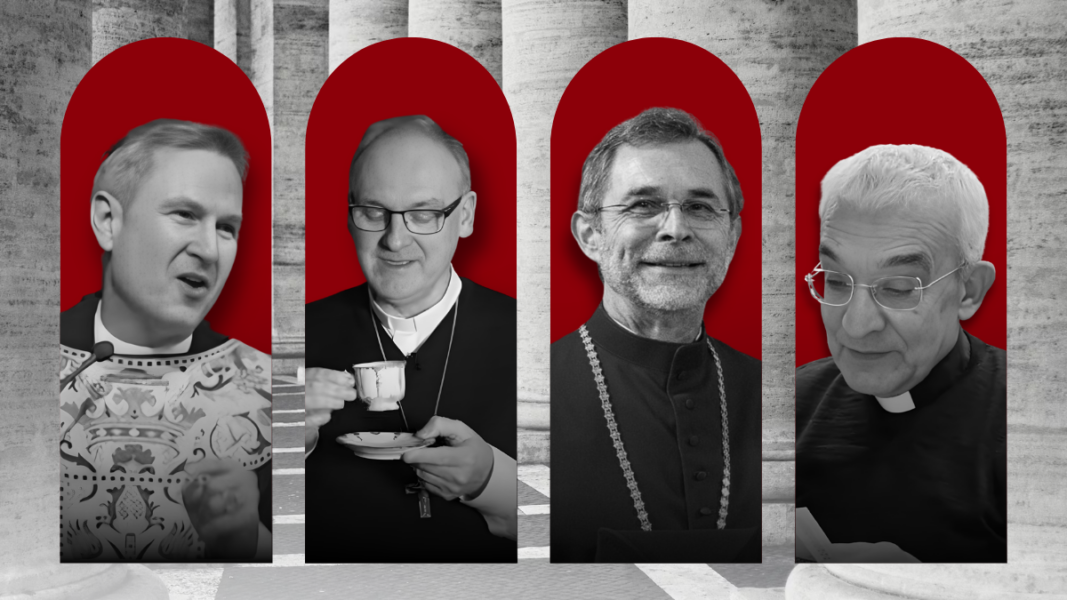
As Pope Leo XIV’s pontificate approaches its first year, it is becoming possible to distinguish, among the long list of episcopal appointments made in recent months, which ones have true strategic scope. Most respond to the ordinary logic of filling vacancies, but some stand out for affecting positions with almost assured cardinalatial biretta, with all that entails. In that group are four designations worth analyzing together: the new prefect of the Dicastery for Bishops and the appointments to the sees of Vienna, Prague, and New York. Those four decisions allow us to intuit what type of cardinal is beginning to emerge as a reference for the new pontificate and how the generation that may end up marking the course of the Church in the coming decades is shaping up.
The four names I am referring to are Filippo Iannone in the Dicastery for Bishops, Josef Grünwidl in Vienna, Stanislav Přibyl in Prague, and Ronald A. Hicks in New York. Iannone was appointed prefect on September 26, 2025; Grünwidl went from apostolic administrator to archbishop of Vienna on October 17, 2025; Hicks was transferred to New York on December 18, 2025; and Přibyl was promoted to Prague on February 2, 2026. Vienna remains a habitually cardinalatial see, and New York has been so de facto for generations; Prague retains enormous symbolic weight and, while it does not guarantee purple, it has a very solid launching pad to achieve it.
If we have to define these profiles in broad strokes, it is not because of a trench ideology, but because they are all a type of «post-conflict» cleric. They are not the old banner-waving progressives, disheveled, coarse, delighted to scandalize the Catholic bourgeois with an aesthetic of «poor priest» turned into moral performance. Nor are they men of doctrinal, liturgical, or ascetic restoration. They are something else: ecclesial managers with soft manners, culturally accommodated, institutionally reliable, media-presentable, and sufficiently ductile to (for now) not break completely with anything, but yes to shift the axis of the Church without needing to declare it. This may be more unsettling than the bronco progressivism of the eighties, because it wears down without stridency and reforms without confessing that it is reforming. The mutation stops being presented as combat and is presented as normality. That is its strength.
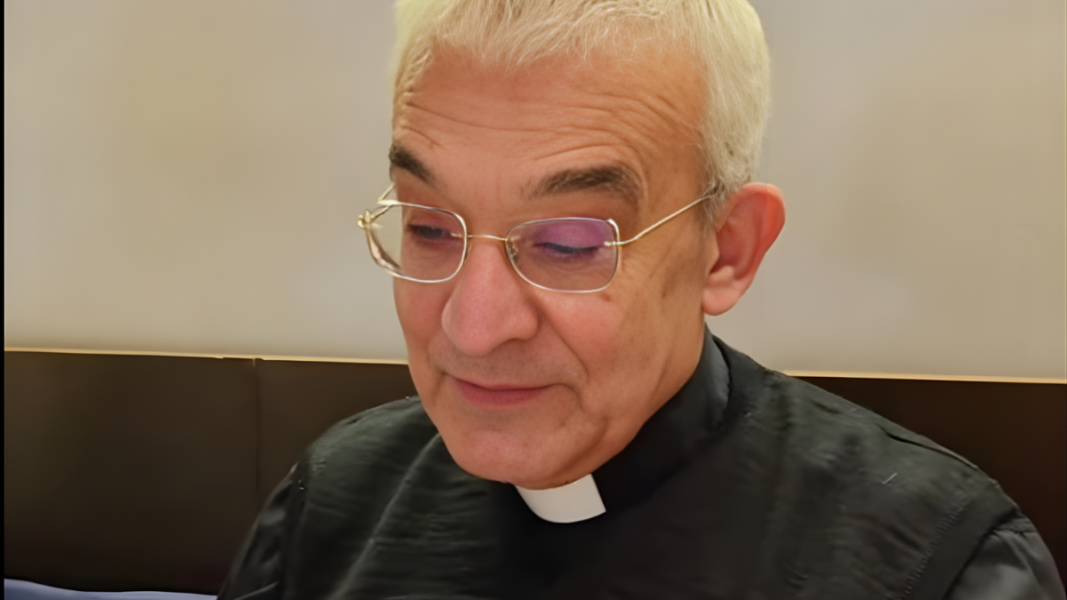
Filippo Iannone is, perhaps, the clearest case of the technocratic profile. He is not a man identified with a great theological substance or a recognizable spiritual school, but with the juridical-canonical apparatus of Rome. He is essentially a jurist and canonist, trained for tribunals, universities, and curial government; his public discourse insists on procedures, norms, processes, and the efficacy of canonical penal law. For now, a toast to the sun. He now directs precisely the body that helps the Pope choose bishops for the whole world. A prefect who will probably not preach heterodoxies, but who will promote «balanced,» «dialogue-oriented,» «non-polarizing» men, and in a decade the episcopal body of the world will be shaped from above with soft, manageable, and doctrinally porous profiles.
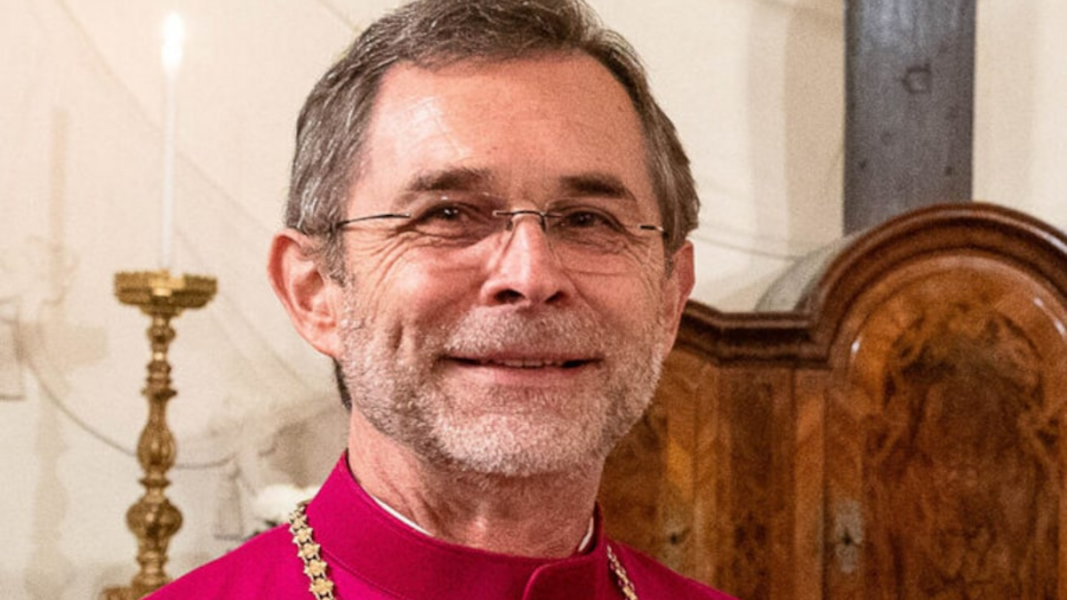
Josef Grünwidl fits more into that archetype of the «nineties priest,» and of the four, he is the boldest when it comes to taking to the hills and peering into the abyss of heterodoxy. His biography is that of a man from the Viennese diocesan apparatus, without intellectual density comparable to Schönborn or visible liturgical thickness. In interviews from the Archdiocese of Vienna, he has defended continuing to discuss the female diaconate, has maintained that celibacy is a valuable form of life but not necessarily inseparable from the priesthood, has called for greater inclusion of women in decision-making processes, and has warned against «neointegralism» and an «exclusivist» Christianity. All that defines the profile quite well: he is not a manifesto revolutionary; but he is a man of doctrinal decompression, of vigilance against any strong affirmation of Catholic identity that might sound too exclusive or too sure of itself. This type of bishop can be more corrosive than a frontal rupturist, because he does not present himself as an enemy of tradition, but as a reasonable moderate who relegates it to the corner of the suspiciously rigid.
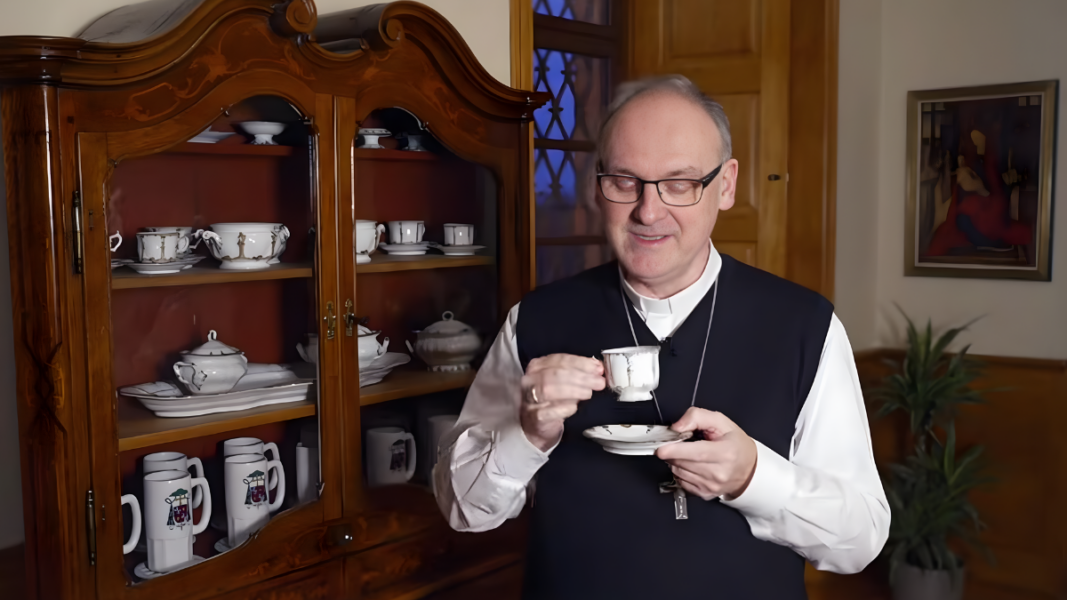
Stanislav Přibyl offers a Central European version of the same mold. His own public language insists on overcoming polarizations, building bridges, listening, dialoguing, learning from the synodal process, and breaking «social bubbles.» At the same time, he speaks of the depositum fidei and new evangelization, which allows him to present himself as a balanced man, not as an explicit progressive. That is precisely the point: it is no longer necessary to verbally deny the deposit of faith to empty it in practice of normative density. It is enough to wrap it in a permanent rhetoric of reconciliation, listening, and accompaniment, where every strong definition comes under suspicion of creating factions. From a critical reading, that is where the danger appears: the revealed truth is not denied, but it is functionally subordinated to the higher objective of ecclesial coexistence.
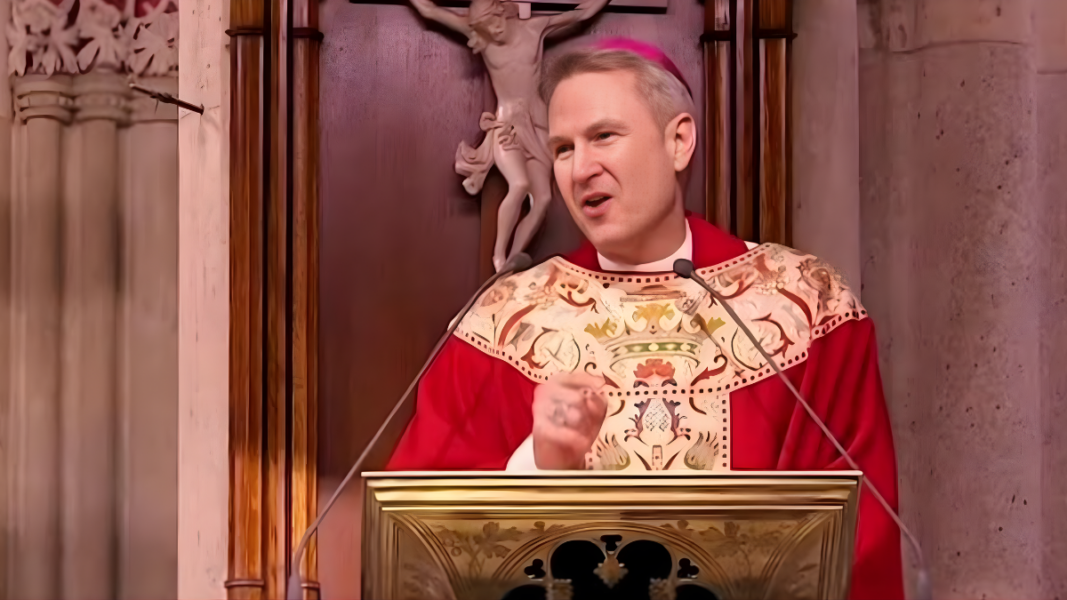
Ronald A. Hicks is the North American equivalent of this new soft clericalism. His rise cannot be understood without the Chicago environment and his long work with Blase Cupich, of whom he was auxiliary and vicar general before moving to Joliet and then to New York. In his first interview after the appointment to New York, he spoke the already recognizable language of this school: «smell of the sheep,» avoiding divisions, walking with the wounded, priority to healing and governance centered on the mission. There is no strident progressivism here like that of certain U.S. prelates from the first post-conciliar era, but there is the same shift toward a therapeutic, inclusive, and anti-conflict episcopate. From a traditional sensitivity, New York’s passage from a Dolan, with all his limits, to a man formed in the Cupich ecosystem is not a detail. It means that even the great American sees no longer need a markedly ideological profile: a pastoral manager with an affable tone, Roman obedience, and healing language is enough.
In other words, these men are not dangerous because they seem like wolves. They are dangerous because they seem harmless. They do not exhibit the aggressiveness of eighties progressivism, but inwardly they usually share its same distrust toward defined, virile, sacrificial, and hierarchical Catholicism. Only now they express it with another grammar. They no longer ridicule tradition; they relativize it. They do not attack it so frontally and administer it downward. They no longer make scandalous gestures; they build an atmosphere where the strong, the clear, and the liturgically serious becomes marginal simply due to lack of institutional interest.
These profiles convey a weakened priestly masculinity: softer gesturality, less paternal authority, greater inclination toward emotional and relational language, less ascetic density, less gravity and sacrality. It is not advisable to reduce it to a psychological caricature, but it would be naive to deny that there is a change in clerical habitus. The priest from seminary in the nineties and early 2000s was socialized not to seem too firm or too separated from the environment. He had to be accessible, sensitive, more «bond manager» than custodian of a mystery. The result is an episcopate that in form may seem elegant and even courteous, but rarely radiates the supernatural weight of the office.
That is why there is also rarely in them a true liturgical concern. They are not liturgical iconoclasts in the style of the seventies, but liturgy no longer matters to them as a central theological place. It matters to them as a pastoral framework, as a functional scenario, as community support. In the end, the absence of liturgical war does not mean love for the liturgy, but indifference.
The crude progressivism of the previous generation generated antibodies. It scandalized, awakened resistance, forced one to take a stand. These new profiles do not. They are sufficiently orthodox on the surface, sufficiently correct in form, sufficiently institutional in language. They do not force you to break with them, because they almost never say anything formally intolerable. But they go on remodeling the ecclesial sensitivity by osmosis: less explicit dogma, less supernatural nerve, less centrality of sacrifice, less awareness of spiritual combat, less priesthood as sacred otherness, less liturgy as an act of worship, more process, more listening, more accompaniment, more management of balances, and a lot of synodal synodalism.
In that sense, they can be more dangerous. The old progressive produced shock. The new one produces dissolution. The first seemed like an adversary. The second presents himself as a normal bishop. A post-heroic, post-liturgical, post-dogmatic model in tone, though not always in letter; a Church that still preserves the Catholic vocabulary, but pronounces it with less and less rotundity.