


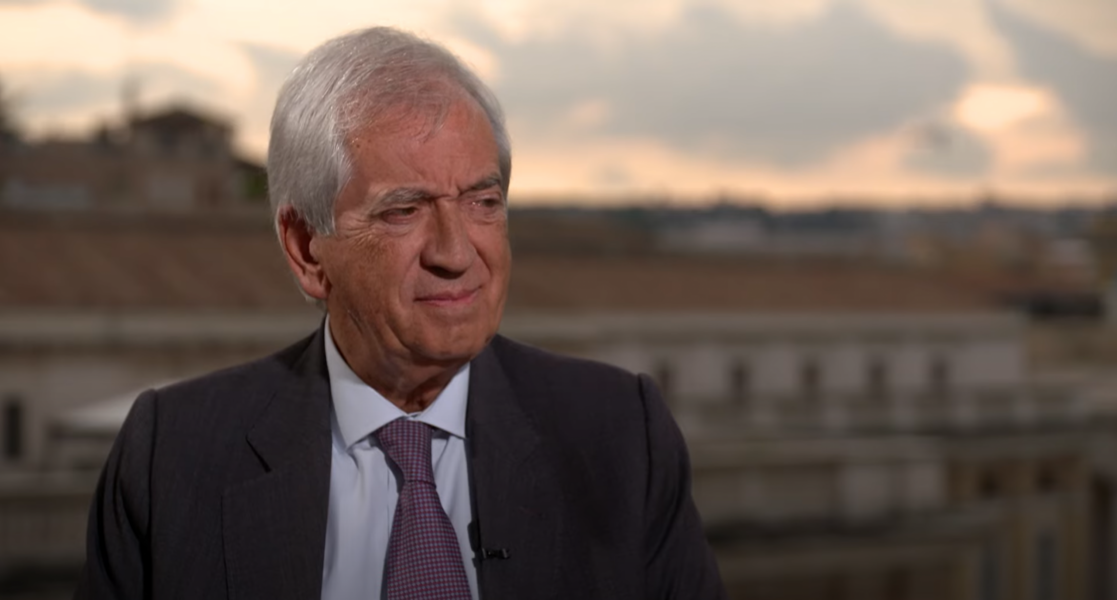
The former Vatican auditor general, Libero Milone, has publicly denounced serious deficiencies in the Vatican judicial system and has reiterated his concerns about possible irregularities in the Holy See’s finances. In an interview granted to EWTN on March 12, Milone stated that his dismissal in 2017 remains shrouded in questions and that the judicial process he undertook to challenge it has left him, in his words, in a situation of defenselessness.
Read also: Milone could trigger a financial nuclear winter in the Vatican
Vatican justice rejected his appeal against the initial ruling that dismissed his lawsuit against the Secretariat of State. Additionally, the court imposed on him the payment of the proceedings’ costs, which amount to 110,000 euros.
Milone maintains that he was never clearly explained the reasons for his dismissal and that, eight years later, he continues without being able to access fundamental documents from the file.
The “document 61”
One of the central elements of the controversy is the so-called “document 61”, cited in the decree used to remove him from his position. According to Milone’s explanation, that document supposedly records the result of a seven-month investigation into alleged crimes committed by him.
However, he assures that he has never been able to examine it.
Despite having repeatedly requested it since 2017, the Vatican has never provided him with that text. In the interview, he stated that this situation prevents him from knowing precisely the accusations that motivated his dismissal.
Milone recounted that Cardinal Pietro Parolin even intervened to try to clarify the matter. He even informed him at one point that the pontifical secret had been lifted on that document. But when he was finally summoned before the Promoter of Justice to examine it, he was told that the document was not available and that they did not know where it was.
Restrictions during the judicial process
The former auditor also denounced that during the judicial procedure, he was prevented from presenting part of the evidence that, according to him, demonstrated that he had acted in accordance with his duties.
Specifically, he explained that the Vatican court required him to withdraw more than twenty pages of documentation from his appeal for the procedure to continue. According to him, those pages described the audit work he had carried out and some of the financial problems detected in various Vatican bodies.
The court considered that content offensive to the Vatican’s top management.
Milone also stated that he was not allowed to present witnesses in the process.
Problems detected in the financial systems
During the interview, Milone again referred to several financial irregularities that, according to his account, he detected during the two years he worked at the Vatican.
Among them, he mentioned problems in the payment system used by the Administration of the Patrimony of the Apostolic See (APSA). According to his explanation, that system allowed the destination IBAN of a transfer to be modified after the money had left the original account, which could hinder tracking the movement of funds.
Milone stated that during his tenure, he reported 15 possible irregularities to the competent Vatican authorities, including the anti-money laundering authority and the Promoter of Justice. According to him, most of those reports were dismissed and some never received a response.
The case of the 2.5 million sent to the Bambino Gesù hospital
The former auditor also cited a financial operation related to the Bambino Gesù pediatric hospital.
According to his explanation, during his investigation, he detected a transfer of 2.5 million euros intended to finance the construction of a new hospital wing. However, he assured that that wing was never built.
According to his account, the money was transferred to the hospital in several payments, but it later left the account without it being clear what its final destination was.
Milone emphasized that his role as auditor was to identify and report these situations, not to investigate them judicially.
Cardinal George Pell
During the interview, Milone recalled his collaboration with Australian Cardinal George Pell, who was appointed by Pope Francis to oversee the Vatican’s financial reform.
According to his explanation, both were investigating various accounting and financial problems when two consecutive events occurred: his dismissal in June 2017 and, ten days later, Pell’s return to Australia to face the judicial process that would later be annulled by the Australian Supreme Court.
Milone stated that he has always considered it possible that both episodes were related to the work they were doing on financial oversight.
Criticism of the transparency of the Vatican’s accounts
The former auditor also questioned the way the Holy See’s accounts are publicly presented.
In particular, he referred to recent statements according to which Vatican finances would have recorded positive results. Milone argued that those claims may offer an incomplete picture if they refer only to the results of certain entities and not to the consolidated financial statements of the entire Vatican.
In his view, only those consolidated accounts would allow for precisely knowing the real economic situation of the Holy See.
A final appeal before the Vatican’s supreme court
Milone has now filed a new appeal before the Vatican Court of Cassation, the Holy See’s highest judicial instance. This could be his last opportunity within the Vatican judicial system.
The former auditor acknowledged feeling deeply frustrated by the impact this case has had on his professional life. According to his explanation, since leaving the Vatican, he has barely been able to find work due to the reputational damage suffered.
Finally, he expressed his desire to be able to meet with Pope Leo XIV to personally explain his case to him and offer his analysis of the financial challenges that, according to him, remain pending within the Holy See.
Milone maintains that his only intention in accepting the position of auditor general was to contribute to improving transparency in the Vatican’s economic management.