


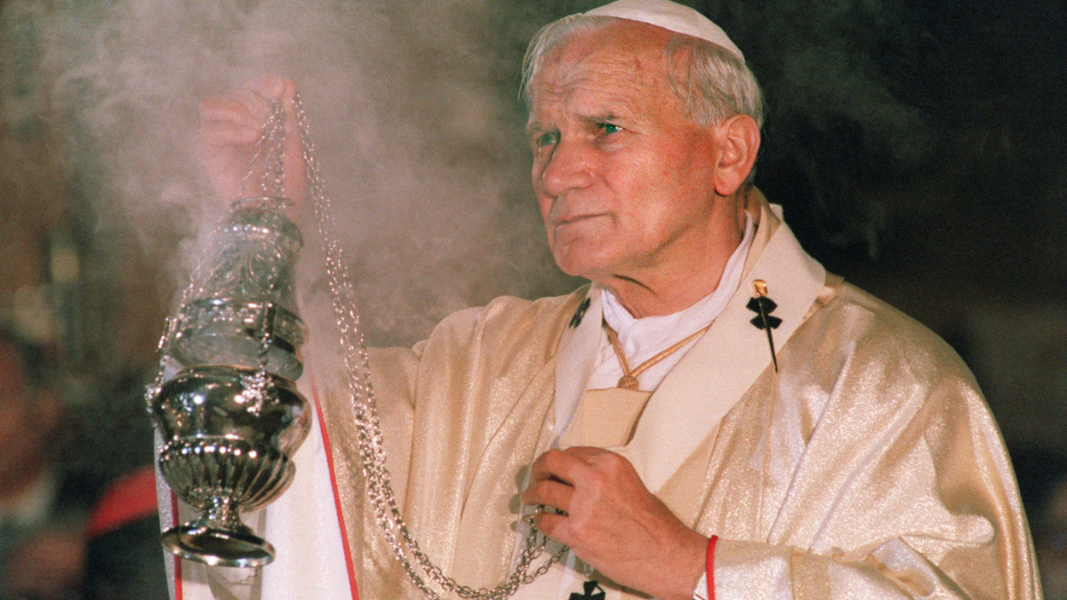
This March 11 marks twenty-five years since the beatification of the 233 Valencian martyrs who were killed during the religious persecution in Spain between 1936 and 1939. The ceremony, presided over by Saint John Paul II in St. Peter’s Square in the Vatican in 2001, marked a milestone in the recent history of the Spanish Church by raising to the altars priests, religious, and laity who gave their lives for fidelity to Christ.
As the Archdiocese of Valencia recalls, that event was one of the most significant moments for the memory of the Valencian Church, by officially recognizing the testimony of faith of those who died during the anti-Christian violence of the Civil War.
A historic beatification at the start of the third millennium
On Sunday, March 11, 2001, Saint John Paul II presided over the beatification in St. Peter’s Square of the priest José Aparicio Sanz and his 232 companion martyrs. They were the first blesseds proclaimed by the Church in the third millennium.
Among them were diocesan priests, religious men and women, lay men and women—married and single—from various professions and ecclesial movements, including members of Catholic Action. All of them were killed between 1936 and 1939 for remaining faithful to their Christian faith.
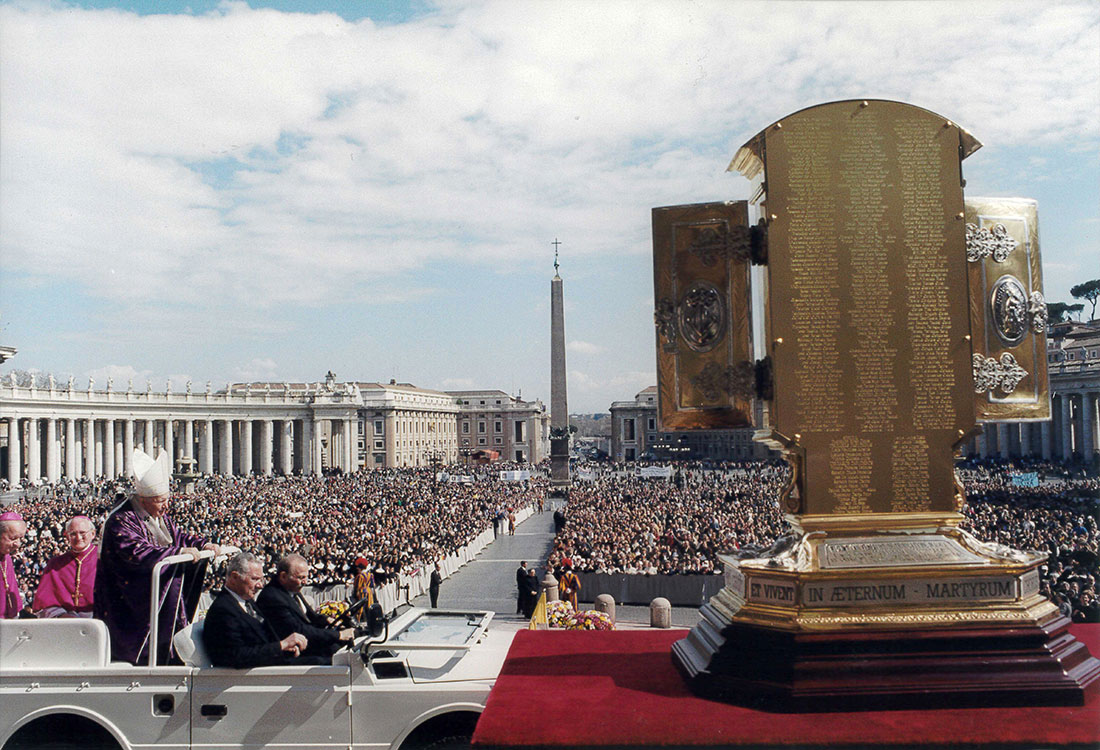
The ceremony began at ten in the morning with the Pope’s entrance into St. Peter’s Square. Three children of martyrs—José María Torres, María Luisa Díaz, and María Adelaide Alonso—carried to the altar a large silver reliquary with the names of the martyrs engraved on it, a work by the Valencian goldsmith Antonio Piró and a gift from the Archdiocese of Valencia.
After the initial rite, the then Archbishop of Valencia, Agustín García-Gasco, along with Cardinal Ricardo María Carles and the Bishop of Lleida, Francisco Ciuraneta, formally requested the Pontiff to beatify the servants of God, accompanied by the postulators of the causes. Brief biographical notes of each of the martyrs were then read.
The recognition of Saint John Paul II
In pronouncing the formula of beatification, Saint John Paul II established that the liturgical memory of these martyrs should be celebrated each year on September 22.
The choice of this date was not casual. As the Archdiocese of Valencia explains, the month of September 1936 was one of the most violent moments of the religious persecution, and that day saw the martyrdom of the largest number of the new blesseds.
When the beatification was proclaimed, the assembly responded with a solemn “Amen” and prolonged applause as the tapestry with the image of the martyrs, hung on the facade of the basilica, was unveiled.
In his homily, Saint John Paul II defined the new blesseds as a “model of coherence with the truth professed”, emphasizing that they honor both the Church and the Spanish people. The Pontiff also made it clear that they did not participate in political or ideological struggles, but were victims of religious persecution.
In that context, the Pope also entrusted to the intercession of the new blesseds a special intention: the end of terrorism in Spain.
A multitudinous celebration
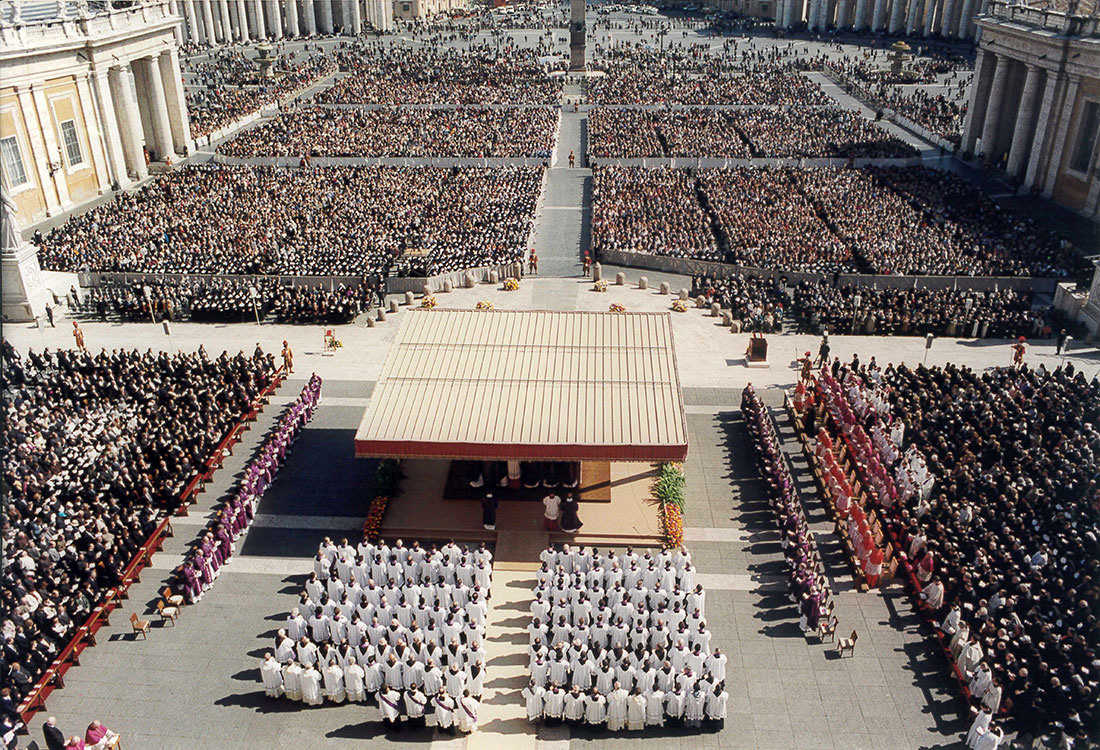
The beatification Mass was celebrated in Spanish and Latin and concelebrated by 56 cardinals, archbishops, and bishops. Among the priests present were family members of some of the martyrs.
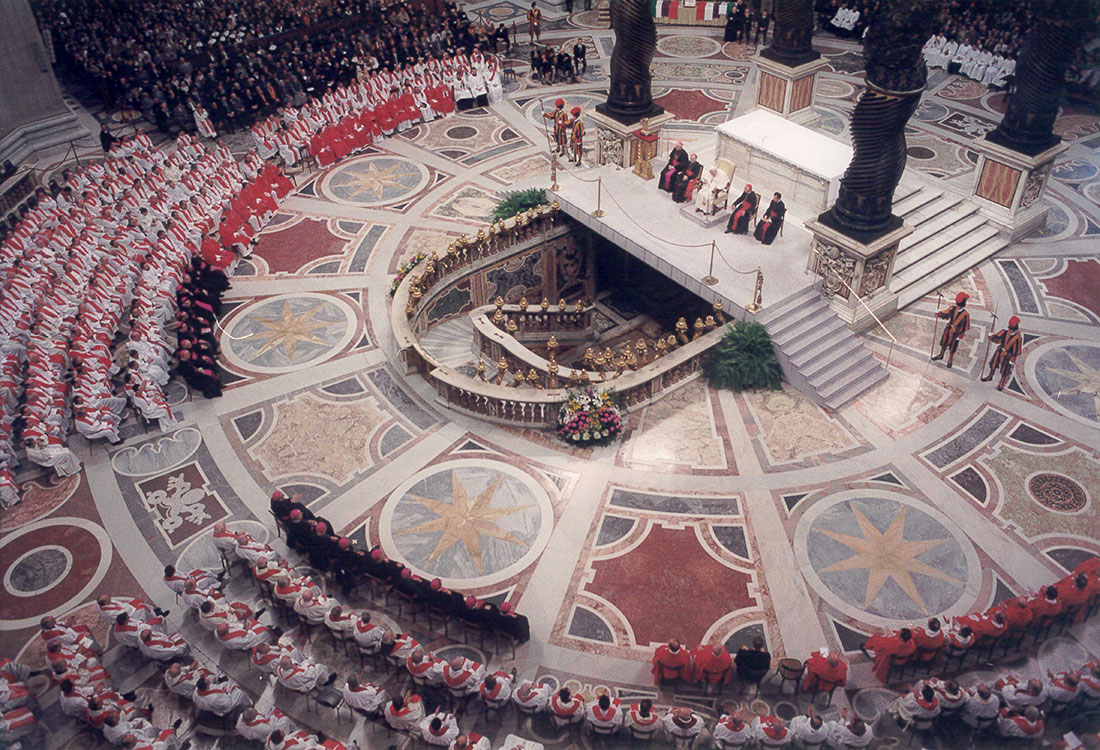
After the ceremony in the square, a Mass of thanksgiving was celebrated inside St. Peter’s Basilica, presided over by the Archbishop of Valencia, Agustín García-Gasco. More than ten thousand pilgrims participated in the celebration, to the point that the temple’s security officials had to open additional spaces to accommodate the attendees.
A testimony that must not be forgotten
At the end of the celebration, Saint John Paul II addressed special words to the families of the new blesseds. The Pope recalled that behind each martyr there is a concrete personal story, with a name and specific circumstances, which makes their life—and their death—a particularly eloquent testimony of fidelity to Christ and to the Church.
The Pontiff encouraged the faithful to keep their memory alive and to let themselves be inspired by their example to be credible witnesses of the Gospel in the current world. “Their testimony cannot and must not be forgotten,” he affirmed, inviting them to promote an authentic culture of life through words and also with concrete gestures.
Source: Archdiocese of Valencia