


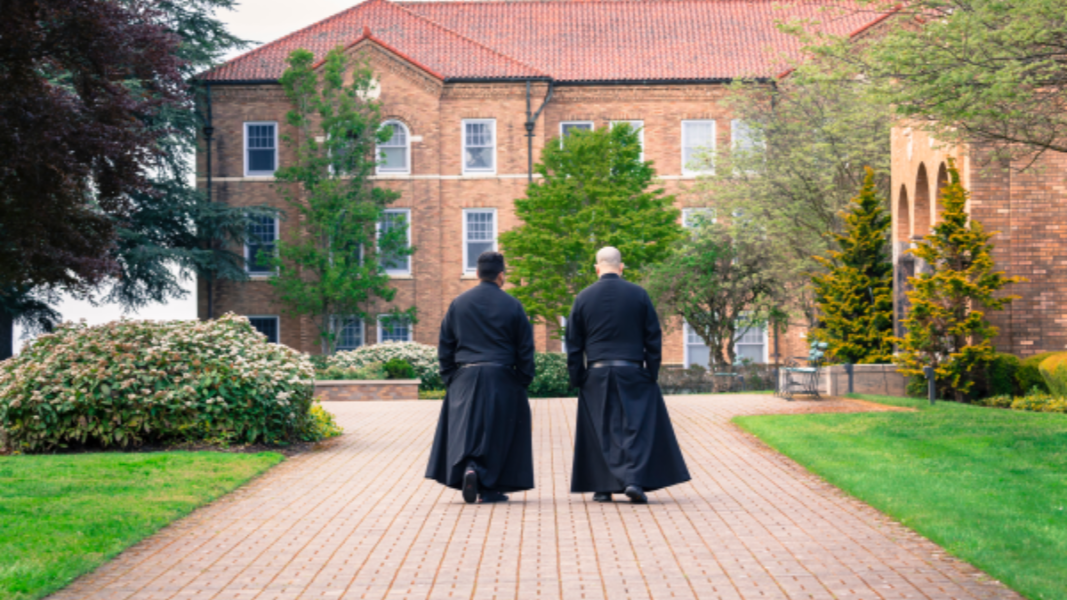
The presence of religious in public positions is uncommon in Europe, but not non-existent. In France and Germany, some Benedictine monks have recently participated in local elections or maintained their positions on municipal councils, a practice that, although exceptional, has historical precedents in certain regions.
A monk candidate in the French commune of Solesmes
According to Tribune Chrétienne, the campaign for the municipal elections on March 15, 2026, in the small town of Solesmes, in the French department of Sarthe, features an unusual particularity: the candidacy of a Benedictine monk.
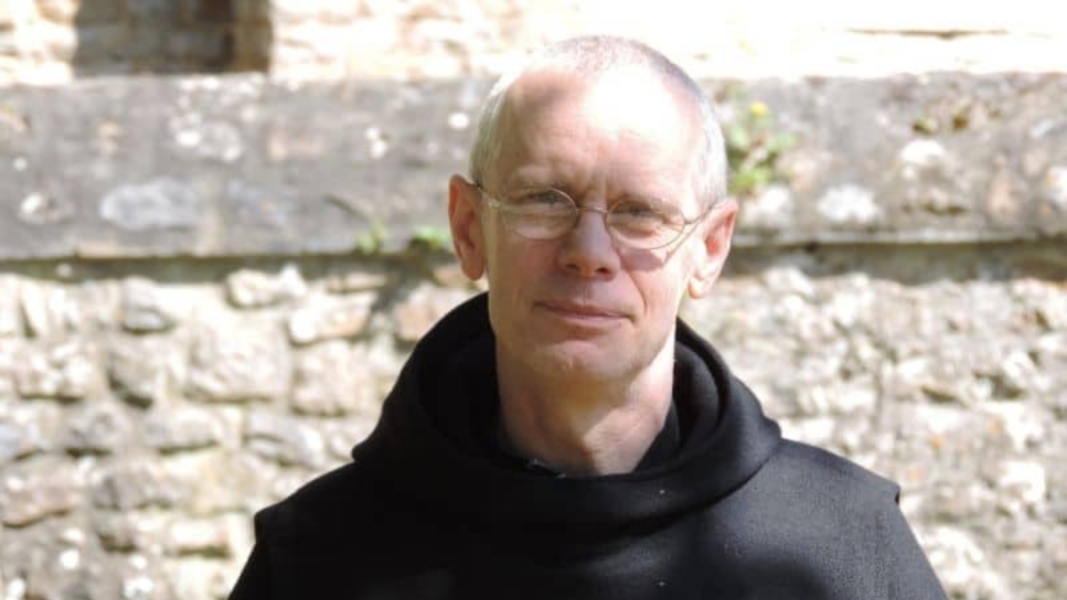
It is Brother Jean-Philippe Duval, a member of the Abbey of Saint-Pierre de Solesmes, who is running again as a candidate for municipal councilor on the list headed by the current mayor, Pascal Lelièvre.
Duval, 70 years old, has already served as a councilor for two terms and has agreed to continue in this responsibility. Although the participation of a religious in local politics does not contravene French legislation, it remains a rare phenomenon.
The monk himself has explained his decision in simple terms. “We are monks to serve,” he stated in comments reported by the regional press.
A municipal tradition dating back to the 19th century
The presence of monks on the Solesmes municipal council is not new. According to the same source, this practice dates back to 1855, when members of the Benedictine community began to participate regularly in local administration.
In some periods, even two monks coincided on the municipal council, although the most common has been for a single religious to represent the monastic community.
The situation is striking considering that Benedictine life is characterized by stability and enclosure. The monks live mainly within the monastery, and their outings to the outside are usually limited to specific needs or religious commitments.
Nevertheless, the Benedictines of Solesmes maintain a close relationship with village life, where they have lived and worked for centuries.
Bavaria: monks elected to municipal councils
Similar cases are also recorded in Germany. According to The Pillar, three Benedictine priests retained their positions on municipal councils following the local elections held on March 8 in the federal state of Bavaria.
Among them is Father Christoph Gerhard, from the Abbey of Münsterschwarzach, who maintains his position on the municipal council of Schwarzach am Main. The list formed by monks from the abbey obtained 6.2% of the votes, which allowed them to retain a seat on the council.
Father Tassilo Lengger, from the Archabbey of St. Ottilien, was also reelected in the municipality of Eresing, after the list linked to the monastic community obtained 9.8% of the votes.
For his part, Father Lukas Wirth, a member of the Abbey of Scheyern, renewed his position on the municipal council after more than two decades of service, a position he has held for 24 years.
A practice uncommon in Europe
Canon law establishes that clerics should not assume public positions that involve the direct exercise of civil power. For this reason, in Bavaria, the monks who participate in municipal councils emphasize that these positions are collegiate in nature and do not involve individual executive authority.
In that sense, they cannot run for positions such as mayor, as that would indeed involve exercising direct civil power.
The Holy See has not intervened in these situations, which remain exceptional within the European landscape.
However, there are precedents of religious involved in public responsibilities. In France, for example, a diocesan priest served as mayor between 2008 and 2014, while in other countries more striking cases have been recorded, such as a priest elected governor in Nigeria or Bishop Fernando Lugo, who was president of Paraguay after leaving the clerical state.
Monasteries and public life
In regions where monasteries are part of the historical social fabric, as occurs in Solesmes or in some areas of Bavaria, the occasional participation of monks in municipal administration is often understood as a service to the local community.
The Benedictines, whose life is organized around prayer, work, and community life according to the Rule of St. Benedict, have played a cultural and social role for centuries in the territories where they settled.
Although the cases remain uncommon, these examples show that, in some places in Europe, the relationship between monastic life and civil community life continues to have concrete expressions in the municipal sphere as well.