


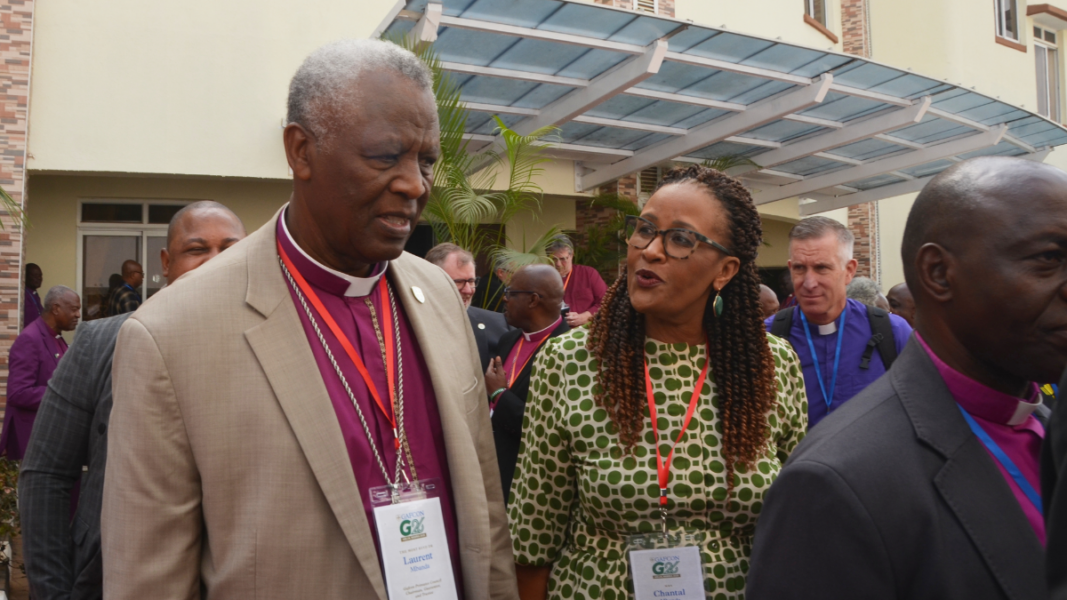
More than 340 Anglican bishops and a hundred lay and clerical leaders from 27 provinces gathered from March 3 to 6 in Abuja (Nigeria) at the GAFCON 2026 conference, where they approved the so-called “Abuja Declaration”, a document that proposes reorganizing the Anglican Communion in the face of the deep doctrinal divisions traversing global Anglicanism.
The meeting was organized by GAFCON (Global Anglican Future Conference) and hosted by the Church of Nigeria, one of the largest Anglican provinces in the world.
The Election of Sarah Mullally
In October 2025, the Church of England elected Sarah Mullally as the new Archbishop of Canterbury, making her the first woman to hold that position and, therefore, primus inter pares within the Anglican Communion.
The appointment provoked strong tensions within Anglicanism, especially in the so-called Global South, where the majority of Anglican faithful are concentrated and where theological positions are generally more conservative.
In various Anglican sectors, the appointment was interpreted as confirming a doctrinal evolution that includes, among other points, the ordination of women to the episcopate and the opening toward blessings for same-sex couples, issues that have generated deep divisions within the Anglican communion for years.
A Schism That Seemed Imminent
In that context, it was anticipated that the Abuja meeting could lead to a formal schism within Anglicanism, as the GAFCON movement had raised the possibility of establishing alternative leadership to that of the Archbishop of Canterbury.
Ultimately, the leaders gathered in Abuja did not proclaim a new primate of global Anglicanism, thus avoiding an immediate institutional rupture.
A New Leadership Structure
Instead, the participants decided to create a new structure called the Global Anglican Council, which replaces the previous GAFCON Primates’ Council, active since 2008.
This body will be chaired by the Archbishop of Rwanda, Laurent Mbanda, with the Brazilian Archbishop Miguel Uchôa as vice president and the Canadian Bishop Paul Donison as general secretary.
The council is composed of primates, bishops, clergy, and laity with voting rights, and aims to coordinate Anglican churches that share the same doctrinal confession.
Criticism of Canterbury’s Structures
The Abuja Declaration contains criticisms of the so-called “Instruments of Communion” of Anglicanism —among them the Archbishop of Canterbury, the Lambeth Conference, the Anglican Consultative Council, and the Primates’ Meeting—.
According to the document, these institutions have failed to maintain doctrinal discipline within Anglicanism, especially on issues related to the interpretation of the Bible and sexual morality.
The signatories maintain that the unity of the Church cannot be based solely on institutional structures, but on a common confession of faith.
The Authority of the Bible and the Jerusalem Declaration
The new structure promoted by GAFCON is doctrinally articulated around the Jerusalem Declaration, adopted by the movement in 2008, which affirms the authority of the Scriptures and the classic formularies of the Anglican Reformation, such as the Thirty-Nine Articles and the 1662 Book of Common Prayer.
The participants maintain that the Anglican communion must be based on a shared doctrinal confession, rather than an institutional unity that allows coexistence with divergent theological interpretations.
Although the Abuja meeting avoided an immediate formal schism, the creation of this new structure reflects the deep doctrinal divisions that have traversed Anglicanism worldwide for years.