


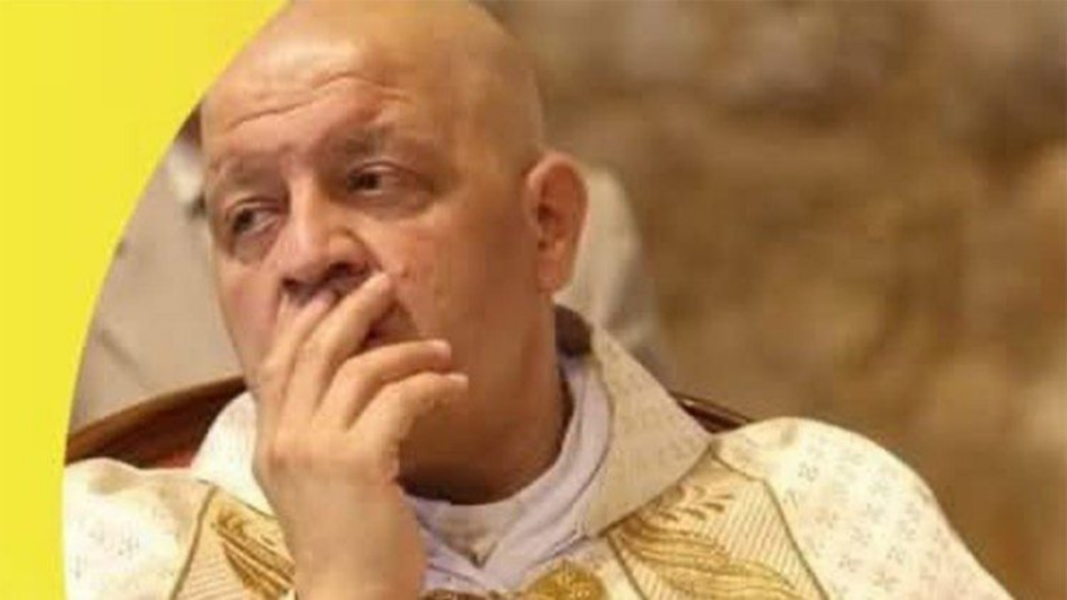
Father Pierre El Raii, Maronite parish priest of Qlayaa in southern Lebanon, died this Monday after being injured in a bombing while trying to help a parishioner. The news was confirmed by Father Toufic Bou Merhi, a Franciscan of the Custody of the Holy Land, as reported by Vatican News.
The priest died exactly one week after the start of Israeli bombings on Lebanese territory, which have once again hit the south of the country particularly hard, a region where numerous Christian communities remain.
Died Trying to Help a Parishioner
According to the Franciscan’s testimony, a first attack hit a house near the priest’s parish in the mountains of southern Lebanon.
Father Pierre quickly went with several young people from the village to help a person injured in the attack. However, a second bombing hit the same place again, leaving the priest seriously injured.
He was taken to a nearby hospital, where he died shortly after his arrival. He was 50 years old.
In the region, he was considered a figure very close to the Christian community, which in recent years has lived under growing pressure due to political instability, the economic crisis, and the military escalation.
Christian Communities Under Pressure
The death of the priest has caused deep shock in the Christian communities of southern Lebanon.
As Father Bou Merhi explained, until now many inhabitants had chosen to remain in their villages despite evacuation warnings. However, the attack that cost the parish priest his life has notably increased fear among the faithful.
This situation is compounded by the severe economic crisis the country is going through, which makes it extremely difficult to leave home and find refuge elsewhere.
A Country Overwhelmed by Displaced People
The conflict is causing a massive displacement of population.
According to figures cited by ecclesiastical leaders in the country, hundreds of thousands of people have left their homes, both in Beirut and in southern Lebanon.
Religious communities have also been forced to become reception centers. In the Franciscan convent in Tyre, for example, around 200 displaced people have found refuge, many of them Muslims.
The humanitarian situation worsens day by day and, according to testimonies gathered in the country, it is increasingly difficult to find safe places.
“Weapons Do Not Generate Peace”
In the midst of the tragedy, Lebanon’s Christians continue to call for an end to the violence.
Ecclesiastical leaders remind that the civilian population is paying a high price for the conflict and reiterate a message that is repeated in many communities: war only leaves destruction, displacement, and suffering among the most vulnerable.