


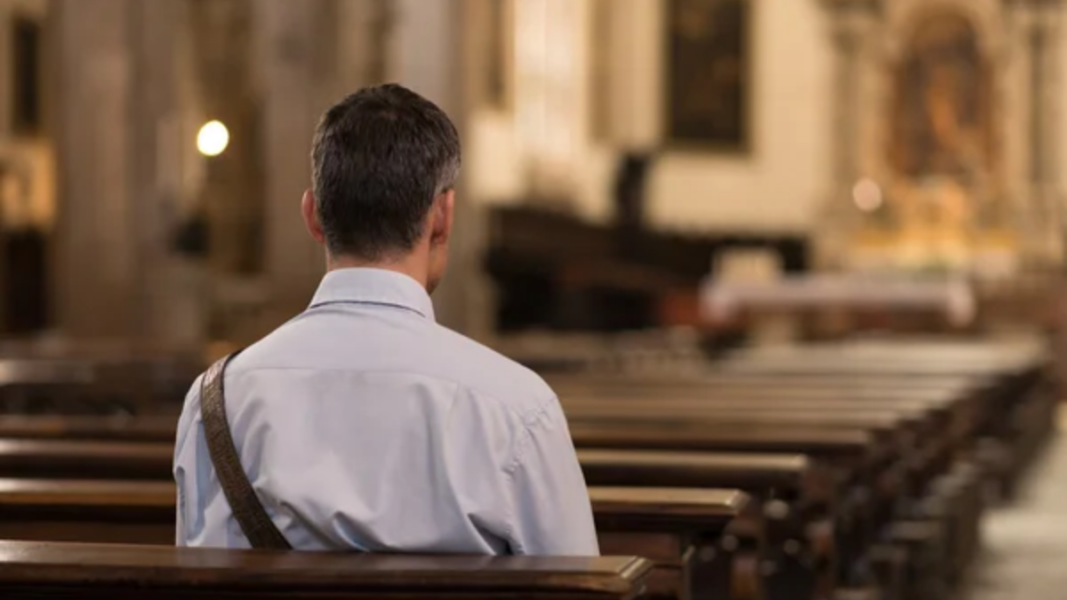
I went back to Mass last Holy Week. It had been more than twenty years since I’d gone. I don’t really know what led me there. Something like a call, though I didn’t know who was calling or why.
The first day I attended daily Mass, in the side chapel of the church, there were two rows of pews occupied. Ten people, maybe twelve. Almost all elderly. I didn’t know quite what to do with my hands or when to kneel. But something happened there, in that silence, in that half hour, that made me come back the next day. And the one after.
Months passed. And what started as a gesture—of rebellion, of a cultural battle in a world you feel is falling to pieces, or whatever it was—turned into hunger. Mass stopped being something I did and became something done to me. I started praying the Rosary, clumsily, distracted, getting lost in the decades. And I discovered that the Virgin doesn’t wait for you to pray well. She waits for you to pray. And that’s enough for her to start working.
A few months ago, I went to confession for the first time in more than two decades. And from then on, grace became something you feel in your body. Those who have received it know what I’m talking about: that strength that appears where there was none before, those situations where you should have fallen and don’t—not by your own virtue, but because there’s something that sustains, that gently pushes, that gets you out of where you shouldn’t be. Those who haven’t received it, ask for it. It comes.
I’m not going to lie: the cross comes too. Coming back isn’t a bed of roses. It’s discovering, with a new and sometimes brutal clarity, your own misery. The sins you didn’t even recognize as sins before now have names, and they weigh. The dryness of the days when you pray and feel nothing. The shame of falling into the same thing again, and again, and having to go back to the confessional knowing you’re going to say the same words you said last time. That’s part of the path too. And anyone who says faith is cheap comfort hasn’t been through it.
But it’s worth it. It’s worth it because there’s something on the other side of that cross that doesn’t exist anywhere else: a peace that doesn’t depend on circumstances, that doesn’t break when life breaks. The certainty—not intellectual, but lived—that you are loved just as you are, with all your garbage on you, and that that love doesn’t withdraw. That there’s a God who has been waiting more than twenty years for you to sit back down in that pew, and when you finally do, he doesn’t reproach you for anything. The world doesn’t give that. No ideology, no well-being, no success gives that. Only He does.
I’ve prayed a lot these months for the conversion of souls. It seems to me the greatest gift you can ask for after your own. And the Virgin, who is a mother, attends to her children with a generosity impossible to understand.
In the last two weeks, in that same chapel where a few months ago there were ten people, you can barely fit. People stand. They’re already talking about celebrating in the main altar. And it’s not an Easter Sunday. It’s an ordinary Tuesday, early in the morning.
Silvia Abril said at the Goyas that it gave her «pity» that young people cling to the Christian faith. It’s not pity she feels. It’s bewilderment. The bewilderment of someone who sees the first generation to fully inherit the secular paradise—without God, without guilt, without limits—look around and say: this is nothing. And come back. Come back to a tradition that has been answering questions for two thousand years that the modern world doesn’t even dare to ask.
Some come back, at first, just to fight the battle. Like I did. And there’s nothing wrong with that. Because God works with what you put in his hands, and then, once inside, he teaches you that the battle was just the door. That behind it there’s a real presence that changes everything. And that that chapel that was empty is filling up.
A son who returns home to his father.