


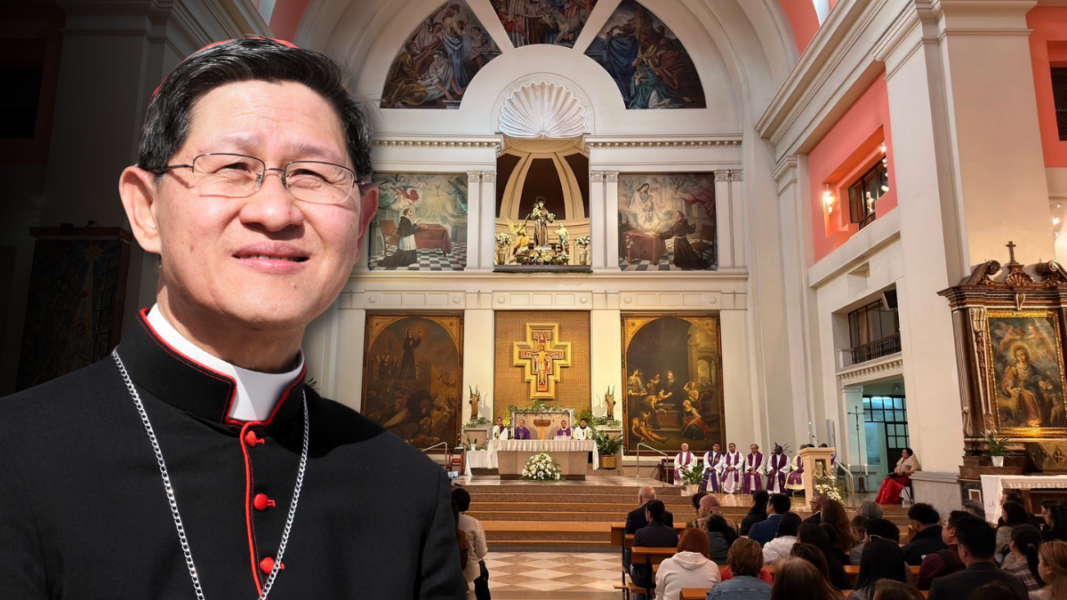
Cardinal Luis Antonio Tagle visited the Filipino chaplaincy in Madrid, Tahanan, this weekend on the occasion of the 40th anniversary of its foundation in Spain and the 30 years of its presence in the parish of Nuestra Señora del Espino. The weekly Alfa & Omega highlights the family atmosphere and the emotion experienced by the community during the cardinal’s visit.
The chaplaincy was born in the 1980s, when the first Filipino women who arrived to work in the capital began to gather in Plaza de España. Four decades later, the community has consolidated a stable presence in the Archdiocese of Madrid.
A long-awaited visit
As explained by Jorge Domínguez, pastor of Nuestra Señora del Espino, the community had long desired to receive the Filipino cardinal. “We had wanted him to visit us for some time, and he was also very eager to do so,” he noted.
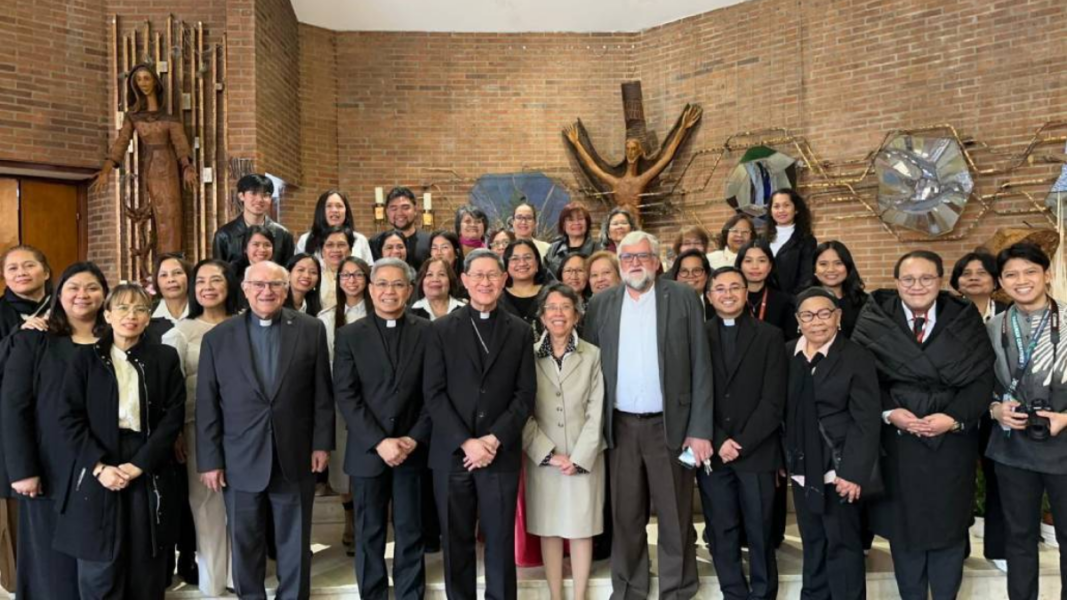
During his stay, the cardinal shared a meal with the pastoral council of the chaplaincy. The meeting was described as a family moment, in which Tagle showed himself to be approachable and spoke in Tagalog for much of the conversation, fostering an atmosphere of trust with the faithful.
Crowded Eucharist
In the afternoon, the cardinal presided over the Eucharist in the parish of San Antonio de Padua. According to Alfa & Omega, half an hour before the start of the celebration, it was no longer possible to access the temple due to the influx of faithful.
The Mass, prepared by the Filipino community, was marked by participation and recollection. In his homily, Tagle encouraged those present to live their faith with depth and to care for their Christian commitment in the context of Spanish society.
At the end of the celebration, numerous faithful expressed their emotion and gratitude for the cardinal’s visit, which strengthened the ties between the Filipino community and the local Church in Madrid.