


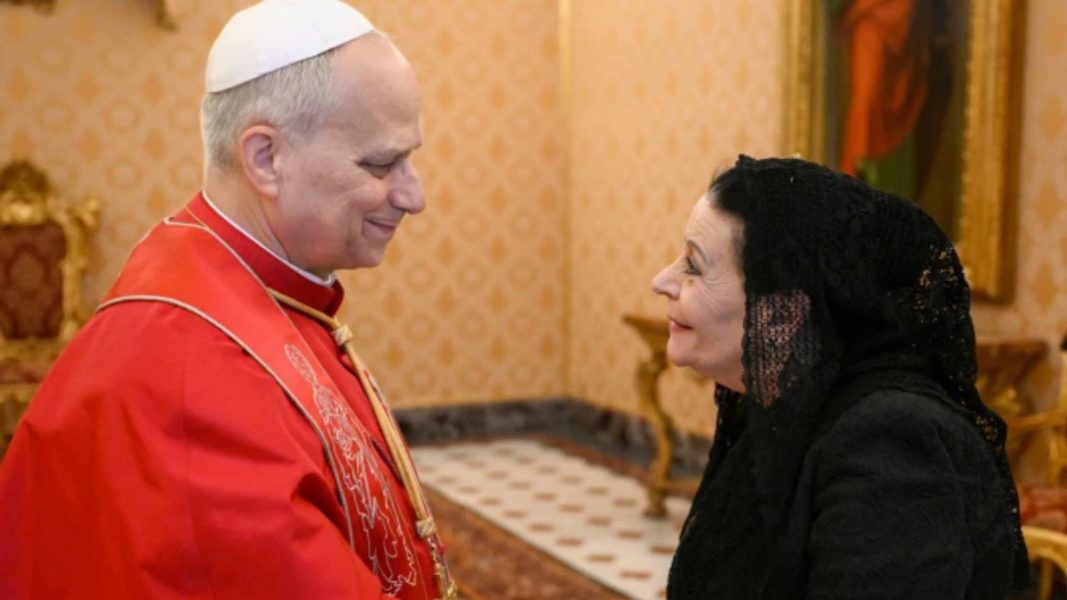
Pope Leo XIV received on March 2 the President of the Republic of Malta, Myriam Spiteri Debono, in audience, as reported by the Holy See Press Office.
After the private meeting in the Apostolic Palace, the Maltese leader met in the Secretariat of State with Cardinal Pietro Parolin, Secretary of State of His Holiness, accompanied by Monsignor Paul Richard Gallagher, Secretary for Relations with States and International Organizations.
International situation at the center of the talks
During the cordial meetings, there was an exchange of views on international current affairs, with special attention to the situation in the Middle East and the conflict in Ukraine.
The official statement also highlighted the good bilateral relations between the Holy See and the Republic of Malta, as well as the fruitful collaboration between the Church and the State in various fields.
Among the matters of common interest addressed are the demographic situation and migrations, topics that are a habitual part of the dialogue between the Holy See and various governments.
Malta, a country of Catholic tradition
As Aciprensa recalls, Myriam Spiteri Debono, 73 years old, has held the presidency since 2024 and is the first woman to hold this position in the country. Last December, the Pope also received the Maltese Prime Minister, Robert Abela.
Malta, an archipelago located in the Mediterranean between Sicily and the north coast of Africa, was evangelized, according to tradition, by Saint Paul, who remained there for nearly three months after the shipwreck of his vessel around the year 60 A.D.
The country maintains a marked Catholic identity: according to the 2021 census, 82.6% of the population declares itself Catholic. Over the last decades, it has received visits from Saint John Paul II (1990), Benedict XVI (2010), and Pope Francis (2022).