



By Kristen Ziccarelli
My generation, Generation Z, has been graduating from college for about ten years now and usually receives some variation of the same message at the graduation ceremony: go out and change the world. But not everyone can change the world. And perhaps it’s worth considering that not everyone should. The charge to change the world presupposes a certain utilitarian calculation: trying to maximize the greatest change for the greatest number of people. Many will inevitably try and fail. Where do they go then?
Right after graduating from college, as I was leaving Mass in a Jesuit basilica, I noticed a small flyer posted near the exit. Below a photograph of the then-blessed Carlo Acutis were the words: «You too can become a saint.» The contrast was striking. «You can become a saint» is radically different from «you too can solve the world’s problems.» The former is universal and attainable; the latter, while not intrinsically wrong, is not the purpose of life nor something that most of us can achieve.
The saints, in fact, have changed the world, but primarily as a consequence of their devotion to Christ. They lived their faith in the transcendentals of beauty, goodness, and truth, who is a Person. The Christian call is not to change the world, but to strive for holiness—and to let God change the world through one. As Vatican II declared in Lumen gentium (the Dogmatic Constitution on the Church), holiness is not just for the clergy or for a few arduously dedicated: «All men are called to this union with Christ, who is the light of the world, from whom we come, through whom we live, and toward whom our whole life tends.»
St. Irenaeus reminds us that the glory of God is man fully alive. Striving for holiness is the essence of living life to the fullest. However, doing so in the modern world necessarily means going against the current of a river that is not only agnostic about holiness, but generally opposes the radical centrality in God that the holy path demands.
Dedicating one’s life entirely to something is not the way of the current world. The classical world understood it better and, perhaps, also strengthened the soul’s authentic obsessive and tireless commitment. But God’s call to us, even today, never pretended to be anything else. The saints are united in their passion for following God’s will. From there sprang their world-transforming actions.
Despite modern hostility toward the Church’s teachings, the message of holiness is finding new life in unexpected places, especially among younger generations. Spain, for example, has recently offered some of the most fruitful examples of public figures who have received the call to holiness—seriously and openly. Last year, for instance, Spanish model and social media influencer Pablo Garna announced his decision to enter the seminary, as did TikTok influencer Juan Manasa. Álvaro Ferraro, an entrepreneur who founded four companies before age 30, left his professional life behind to follow his priestly vocation. «My only dream and desire,» he said, «is to be a saint.»
Public figures like these, and our «millennial» saint Carlo Acutis, are precisely the examples needed to ignite countercultural redemptive aspirations in an age of distraction and on-demand mediocrity.
These cultural references are compelling because of the radical transformation they bring to their worldly lives, but also because they are, evidently, normal. They are not silent monks who pray daily on some distant mountain. As Bishop Robert Barron often says: «A saint is a person who knows they are a sinner.» That’s why we need to help people understand that saints, like heroes, are not models of perfection, but examples of ordinary human effort toward holiness.
Another message that resonates with my generation is that the saints are people who believed wholeheartedly that their sins were not beyond redemption. Knowing that one is deeply loved by God, redeemed by Christ, and made for Heaven is medicine for the world’s empty promises. I have met many young people who truly believe they are unworthy of mercy. That’s why it falls to ordinary Catholics to teach and embody the reality of Christ’s mercy, making it clear that no sin is so powerful that repentance and the pursuit of holiness are unattainable.
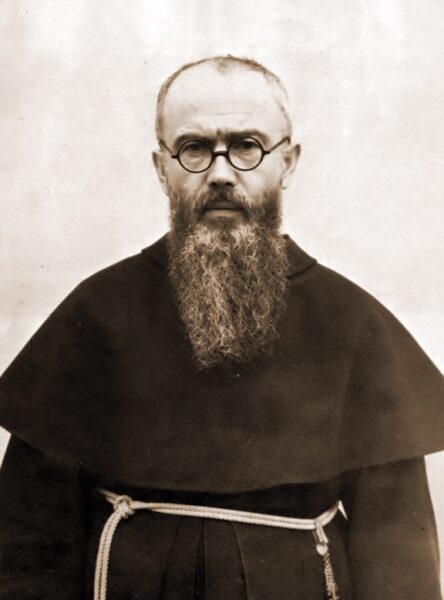
Indeed, the saints remind us that some of the most beautiful stories begin and end amid the ruins of life: in prisons, hospitals, broken hearts, and wars. It was in Auschwitz, after all, where St. Maximilian Kolbe offered his life for another prisoner; and it was while fleeing the Nazis that Dietrich von Hildebrand wrote some of his most prolific reflections on beauty and the Church.
Christ writes a beautiful story for each person. The saints are those who dare to live that story and to give themselves entirely in love, free from the worry of trying to «take control of their life,» because it is precisely that gift that constitutes the meaning of life.
The message my generation most needs to hear is not «Go out and change the world,» but something more humble and more demanding at the same time: «Go out and be saints, and let God do the rest.»
About the Author
Kristen Ziccarelli is a writer and lives in Washington, D.C.