


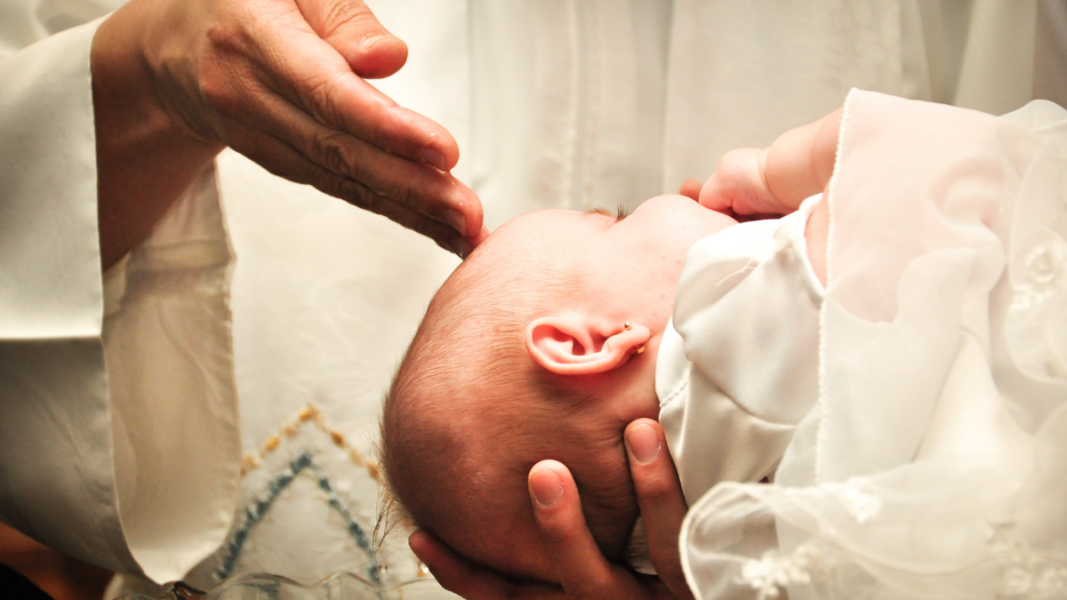
For Saint Thomas Aquinas, the theme of man’s filiation with God has important nuances. It cannot be resolved with a simple affirmation or negation, but rather distinguishes three well-defined levels in the way we can predicate said filiation from God.
According to the Angelic Doctor, all beings have a special relationship with God, since, as Creator of the entire universe, He has a special love for all His creatures. However, only rational beings can properly be called “sons,” and this occurs in different degrees.
When saying rational beings, he does not simply refer to the capacity to reason, in terms of following logical procedures to reach certain conclusions, but to being participants in the divine Logos.
Indeed, when Aristotle defines man as “rational animal” he does not refer simply to rational intelligence or feelings, which are also present in many other animals, but to participation in the Logos, which means much more than just reason or word, and therefore he uses in his Metaphysics the Greek terms “ζῷον λογικόν” (zoon logikón), implying a living being endowed with soul, reasoning, word, and transcendental logical thought, and moreover capable of connecting intellectually and lovingly with its Creator. Also, Saint John at the beginning of his gospel (Jn 1,1) uses the term Logos when he says that “In the beginning was the Word” (Ἐν ἀρχῇ ἦν ὁ Λόγος).
This concept fully coincides with Genesis when it explains that man is the image of God (Imago Dei). The expression “in the image and likeness” (Gn 1,26-27) is not a redundancy, but means that man as image is a mirror that reflects God, but in turn, through grace, tends to a greater progressive likeness as he approaches holiness. Thus explains Saint Bonaventure in his work Itinerarium mentis in Deum.
“The gods are not God”
The short phrase of this title is attributed to Benedict XVI and synthesizes a great truth in few words. It is common to speak of “the gods” in general, as if they were all more or less the same, and consequently we would all be sons of God or at least of some god, in a kind of Masonic universal fraternity.
But the true God, the one who is one and triune and who died on the cross to redeem humanity, is only one, quite distinct from all other gods, even that of the Muslims or Jews with whom we share the truths of the “Book.”
While Christianity makes its own many doctrines of other religions, thus forming a common cultural heritage, there are other truths that are exclusive and differentiate it.
As Saint Justin affirms in his Apologies: “Christianity has not come to destroy anything, but to magnify and perfect everything. Revelation does not destroy the intellectual building erected by thinkers; on the contrary, it consolidates its foundations and crowns it with a magnificent finish… Every truth that any man says belongs to us Christians, because we worship the Logos, who proceeds directly from God”.
To say it again with words from Benedict XVI: “Primitive Christianity carried out a purifying choice: it decided for the God of the philosophers against the gods of the other religions… When we speak of God we refer to being itself, to what the philosophers consider the foundation of all being, to whom they have exalted as God above all powers; that is our only God” (Introduction to Christianity).
But returning to the opinion of Saint Thomas, he considers that divine filiation can be expressed in three different ways:
-
By creation (common filiation)
In a very broad sense, the entire creation is a daughter of God, and in a more specific sense all men are sons of God because we have been created by Him and have received His divine breath. And of course, God loves in all humans that essence that brings us closer to His nature.
According to Saint Thomas: “The name of sons of God is not applied to creatures except insofar as they participate in the likeness of God… Man, by his rational nature, is like God, and therefore every man can be called son of God insofar as he is created in the image of God” (Summa Theologica, III, q. 23, a. 3).
However, the same Aquinas clarifies later that filiation properly speaking requires going even further, and strictly needs a likeness of nature or grace that comes from baptism and faith, as Saint Mark clearly expresses.
It should be noted that, while divine love for man includes us all, this does not contradict the fact that those who have no faith or are sinners will be condemned, since in God there is an infinitely perfect balance between love and justice.
Within this context, saying that we are all sons of God adds nothing concrete to morality or Christian life.
Indeed, it can be said that even the Demon, as a creature, is loved by God and His son, which does not prevent him from being in hell. Lucifer, the bearer of light angel, is condemned when he refuses to serve God saying: “Non serviam”. The opposite of the Virgin who declares herself “Handmaid of the Lord” (Lk 1,38).
The expression of rebellion also appears in the Bible to describe the disobedience of the people of Israel toward God, who had them as His chosen people, and in that context it is a metaphor for their idolatry and betrayal (Jer 2,20).
-
By grace (adoptive filiation)
The second way according to which, for Aquinas, we are “sons of God” in the full sense is through sanctifying grace, the divine gift that brings us closer to holiness. This concept allows distinguishing between humanity as a whole and that part of men who are united to Christ through the sacrament and love.
“Many are called, but few are chosen” (Mt 22,14). It is false that all are saved, since, while many are called, not all are chosen, according to the words of Christ Himself. Only those who are baptized in the name of the Trinity and persevere in faith will be saved.
We read in Romans: “The Spirit makes us sons, and sons and coheirs with Christ” (Rm 8,14-17), and in Galatians: “You are all sons of God through faith” (Ga 3,26; 4,4-7).
Saint Thomas says: “Adoptive filiation is a likeness of natural filiation, but it occurs in us by grace, not by nature… Therefore adoptive filiation properly belongs to those who are united to Christ by faith and charity” (Summa Theologica, III, q. 23, a. 1).
-
The case of Christ (natural filiation)
In third and last place, the Angelic Doctor essentially differentiates our relationship with the Creator from His relationship with Christ, pointing out that we humans are sons “by participation”, while Christ is Son “by essence”.
By saying that we are sons by participation it means that the love of God gratuitously makes us partakers of His divinity, without us being so by nature, since we remain creatures. Christ, on the other hand, is by His own essence Son of God, as the second Person of the Most Holy Trinity.
On this matter, Saint Thomas clarifies: “Christ is Son of God by nature, according to His divinity; we are sons of God by adoption, according to the participation of grace” (Summa Theologica, III, q. 23, a. 2).
“By sanctifying grace man is made a partaker of the divine nature and is adopted as a son of God” (Summa Theologica, I-II, q. 110, a. 2).
In full continuity with this Thomistic vision, the Apostolic Tradition clearly distinguishes between God’s paternity by creation, which is universal and applies to all creatures, and filiation by grace, which is specific to faithful Christians.
The Catholic Church also holds that divine mercy is so great that exceptionally it can include among those who are saved some people who, without fault of their own, have not received baptism nor fully know the true religion, but sincerely seek the truth and act according to their conscience. However, this cannot be taken as a general norm.
Magisterium of the Popes
Many Popes have also expressed themselves in relation to this issue. Among them stand out:
Saint John Paul II, in Redemptor Hominis, teaches: «Through grace, man is made ‘son of God’, partaker of the divine nature… Man, by the Holy Spirit, becomes heir of divine goods, and the Spirit Himself bears witness that we are sons of God».
Benedict XVI, in the homily of January 8, 2006, affirmed: «Through Baptism, man is not only a creature, but becomes a son of God. […] Only through Christ, the only Son, can we become sons of God».
Francis, in the general audience of June 12, 2019, declared: «No one is a son of God in a generic way: we are all creatures of God, but the Holy Spirit makes us sons and daughters of God in Christ. He is the one who inserts us into this relationship». This declaration by Francis is very important, since several times he has generated bewilderment in the Church due to expressions of his in a diverse sense.
Saints and Doctors of the Church
Other wise men of the Catholic Church have given their learned opinion, coinciding, of course, with the Apostolic Tradition:
Saint Augustine (Sermon 121): «To those who believe in His name, He gave power to become sons of God. If we are sons of God, it is by grace, not by nature. Only the Only Begotten is son by nature; we are so by time, through Him who is before time».
Saint Athanasius of Alexandria, in De Incarnatione Verbi: “The Son of God became man so that we might be made sons of God”.
Saint Cyprian of Carthage, in On the Lord’s Prayer: «The new man, reborn and restored to his God by His grace, says first: ‘Father’, because he has already begun to be a son».
Saint Josemaría Escrivá, in Christ Is Passing By: «Divine filiation is a joyful truth, a consoling mystery. Divine filiation fills our entire spiritual life, because it teaches us to treat, to know, to love our Father in Heaven».
Catechism of the Catholic Church
Finally, the Catechism is very precise and revealing on this matter, since it uses the word «adoption» to differentiate it from creation:
It says in item 1265: «Baptism not only purifies from all sins, it also makes the neophyte ‘a new creature’, an adopted son of God who has become ‘partaker of the divine nature’, member of Christ, coheir with Him, and temple of the Holy Spirit».
And in item 2782: «We can invoke God as ‘Father’ because He has made us reborn to His life by adopting us as His children in His only Son: by Baptism He incorporates us into the Body of His Christ».
In summary, setting aside Christ’s natural filiation, man’s divine filiation is basically understood in two ways:
1. As creatures: All human beings are loved by God who is our origin and end, and we possess a sacred dignity insofar as we have been created in His image, but we are not truly sons in the evangelical sense.
2. As adopted sons: Only through baptism and the profession of the true faith, human beings pass from being «servants» or «creatures» according to the Old Testament, to being formally and fully «sons in the Son» according to the New Testament, or “One in the One”, according to the Augustinian phrase of our Pope Leo XIV.
About the author:
Carlos Prosperi is a doctor in Biological Sciences, licensed in Philosophy, and diploma in Thomism. He works as a university professor of Biology and Epistemology
Note: Articles published as Tribune express the opinion of their authors and do not necessarily represent the editorial line of Infovaticana, which offers this space as a forum for reflection and dialogue.