


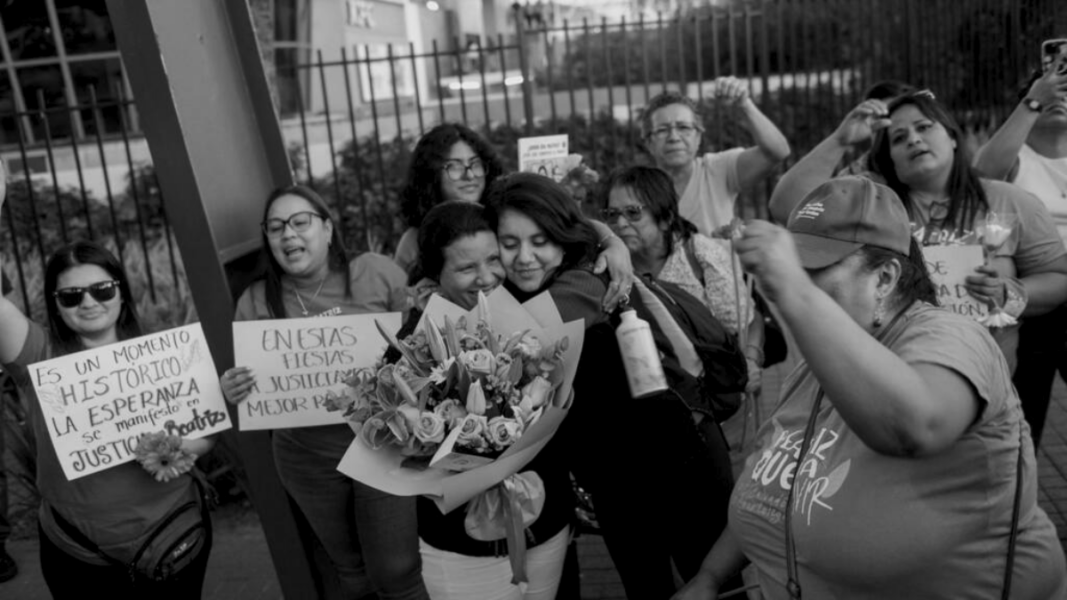
The main platform promoting the decriminalization of abortion in El Salvador has announced its legal dissolution following the entry into force of the Foreign Agents Law, a regulation that requires organizations funded from abroad to register and disclose the origin of their resources. The decision has been interpreted by pro-life sectors as a strategic retreat in the face of the obligation to render accounts.
According to ACI Prensa, the Agrupación Ciudadana por la Despenalización del Aborto announced on February 23 that its work “is no longer compatible” with the new legislation approved in May 2025 by the Legislative Assembly and promulgated by President Nayib Bukele. The organization chose not to register in the Foreign Agents Registry (RAEX), a mandatory requirement for NGOs that receive international funding.
Mandatory Transparency and End of Opacity
The Foreign Agents Law establishes that all NGOs receiving funds from abroad must register and pay a 30% tax on said transfers. The stated objective of the authorities is to ensure transparency in financial operations and prevent covert political interference under the label of “aid” or “defense of rights”.
In his Message to the Nation on June 1, 2025, President Bukele warned that there are organizations operating “in the darkness,” moving millions to influence national politics without any fiscal control. The new law, he stated, does not prevent legitimate cooperation, but does require rendering accounts.
Instead of adhering to that legal framework, the abortionist group decided to dissolve as an NGO and transform into an activism movement under the name “La Movimienta Regional por el Derecho al Aborto y las Maternidades”. That is, it changes the legal form, but does not abandon the agenda.
Abortion is a Crime
El Salvador maintains one of the clearest legislations in defense of human life. Abortion is a crime and the Constitution recognizes as a person every human being from the moment of conception.
For years, the now dissolved NGO promoted emblematic cases such as the so-called “Beatriz Case,” the “Manuela Case,” and that of “The 17,” presented before international instances to pressure for a legal reform that would open the door to decriminalization.
For the pro-life movement, the defense of life is not a political slogan, but a constitutional and moral principle. Salvadoran law not only protects the unborn, but legally affirms their condition as a person.