


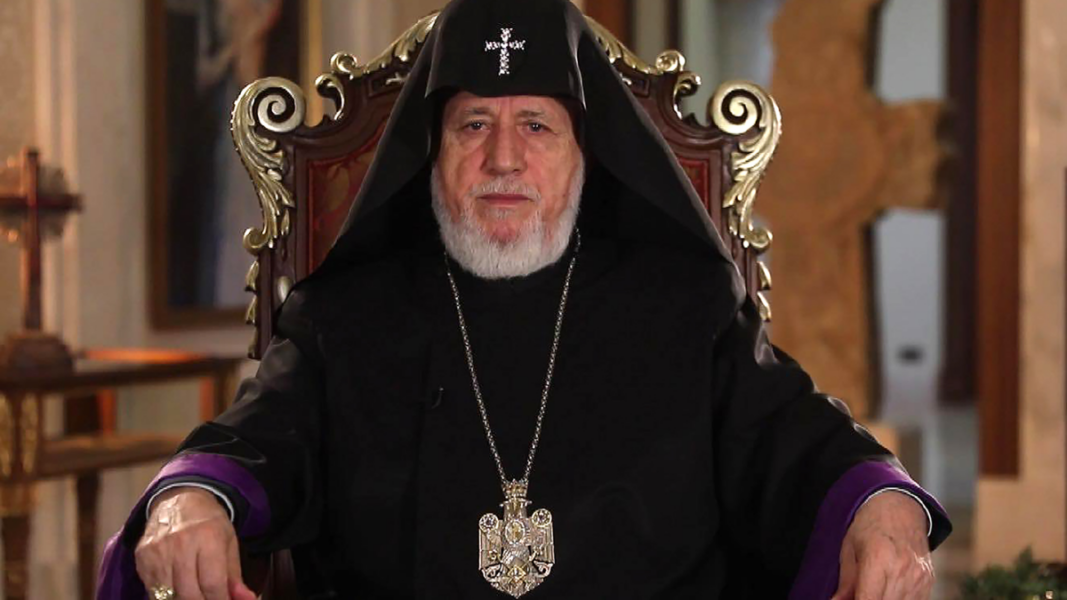
The Attorney General’s Office of Armenia has filed criminal charges against Karekin II, Supreme Patriarch and “Catholicos” of all Armenians, and has prohibited him from leaving the country, according to La Nuova Bussola Quotidiana. The measure, issued on February 14, 2026, prevented him from participating in the assembly of the Armenian Church held on February 17 in Austria.
The decision is framed within a growing confrontation between the government of Prime Minister Nikol Pashinyan and the Armenian Apostolic Church, which has intensified in recent months.
A crisis that has been worsening since the Karabakh conflict
Tensions between Church and State have intensified following the second war between Armenia and Azerbaijan over Nagorno-Karabakh in 2020, which ended with a military defeat for Armenia and the opening of negotiations for a ceasefire. In September 2023, Azerbaijan regained full control of the territory after an offensive that caused the displacement of tens of thousands of Armenians from the self-proclaimed Republic of Artsakh.
Between April and June 2024, Archbishop Bagrat Galstanyan led protests against territorial concessions to Azerbaijan. He was later detained on charges of having organized an attempted coup d’état. On June 25, 2025, he was arrested along with 15 other people, including priests and laypeople.
Two days later, Archbishop Mikael Ajapahian was also detained, accused of inciting the violent overthrow of the government. In October 2025, Bishop Mkrtich Proshyan and 12 other clerics were arrested on charges including coercion to participate in public gatherings, obstruction of electoral rights, and economic crimes. In recent weeks, the courts have replaced the pre-trial detention of Proshyan and Ajapahian with house arrest.
Charges against the “Catholicos” and judicial restrictions
According to the Italian media outlet, the charges against Karekin II are based on similar grounds to those used since 2024 against other members of the clergy. The ban on leaving the country prevented him from attending the ecclesiastical assembly in Austria, which his defenders have interpreted as direct interference in the autonomy of the Church.
Various religious freedom advocacy groups have denounced the detention of high-ranking prelates and priests in Armenia in recent months. The cited media outlet notes that these measures could conflict with the Armenian Constitution and the European Convention on Human Rights, particularly regarding freedom of religion and association.
The Armenian Apostolic Church and its role in national identity
The Armenian Apostolic Church, one of the oldest Christian communities, is part of the pre-Chalcedonian Oriental Orthodoxy and, according to tradition, dates back to the missions of the apostles Bartholomew and Judas Thaddaeus in the 1st century. More than 90% of the Armenian population considers itself Christian, and the Church plays a central role in preserving the country’s cultural and national identity.
A decisive year for Armenia
The year 2026 presents itself as a key period for Armenia, both in domestic and foreign policy. Following the so-called “Washington Declaration” of August 2025 and international diplomatic efforts, the reopening of regional communications, including the border with Turkey, is expected, as well as the signing of a definitive peace agreement with Azerbaijan.
However, recent events show that the crisis between the government and the Church remains open, at a time of particular political sensitivity for the Caucasian country.