


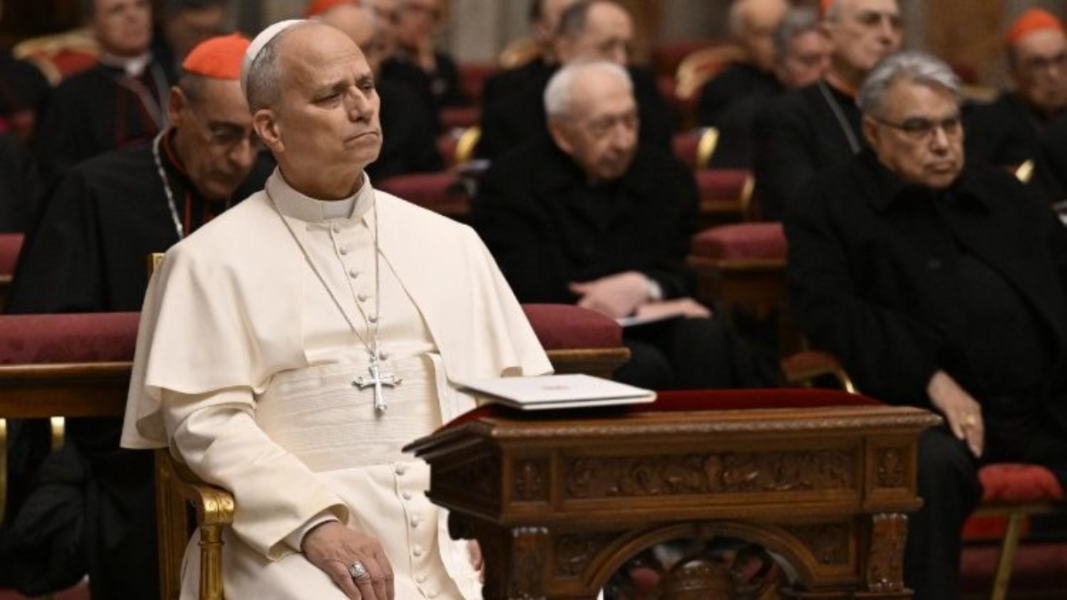
Pope Leo XIV and the members of the Roman Curia experienced this Monday, February 23, a day of Spiritual Exercises in the Pauline Chapel, structured around two meditations that addressed interior conversion and the purification of faith in the face of trial.
According to Vatican News, this year’s preacher, Mons. Erik Varden O.C.S.O., bishop of Trondheim and Trappist monk, offered a morning reflection centered on St. Bernard of Clairvaux and, in the afternoon, a meditation on how to live in God’s help without reducing religion to an “insurance policy”.
St. Bernard: conversion born of interior struggle
In the morning meditation, Varden presented St. Bernard of Clairvaux as an “excellent companion” for anyone wishing to undertake an authentic Lenten exodus from egocentrism and pride. Far from an idealized figure, the preacher emphasized that Bernard’s teaching on conversion arises from concrete experience, personal struggle, and the need to question one’s own presumptions.
He recalled that the 12th-century Cistercian movement, to which Bernard belonged, was at once innovation and reform. The foundation of the novum monasterium in Cîteaux did not arise as a reaction against someone, but as a positive search for fidelity. Merely reactive projects—he warned—are destined to run out of steam.
St. Bernard was a man of strong character, capable of rigid positions, but at the same time profoundly humble, tender, and faithful in friendship. His life, Varden noted, shows real tensions, comparable in some ways to those experienced centuries later by Thomas Merton. Conversion, in this horizon, is not an abstract ideal, but a process sustained by biblical culture and a well-rooted theology.
“God is not an emergency service”
In the afternoon, the third meditation shifted focus to the experience of suffering and divine help. Starting from a phrase by Mary Ward—“Do the best you can and God will help you”—the bishop explained that the conviction that God aids man belongs to the core of biblical faith.
In the light of Psalm 90, he developed the image of God’s help as a stable dwelling. It is not a resource occasionally resorted to in extreme situations, like dialing an emergency number. Living “under the shelter of the Most High” implies founding existence on a constant presence.
The reflection then delved into the figure of Job. The biblical book was described as a “symphony” that traverses lament, threat, and finally grace. Job rejects reducing his relationship with God to an accounting calculation; in a trial, it is not explained through simplistic schemes.
The temptation of a utilitarian faith
Varden warned against the temptation to consider religion as an insurance policy: complying with God in expectation of guaranteed protection against evil. When the “protective barriers” collapse, that contractual faith enters into crisis.
Dwelling in God’s help—the preacher taught—does not mean shielding oneself from suffering or negotiating securities. It means traversing lament and threat to learn to live with grace at a deeper level of trust.
God can allow the walls we thought necessary to fall, walls that in reality were suffocating us. Only then can a new and blessed world open up.