


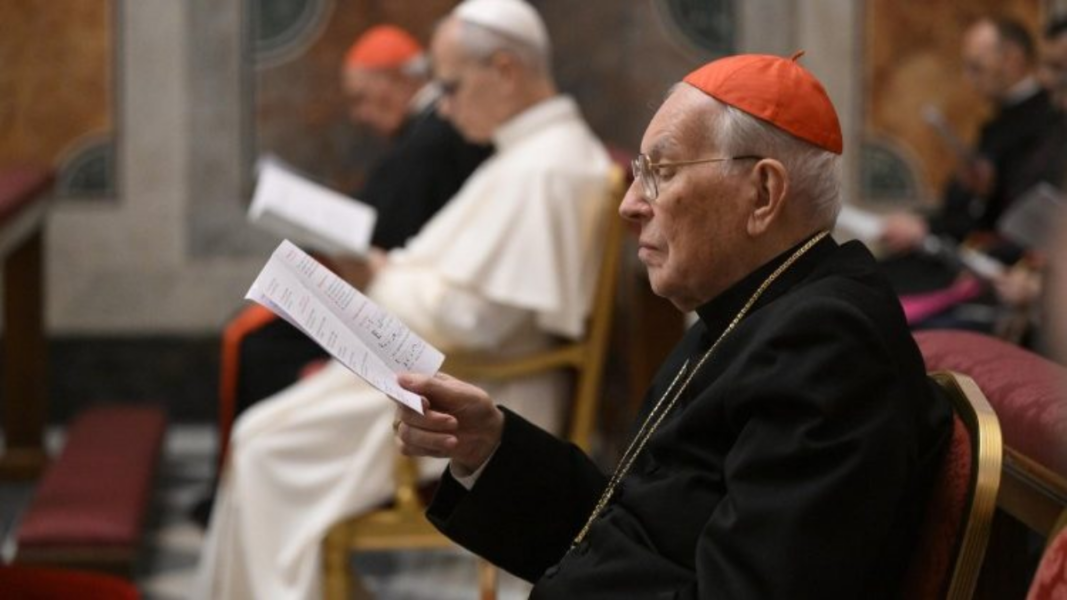
The meditations of February 24 in the Lenten Spiritual Exercises at the Vatican focused the reflection on the Christian meaning of both concepts. Leo XIV, together with the cardinals residing in Rome and the heads of dicasteries, participated in the Pauline Chapel in two new meditations preached by Monsignor Erik Varden, bishop of Trondheim (Norway) and Cistercian monk, in which he addressed the themes “Becoming Free” and “The Splendor of Truth”.
Freedom is not affirmation of the self, but donation
According to Vatican News, in the morning meditation, Varden started from the contemporary use of the term “freedom”, which has often become a rhetorical tool within political and social discourse. What some present as liberation, others perceive as oppression, generating a permanent confrontation in the name of the same word.
In the light of Saint Bernard, the preacher recalled that true freedom is not connatural to man wounded by sin. What is usually understood as freedom—doing one’s own will without limits—can become a form of slavery. The ease with which man repeatedly falls into the same traps reveals, precisely, his lack of interior freedom.
Christian freedom, he explained, is founded on Christ’s “yes” to the Father’s will. It does not consist in imposing oneself or dominating, but in loving with a crucified love, capable of giving itself. In this perspective, no ideology can legitimately appropriate the concept of freedom to justify the oppression of others, for authentic freedom is always personal and never annuls that of the neighbor.
Temptation, ambition, and the search for truth
In the evening meditation, centered on “The Splendor of Truth”, Varden addressed the role of temptations in spiritual life. Recalling Psalm 90 and the teachings of Saint Bernard, he affirmed that no one is exempt from them and that, far from being useless, they can strengthen commitment to the truth.
Far from falsehood, he pointed out, the believer can convert and confirm his brothers. Among the temptations, he especially highlighted ambition, which Saint Bernard describes as a denial of truth and a form of alienation. Ambition—he emphasized—can corrupt even those called to service, transforming vocation into vainglory.
In response to the question “What is truth?”, the preacher indicated that the Church is not called to adapt to the changing languages of culture to be acceptable, but to speak in its own language: that of Scripture, the liturgy, and the saints. The credibility of Christian truth does not arise from external brilliance, but from its incarnation in holy lives.
At the end, Varden recalled that the universal call to holiness, emphasized by the Second Vatican Council, remains fully relevant. Christian truth becomes convincing when it manifests itself in personal form, through a life willing to sacrifice.