


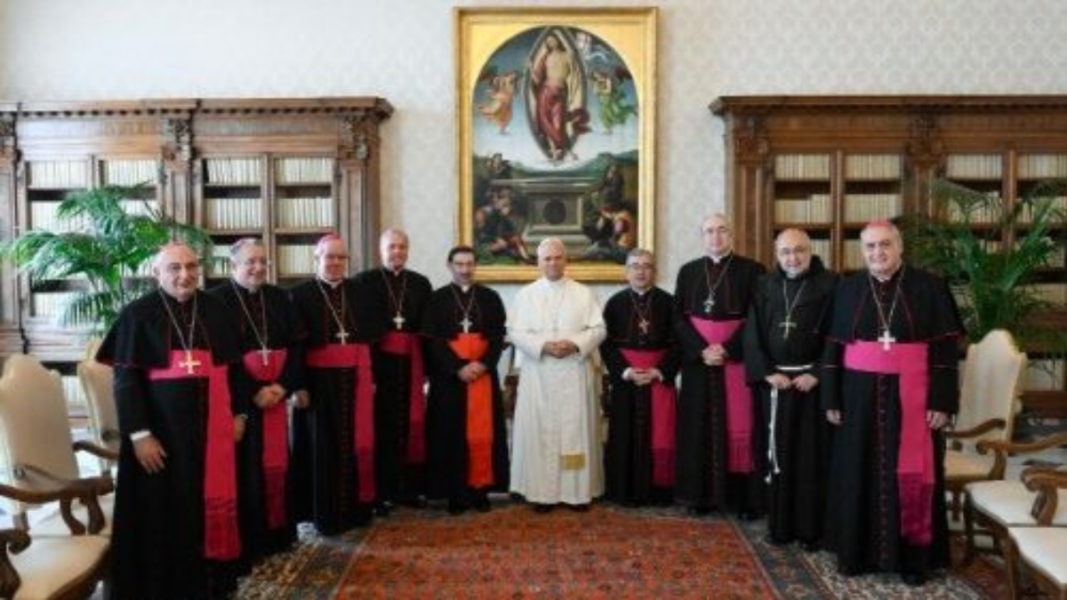
Several cardinals present have privately confirmed the content of the meeting held between Pope Leo XIV and the Spanish bishops. There was no official statement at that time, but sources agree that the encounter had a direct tone and was focused on the moral, social, and ecclesial situation in Spain.
According to this leak, the Pope expressed his concern over the legislative direction promoted in recent years by the PSOE. He specifically pointed out the consolidation of abortion and euthanasia as rights, the progressive legal redefinition of the family, and the expansion of approaches that he described as materialistic and alien to Christian tradition. In that context, he alluded to the political responsibility of the current Executive led by Pedro Sánchez and mentioned the institutional deterioration associated with episodes protagonized by leaders such as José Luis Ábalos.
The Pontiff also warned about initiatives aimed at questioning or removing symbols linked to the martyrs of the 20th-century religious persecution, interpreting them as part of a process of delegitimizing Christian memory in the public space.
The meeting included an internal call to attention. Leo XIV noted that Spanish seminaries record minimal vocation figures and asked the bishops for a deep analysis on formation, vocational pastoral care, and doctrinal clarity. He indicated that it is not enough to attribute the lack of candidates to the secularized context, but that it is necessary to review the Church’s own dynamics.
Finally, according to the cardinals, the Pope addressed the criticisms regarding his past management of abuse cases in the Diocese of Chiclayo. He acknowledged procedural errors, asked for forgiveness, and explained that corrective measures have been adopted. He emphasized that he does not intend to place himself outside scrutiny and that the credibility of the Church requires assuming responsibilities when appropriate.