


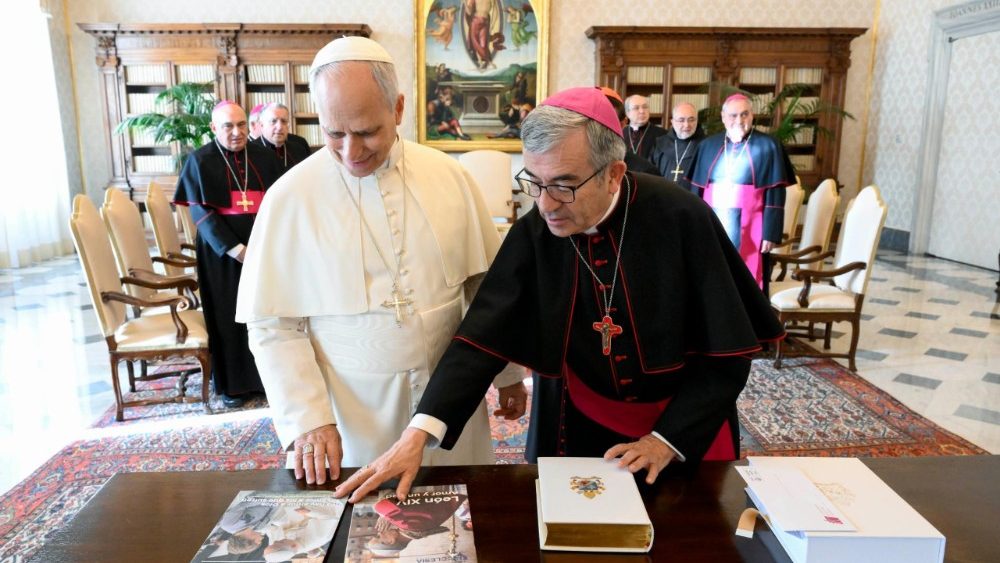
The information published by the newspaper El País about the November 17 meeting between Pope Leo XIV and the leadership of the Spanish Episcopal Conference introduces an element of enormous political weight: that the Pontiff’s “greatest concern” regarding Spain would be the “far-right ideology” that would attempt to “instrumentalize the Church.” The newspaper attributes that statement to sources knowledgeable about the meeting and presents it as a key interpretive element of subsequent decisions by the episcopate on issues such as immigration or abuses.
However, InfoVaticana has been able to contrast that version with several people who were present at the meeting in the Vatican. According to these direct sources, the content of the meeting did not unfold in the terms that are now being disseminated. Coincidentally, several of the attendees consulted assure that there was no specific warning centered on the Spanish “far-right” nor a formulation that pointed to that issue as the main axis of papal concern.
The same sources emphasize that the conversation addressed broader pastoral and ecclesial matters, in a tone they describe as institutional and non-partisan. The political interpretation that is being projected —they affirm— does not correspond to the real development of the dialogue held with the Holy Father.
In episcopal circles, it is also pointed out that the leak may respond to internal dynamics. Various voices recognize that in recent months discontent has increased over the management of the Valley of the Fallen and the terms of the agreements reached with the Government. The perception that certain decisions have been channeled with little prior debate in the collegiate bodies has generated tensions that had not surfaced publicly.
In that context, attributing to the Pope a supposed priority concern for the “far-right” would have evident effects on the internal balance: it reinforces certain positions, disauthorizes others, and cloaks with pontifical authority decisions that are being discussed within the Conference itself.
As of today, the only verifiable thing is that sources present at the meeting deny the core of the published version and deny that the warning now being disseminated occurred in those terms. The distance between both narratives obliges, at minimum, to exercise extreme prudence before turning an anonymous leak into an interpretive criterion for episcopal action.