


Pope Leo XIV faces a vital decision for the unity of the Church
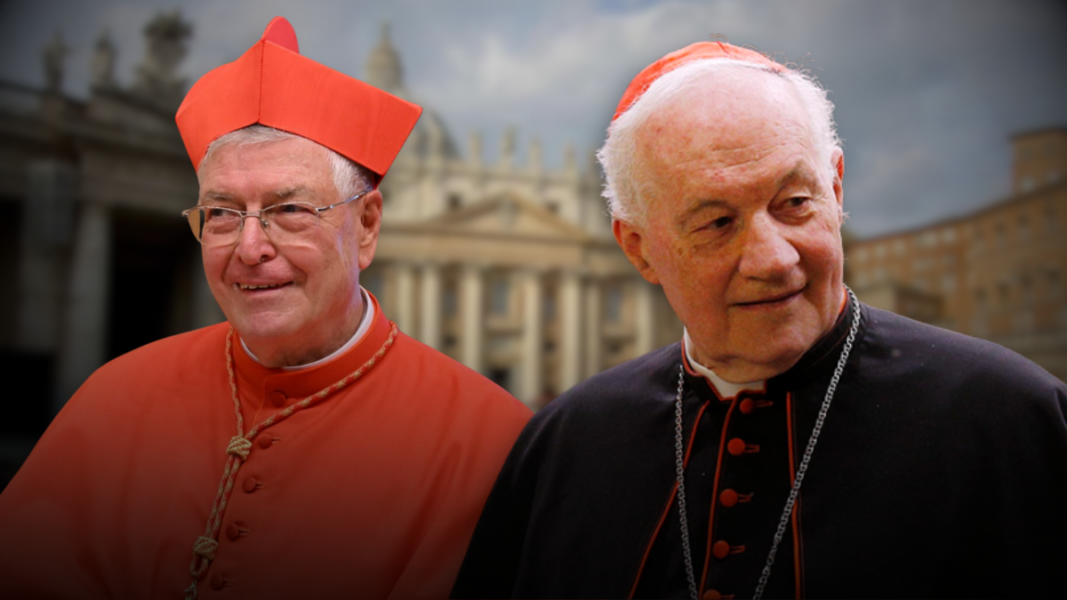
The political advisor behind the transfer of the potestas sacra to the laity, as in the case of the «prefect» of the Dicastery for Religious, is the Jesuit canonist Gianfranco Ghirlanda. Recently, he has allied with Cardinal Marc Ouellet. The latter claims that the «charisms» of the Holy Spirit represent the laity’s capacity to exercise the potestas sacra. Therefore, the Pope could transfer to the laity the ordinary power of governance, just as it is granted with the position of prefect of certain Vatican dicasteries. This contradicts the Second Vatican Council, which in LG 21 taught that the power of governance is transmitted fundamentally through the sacrament of orders. It would then be a matter of more detailed legal determination by the Pope on how it is exercised (for example, as a diocesan bishop, as an auxiliary bishop, as a prefect, etc.).
This is not about subtleties. At the latest after the Society of Saint Pius X’s refusal to the prefect of the Dicastery for the Doctrine of the Faith on February 18, 2026, this should also have become clear in the Vatican. Because the Society of Saint Pius X defends, with regard to LG 21, the same pre-conciliar position as Ghirlanda and Ouellet. Of course, the objectives are different. The cardinals want to impose «gender justice» in the Church. The Society of Saint Pius X wants to legitimize its planned episcopal ordinations. But what both agree on is the following: jurisdiction is transferred by the Pope through legal means, without the need for the sacrament of orders (see annex II of the letter of February 18, 2026). The Society of Saint Pius X does not base itself on chimerical charisms, like Ouellet, but on a pre-conciliar vision that was indeed defended by theologians and popes: the sacrament of orders was considered conferred with priestly ordination. Bishops then received jurisdiction from the Pope, which made them diocesan bishops. The function of episcopal consecration remained unclear.
This conception of papal omnipotence has always been in contradiction with the figure of the apostolic college that Jesus had convened. The jurisdiction granted by the Pope, which turned someone into a bishop, turned individual bishops into vicars of the Pope, so to speak, into his branch managers. Therefore, they did not appear as shepherds who, as successors of the apostles, exercised their ministry by their own right cum et sub Petro. That is why the unconsecrated «bishops» of the Middle Ages did not have to have a bad conscience. Because they had the Pope’s appointment. That was the only thing that mattered for governing. And for sacred acts, they relied on auxiliary bishops.
The Second Vatican Council has clarified here a question that had been open for a long time. This is the work of the Holy Spirit, which does not create a second ecclesiastical structure alongside the Church of Jesus Christ. Rather, it introduces the one Church ever more deeply into the truth.
The new Vatican hyperpapalists, in line with the Society of Saint Pius X, also set aside the sacrament of orders and claim that the appointment by the Pope is the only decisive factor for exercising the potestas sacra. Pope Francis put it into practice. As is known, he was considered «progressive». However, in this point, it becomes evident that he was pre-conciliar reactionary, just like the mentioned cardinals. All this becomes even more grotesque if we consider that Pope Francis preached «synodalism» at the same time, which evokes a participatory format. This is practically the opposite of what deriving all jurisdiction from the papal superpotestas means. This process becomes even more grotesque if we take into account the attack on canon law, which has not ceased since the Second Vatican Council: «Church of love instead of Church of law». Because it precisely means the total judicialization of the Church when the sacrament of orders becomes an accessory that is not necessary to govern the Church.
Pope Leo XIV must now decide whether the Second Vatican Council remains valid in a decisive dogmatic question or not. And he must act accordingly. If he takes a step back from the Second Vatican Council—as, unfortunately, it seems he is going to do—there will not be stone upon stone left. Because, how is he going to credibly demand obedience to the Second Vatican Council—against the Society of Saint Pius X and many others—if he himself disobeys it?