


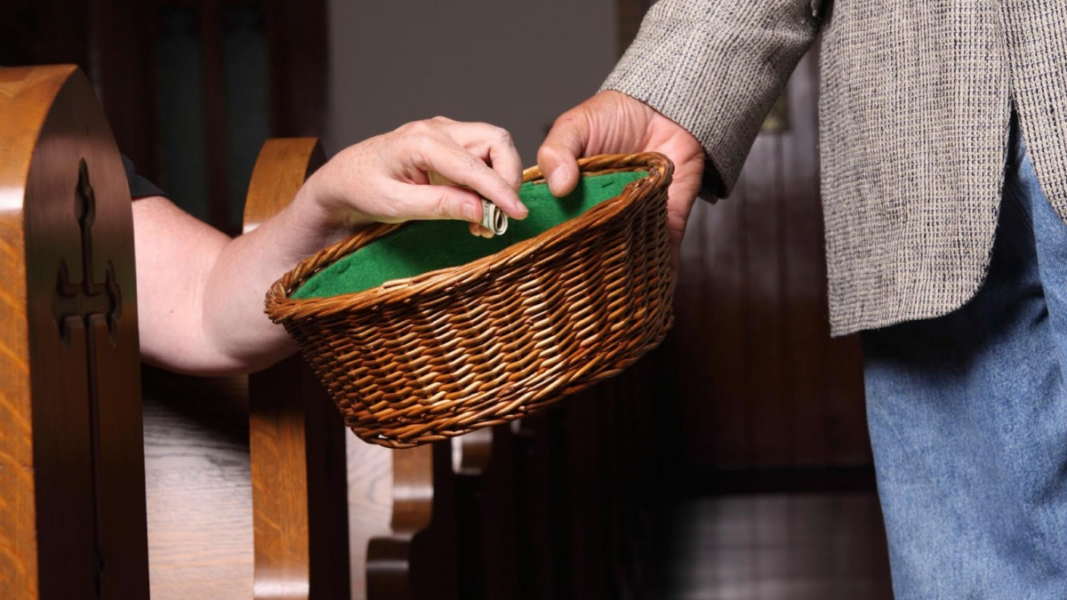
The Spanish Episcopal Conference has decided that the best way to prepare for the visit of Leo XIV is to open a collection. With a website, donation form, appeal to companies, in-kind contributions, and volunteering. All very organized, all very proper, all very transparent. And all deeply disconnected.
Read also: The CEE promotes a collection for the Pope’s visit in June
It’s not just about asking for money in a country where many families can’t make ends meet, where self-employed workers survive on minimal margins, and where tax pressure suffocates those who still sustain the productive fabric. That alone would be enough to question the timeliness. The problem is deeper: it’s being asked from a structure that doesn’t live that reality.
The Church in Spain is not an indigent institution. It manages an immense real estate patrimony, schools, universities, hospitals, foundations, media outlets, financial investments, and a stable allocation via IRPF. It’s not a clandestine community that has to pay the parish rent with raffles. It’s one of the largest corporate structures in the country. Activating a campaign from there for the faithful to finance the logistics of a papal visit obliges, at minimum, to pose uncomfortable questions.
They talk about organizing the trip in a «sober» way. Sobriety doesn’t mean cheap. Nor does it mean necessary. Nor prudent. And even less does it mean that the cost should fall on those who already sustain the ordinary structure. If the visit is strategic and priority, the coherent thing would be to assume it with its own resources. Adjust internal budgets. Reduce apparatus if necessary. Not transfer the additional effort to the average faithful, who already contributes via taxes, parish donations, and tax allocation.
Moreover, public perception matters. Bishops do not live like the majority of Spaniards. They don’t pay mortgages, don’t support children in university age, don’t face an uncertain job market or the monthly supermarket inflation. Their maintenance is guaranteed by the ecclesial structure itself. That’s not a moral accusation; it’s an objective fact. But when from that position an extraordinary effort is requested from those who are indeed subjected to real economic pressure, the distance becomes evident.
And that distance is aggravated by the pastoral context. Many faithful perceive that the Church in Spain is going through a crisis of identity, vocations, and doctrinal clarity. Empty parishes, shrinking seminaries, catechesis diluted in sociology, and a persistent feeling that the official discourse is more concerned with fitting into the cultural consensus than with firmly reaffirming the Catholic faith. In that framework, requesting funding for a major institutional tour sounds less like an evangelizing impulse and more like an apparatus event.
The comparison is inevitable: it reminds one of those students who sell cakes at the exit of Mass to pay for their end-of-year trip to Rome. Only here the direction is reversed, and the recipient is not a youth group, but the top of the ecclesial government. The faithful finances the stage from which, probably, he will be exhorted to be more open, more hospitable, more synodal. It’s a scene that’s hard to explain outside the bubble.
The CEE promises auditing and public accountability. Perfect. But the debate is not accounting. It’s structural. The issue is not whether the money will be managed transparently, but whether the priority itself is coherent with the social and ecclesial reality of the country.
When an institution with considerable patrimony appeals to the economic sacrifice of an exhausted people, the problem is not the Excel sheet. It’s the disconnection. Moral authority is not sustained only with discourses on austerity; it demands visible coherence between who asks and who pays.
If the trip is essential, let it be financed with the resources already available. If it can’t be done without resorting to a public collection, perhaps the question is not how much is raised, but whether the approach itself responds to Spain’s real situation.
Because when pastors seem to inhabit a plane different from that of their faithful, every economic request stops being a gesture of communion and starts to seem like a symptom: not of material poverty, but of remoteness.