


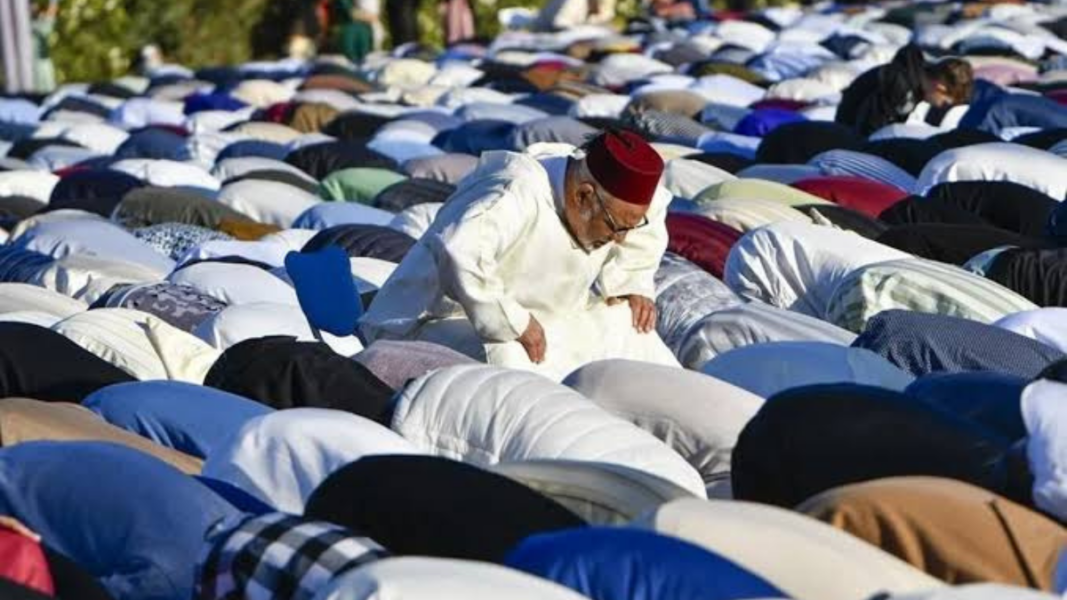
The Dicastery for Interreligious Dialogue has made public on this February 20 the message addressed to Muslims around the world on the occasion of the month of Ramadan and the feast of ‘Id al-Fitr 1447 H. / 2026. The text, signed by the prefect of the Vatican body, Cardinal George Jacob Koovakad, and by the secretary, Monsignor Indunil J.K. Kodithuwakku, emphasizes the closeness and solidarity of the Catholic Church with Muslim believers, in a year in which, due to a “providential convergence of calendars”, Ramadan largely coincides with the Christian Lent.
The message places emphasis on the need to reject despair and violence in the face of personal and institutional trials that current societies are going through, marked—according to the text—by informational confusion and polarization. In the face of that scenario, the Dicastery invites Christians and Muslims to fix their gaze on God, practice fasting and prayer, and commit to concrete works of charity, justice, and dialogue, as a path to authentic peace, understood—in the words of Leo XIV—as the fruit of the “disarmament of the heart, of the mind, and of life”.
We leave below the full message:
Dear Muslim brothers and sisters:
It is with great joy that I address you on the occasion of the month of Ramadan, which culminates in the feast of breaking the fast, ‘Id al-Fitr’. This important annual celebration offers me a valuable opportunity to express my closeness, solidarity, and respect to you, believers in God, “one, living and subsistent, merciful and all-powerful, Creator of heaven and earth, who has spoken to humanity” (Vatican II, Declaration Nostra Aetate, October 28, 1965, 3).
This year, due to a providential convergence of calendars, Christians live this period of fasting and devotion alongside you during the holy time of Lent, which leads the Church toward the celebration of Easter. In this spiritually intense time, we seek to follow God’s will more faithfully. This shared path allows us to recognize our inherent fragility and face the trials that weigh on our hearts.
When we suffer trials—whether personal, family, or institutional—we often believe that understanding their causes will reveal a clear path forward. However, we frequently discover that the complexity of these situations exceeds our strength. In an era marked by information overload, conflicting narratives, and opposing viewpoints, our discernment can become clouded and our suffering even more acute. In such moments, a question naturally arises: how can we find a way forward? From a purely human perspective, the answer may seem elusive, leaving us with a sense of helplessness.
It is precisely then that the temptation to yield to despair or violence may arise. Despair may seem like an honest response to a broken world, while violence may present itself as a shortcut to justice that bypasses the patience demanded by faith. However, neither can ever be an acceptable path for believers. The true believer keeps their gaze fixed on the invisible Light that is God—the Almighty, the Merciful, the only Just One—who “rules the peoples with equity” (Ps 96:10). Such a believer strives, with all their strength, to live according to God’s commandments, for only in Him are found both the hope of the world to come and the peace so deeply desired by every human heart.
Indeed, we—Christians and Muslims, along with all people of good will—are called to imagine and open new paths by which life can be renewed. This renewal is possible thanks to a creativity nourished by prayer, to the discipline of fasting that purifies our inner vision, and to concrete acts of charity. “Do not be overcome by evil —the apostle Paul exhorts us— but overcome evil with good” (Rom 12:21).
Dear Muslim brothers and sisters, especially those among you who struggle or suffer in body or spirit because of your thirst for justice, equality, dignity, and freedom: be assured of my spiritual closeness and know that the Catholic Church stands in solidarity with you. We are united not only by our shared experience of trial, but also by the sacred task of restoring peace to our wounded world. We are truly “all in the same boat” (Francis, Encyclical Letter Fratelli Tutti, October 3, 2020, 30).
Peace—this is my fervent wish for each of you, for your families, and for the nations in which you live—. It is not an illusory or utopian peace, but, as Pope Leo XIV emphasized, a peace born of the “disarmament of the heart, of the mind, and of life” (Message for the 59th World Day of Peace, January 1, 2026). Such peace is a gift received from God and cultivated by deactivating hostility through dialogue, practicing justice, and appreciating forgiveness. May, through this shared season of Ramadan and Lent, our inner transformation become a catalyst for a renewed world, where the weapons of war give way to the courage of peace.
With these sentiments, I pray that the Almighty may fill each of you with his merciful love and divine consolation.
From the Vatican, February 17, 2026
Cardinal George Jacob Koovakad
Prefect
Mons. Indunil J.K. Kodithuwakku
Secretary