


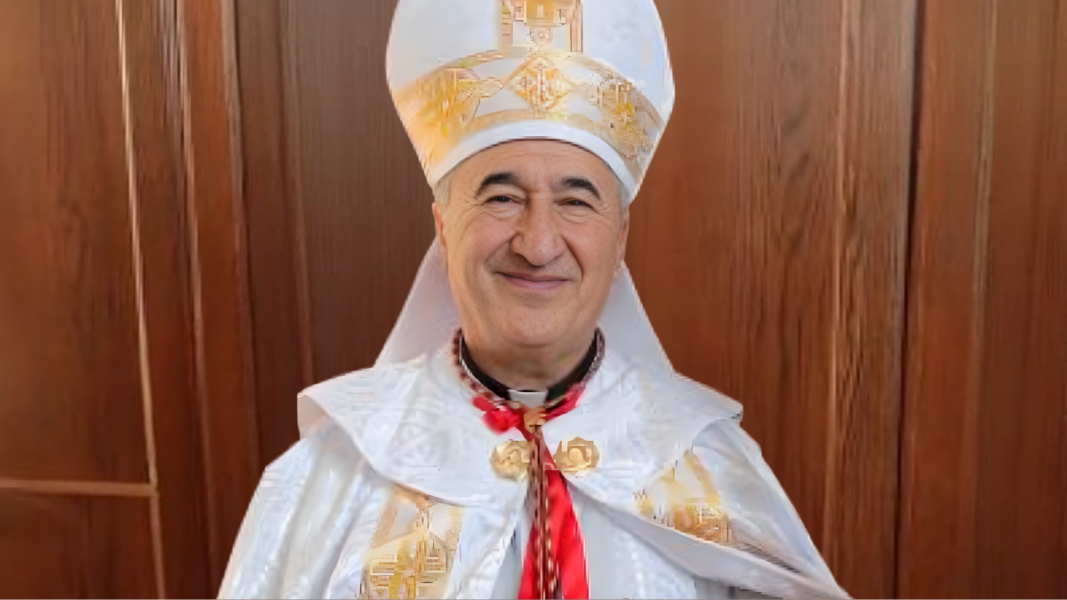
The bishop of the Chaldean eparchy in San Diego (United States), Emanuel Shaleta, is being investigated for alleged embezzlement of funds and accusations of improper personal conduct, in a process that combines civil investigation in the United States and canonical inquiry ordered by the Vatican.
According to The Pillar, the suspicions arose after detecting irregular movements in the accounts of St. Peter Chaldean Cathedral in El Cajón (California), which in practice also functions as the administrative center of the eparchy.
Financial irregularities under review
The origin of the investigation was the analysis of income from the rental of a parish hall, whose lease amounts to around $33,990 monthly. Members of the economic council warned that for several months the payments did not come from the tenant company, but from an internal account intended for charitable aid.
Subsequent review of the records would have revealed a system of cash payments managed directly by the bishop, with subsequent “reimbursements” to the parish made from the fund reserved for assistance to the poor. The documentation examined by the U.S. media outlet points to at least $427,000 being handled in this manner, although other questioned operations could significantly increase the figure.
Among the highlighted transactions are also cash income linked to stipends for perpetual Masses for the deceased, which would have been similarly compensated with charitable funds.
The bishop would have claimed that the cash was destined for charitable works in the United States and abroad, although—according to the published reports—no detailed justifications have been presented to substantiate those distributions nor a clear explanation of the procedure followed.
Civil investigation and Rome’s action
The alleged irregularities were reported in 2025 both to the apostolic nuncio in the United States and to the civil authorities of San Diego County. The criminal investigation remains open, and forensic accountants would be examining the financial documentation to determine if there are criminal liabilities.
In parallel, the Dicastery for the Eastern Churches ordered a canonical investigation, entrusted to the Archbishop of Los Angeles, José Gómez. According to sources cited by The Pillar, the bishop would have submitted his resignation at Rome’s request, although it has not yet been officially accepted.
The situation has generated bewilderment among Chaldean priests and faithful, both in the United States and in Iraq, in the absence of a definitive resolution.
Personal accusations and improper behavior
The dossier sent to the Holy See would also include complaints about personal conduct considered improper for a bishop. Among them, frequent visits to an establishment in Tijuana flagged in local media for activities linked to prostitution. A private investigator, a former FBI agent, claimed to have documented repeated trips by the bishop to that place during nighttime hours.
The report also records the existence of a joint bank account maintained for years with a woman who was a parish secretary in earlier stages of Shaleta’s ministry, as well as a close personal relationship that has raised concern among community members.
This would be added to other behaviors considered improper, such as the practice of palm reading during a pilgrimage, a conduct that the Catechism of the Catholic Church explicitly qualifies as a form of divination incompatible with the Christian faith.
To date, the bishop has not publicly responded to the accusations.
Tensions in the Chaldean hierarchy
The case has also highlighted internal tensions within the Chaldean Church. Sources cited by the U.S. media outlet indicate that the Chaldean patriarch, Cardinal Louis Sako, would have shown reservations about the accusations and tried to garner support for the bishop in Rome.
Some reports suggest that the patriarch would have considered the reaction to the alleged financial irregularities excessive and explored the possibility of Shaleta taking on another ecclesiastical role if he does not continue in San Diego.
However, neither the patriarch nor the bishop have offered detailed public explanations to date.
A small community facing a major challenge
The San Diego eparchy is one of the two Chaldean circumscriptions in the United States. It covers 19 western states of the country and serves more than 70,000 faithful with around twenty priests. It is part of the Chaldean Catholic Church, an Eastern sui iuris Church composed mostly of faithful of Iraqi origin.
The gravity of the accusations—both financial and personal—and the simultaneous intervention of civil and Vatican authorities place the community at a decisive moment. Beyond the individual responsibilities that may be determined, the case once again raises fundamental questions about transparency, economic oversight, and episcopal accountability in the life of the Church.