


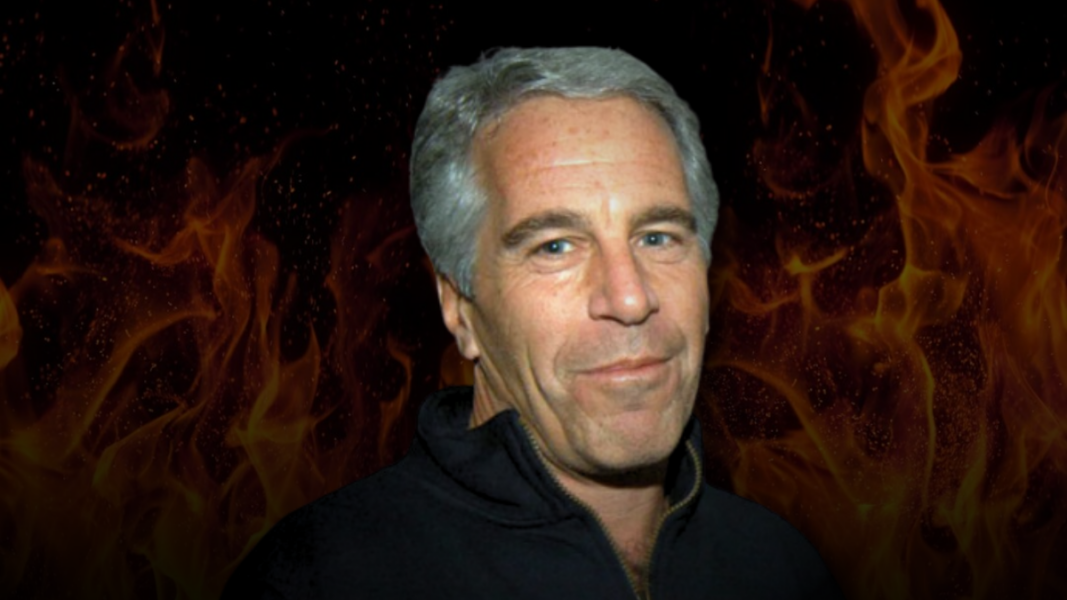
Among the many details that have come to light surrounding Jeffrey Epstein, there is one that has surprisingly gone unnoticed. In 2018, in an email addressed to Steve Bannon, Epstein copied verbatim Lucifer’s proclamation from John Milton’s poet Paradise Lost:
Here at least
We shall be free; th’ Almighty hath not built
Here for his envy, will not drive us hence:
Here we may reign secure, and in my choice
To reign is worth ambition though in Hell:
Better to reign in Hell than serve in Heav’n.
It is not a loose verse nor a learned irony. It is the doctrinal core of the Luciferian rebellion. It is the anti-theology of non serviam: freedom understood as a break with God, ambition elevated to supreme principle, reign conceived as unlimited dominion, and hell reinterpreted as a space of sovereignty.
In any ordinary character, it might pass as literary provocation. In Epstein, no. We are not talking about an eccentric loner, but an operator who accumulated sensitive information on political, financial, and academic elites; who compromised powerful people; who built a system of recruitment, recording, and archiving; and who maintained for years a structure of protection that is almost inexplicable. Too many gaps remain. For whom was he storing so much information? Whom did he really serve? For what purpose did he compromise key figures in global power?
The quote then acquires another density. It is not aesthetic: it is programmatic. The «reign secure» of the text fits with the creation of a shielded environment where the law seemed unable to penetrate. The ambition that «is worth it even in hell» corresponds to a logic where power is an end in itself, even if the cost is the destruction of innocents and the moral corruption of elites.
We know well that Satanism is not reduced to concrete rituals – which exist – but permeates environments and attitudes. There is an intellectual and operational adherence to Lucifer’s logic in Epstein: not serving God, not recognizing limits, instrumentalizing one’s neighbor, placing one’s own dominion as absolute.
Even more: the choice of recipient is not irrelevant. Steve Bannon has been described as a strategist obsessed with power, the construction of movements, and influence. Epstein, who knew how to detect weaknesses and temptations in men of power, places before him the exact motto: better to reign than to serve. The mirror of his greatest temptation.
Was Epstein a Satanist in a formal sense? Although graphic indications have been identified, there may not be (yet) accredited altars or Satanist ritual manuals in the declassified public documents. But the hypothesis becomes more than plausible when a life structured around dominion and corruption converges; an opaque network of information and blackmail that suggests higher, unclear purposes; and the explicit adoption of the Luciferian slogan as his own message.
Evil is not just individual disorder: sometimes it is a project, and sometimes it is a system. At times, it leaves symbolic traces that reveal the deep loyalty of those who embody it. The phrase quoted by Epstein was not a literary accident. Read in the light of his trajectory, it sounds less like a metaphor and more like an identification.