


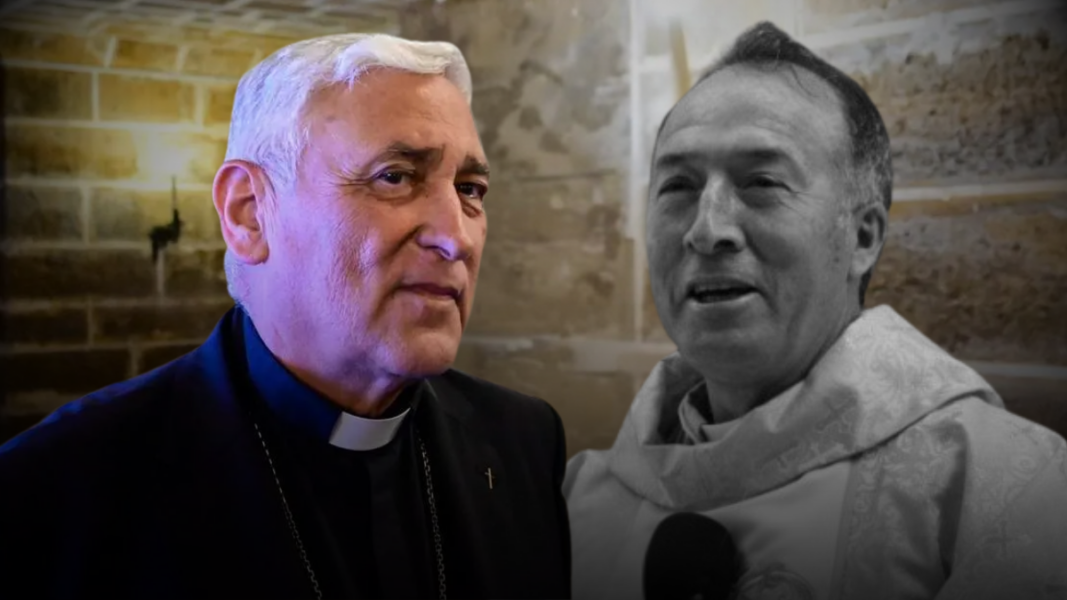
The canonical investigation into Bishop Rafael Zornoza has entered its decisive phase. According to Religión Digital, the Rota of Madrid would have concluded the preliminary investigation and already sent its report to the Archbishop of Seville, Monsignor Saiz Meneses, who now has to decide whether to propose the opening of a penal process before the Dicastery for the Doctrine of the Faith (DDF).
The case, which affects the former Bishop of Cádiz, thus advances to its next procedural stage after months of taking statements, legal analysis, and gathering testimonies.
Investigation concluded and decision in the hands of Seville and Rome
According to the published information, the preliminary instruction phase—whose objective is not to determine guilt, but to verify the consistency of the reported facts, their penal classification, and the possible prescription—would have already ended.
Sources consulted by the aforementioned medium point out that it is likely that the Rota has suggested the opening of a penal process, although the final decision corresponds to the metropolitan archbishop and, ultimately, to the Dicastery for the Doctrine of the Faith, which has jurisdiction in matters of delicta graviora and can even lift the prescription if it deems it appropriate.
With the delivery of the report, the most technical and reserved section of the procedure closes and the decision phase opens.
The «Lute case», an inevitable comparison
The progress of the Zornoza case inevitably contrasts with the situation of the well-known “Lute case” in Chiclayo (Peru), whose processing continues without resolution after more than two years of effective paralysis.
The complaint filed in April 2022 in the Diocese of Chiclayo led to a preliminary investigation and the sending of the file to Rome. Subsequently, there was talk of a “pro nunc” filing. Later, new actions, new statements, and requests for evidence occurred. Finally, in November 2025, the dispensation from the clerical state was granted to the denounced priest.
It is not recorded—to date—a public penal sentence. Nor a motivated penal decree that formally closes the procedure.
Years after the initial complaint, the penal outcome is not visible and the victims… have not had a response.
Two speeds under the same legal framework
The difference in rhythms is evident. While in the Zornoza case the preliminary investigation has developed with relative speed and has already been elevated to higher instances, in the Lute case the instruction remains without visible advances or effective communication with those who reported.
The Zornoza case now enters its decisive phase. The Lute case, on the other hand, continues waiting. Two files, two speeds, and one same demand: that the truth be clarified and that responsibilities, if any, be determined without undue delays.
It is not about comparing people. It is about comparing procedures.
The Church has emphasized in recent years its commitment to transparency and the protection of victims. But procedural coherence is the definitive proof of that commitment. Justice must not only be done; it must be done with homogeneous criteria.