


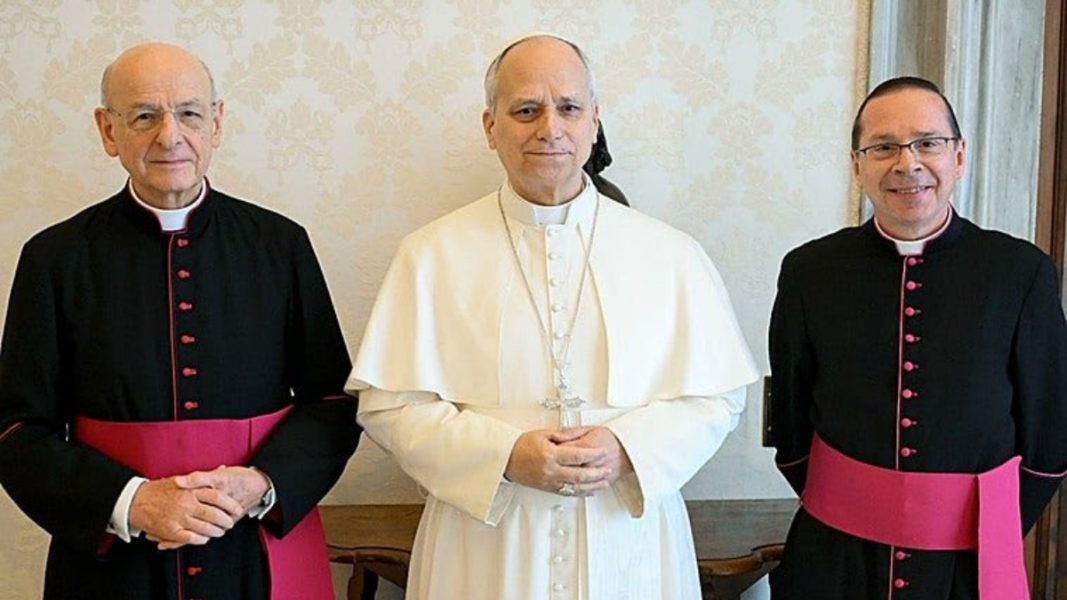
When Leo XIV had just been elected, no one knew exactly how the new pontificate breathed. After years of unpredictable twists, eloquent silences, and minimalist tailoring, the prudent thing was not to take risks. And Opus Dei, which knows a thing or two about strategic prudence, appeared at that first audience in low-profile uniform: dark suit, discreet clerical collar, institutional sobriety aesthetic. Neither too clerical nor too symbolic. Just enough not to make a mistake.
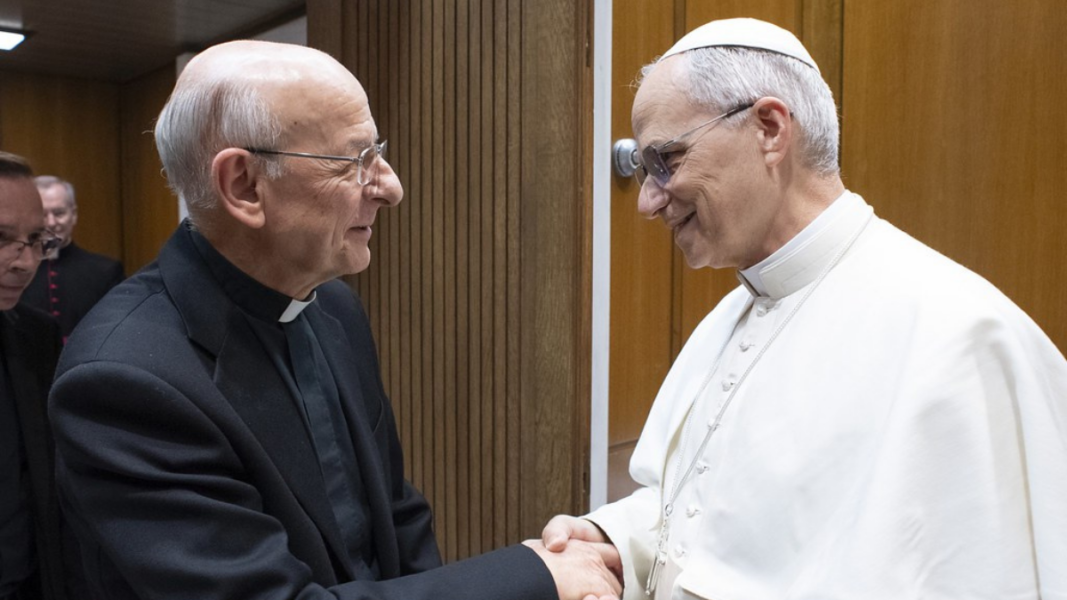
It was logical. The first days of a Pope are mined territory. A misinterpreted gesture can become a headline. A cassock can seem like a claim. And Opus Dei, which has learned to survive in all ecclesial climates, opted for textile prudence.
Months later, the scene changes. Leo XIV is no longer an unknown. He has been seen comfortable with traditional signs, classic forms, even with tailoring more careful than that of his predecessor. It no longer seems that a cassock will offend sensitivities. On the contrary. And then the black cassock reappears, the sash, the aligned buttons. The full version of elegant clericalism.
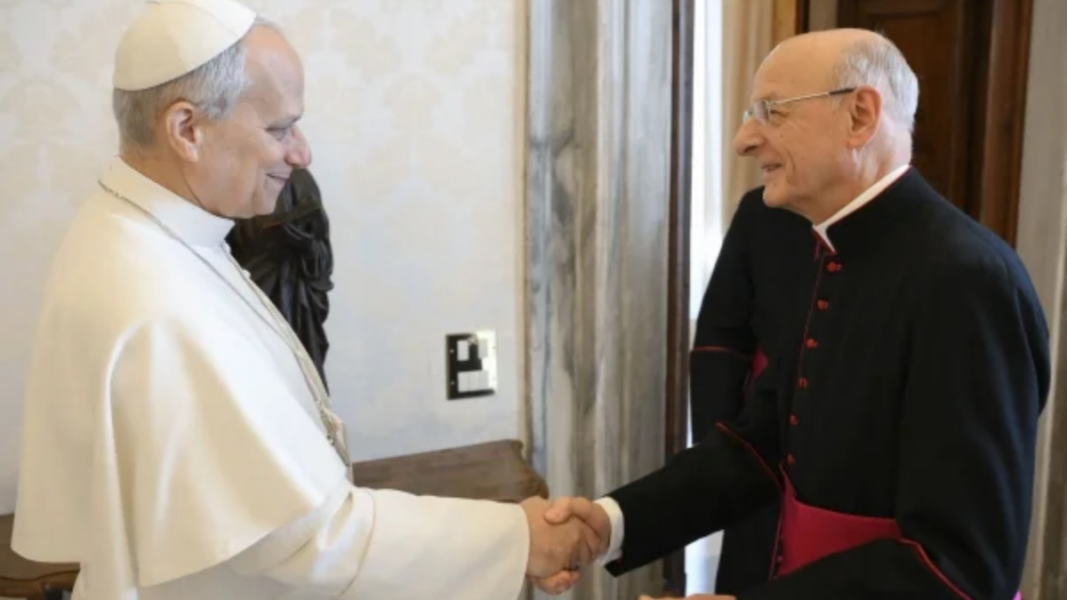
It is not a minor detail. It is a wordless declaration: now yes. Now it is convenient. Now it does not bother.
And there emerges the true spirit that one wants to portray. Opus Dei has always defended that it has firm principles, clear identity, stable mission. However, its way of presenting itself before ecclesial power has demonstrated admirable elasticity. The climate changes, the tone changes. The pontificate changes, the gesture changes. The atmosphere changes, the suit changes.
Groucho Marx’s phrase fits with uncomfortable precision: “These are my principles, and if you don’t like them, I have others.” Not because the Work lacks doctrine—it has it—but because its instinct for conservation is stronger than any identitarian theatricality. The cassock is not renounced; it is administered. It does not disappear; it is dosed.
In parallel, the Vatican adds its own nuance by calling “moderator” to someone who for decades was presented as prelate. It is not the same. It does not sound the same. It does not weigh the same. It is a silent, bureaucratic, surgical reduction. But that belongs to another plane. When the moderator decided to recover the cassock, he did not know what term the Sala Stampa would use. The choice of suit was calculation; the Roman etiquette, legal correction.
What is interesting is the whole: an institution that was born claiming sanctification in the middle of the world and that today seems specialized in sanctification in the middle of any wind. Cassock or clerical collar, prelature or moderation, exceptionality or normalization. There is always a version available.
The cassock does not come and go by carelessness. It comes and goes because in Opus Dei identity is not exhibited: it is managed.