


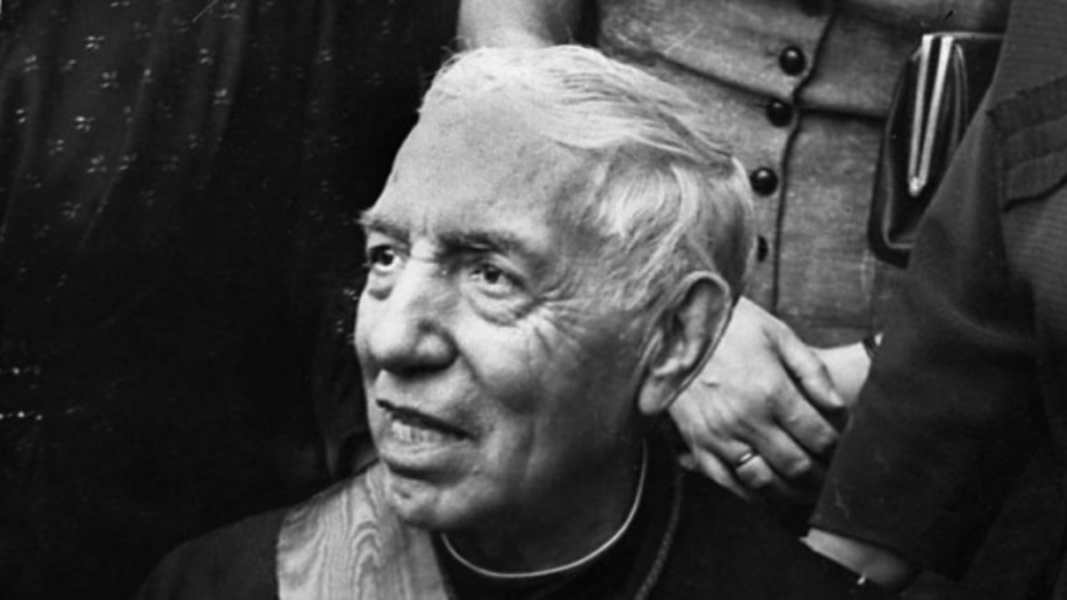
The Church in Spain will officially open on February 20 the canonization process for Father Ángel Ayala, Jesuit priest and founder of the Catholic Association of Propagandists (ACdP). The act will mark the formal start of the diocesan investigation into the life, virtues, and reputation for holiness of a key figure in the articulation of the Catholic laity in contemporary Spain.
Historical context and difficulties
Father Ayala’s trajectory developed during a period of deep political and religious tensions in Spain. During the Second Republic, the Society of Jesus was dissolved by the Government, forcing its members to reorganize under adverse circumstances.
In the months prior to the Civil War and during the conflict, Ayala had to hide to avoid reprisals. Despite those difficulties, he continued to exercise internal government functions within the Society and maintained his educational work as much as possible.
A profile of government and written teaching
Over more than three decades, he was superior of various Jesuit communities and left a broad written production focused on education, freedom, and the formation of committed Christian minorities for social transformation.
Born in Ciudad Real in 1867, he entered the Society of Jesus after studying Law and Philosophy and Letters, and was ordained a priest in 1903. He died in Madrid on February 20, 1960. His remains currently rest in the chapel of the San Pablo University Residence, next to the central headquarters of the ACdP.
A project centered on the formation of laypeople
Beyond biographical data, the trait that defined Father Ayala’s action was his decisive commitment to the intellectual and spiritual formation of laypeople. Convinced that the Christian presence in public life should be supported by solidly formed individuals, at the beginning of the 20th century he promoted a model of apostolate that sought to influence culture, education, and social debate.
In 1908, he gathered a group of young university students in Madrid to discern new forms of Christian commitment. From that initiative would emerge the National Catholic Association of Propagandists, the germ of the current ACdP, which would play a relevant role in the educational and media spheres for decades.
Among the works linked to that impetus are the Catholic Institute of Arts and Industries (ICAI) and the newspaper El Debate, which became a reference for Catholic thought in the first half of the 20th century.
With this step begins the ecclesial procedure that examines the spiritual and apostolic trajectory of the candidate, the first phase before an eventual recognition of heroic virtues.