


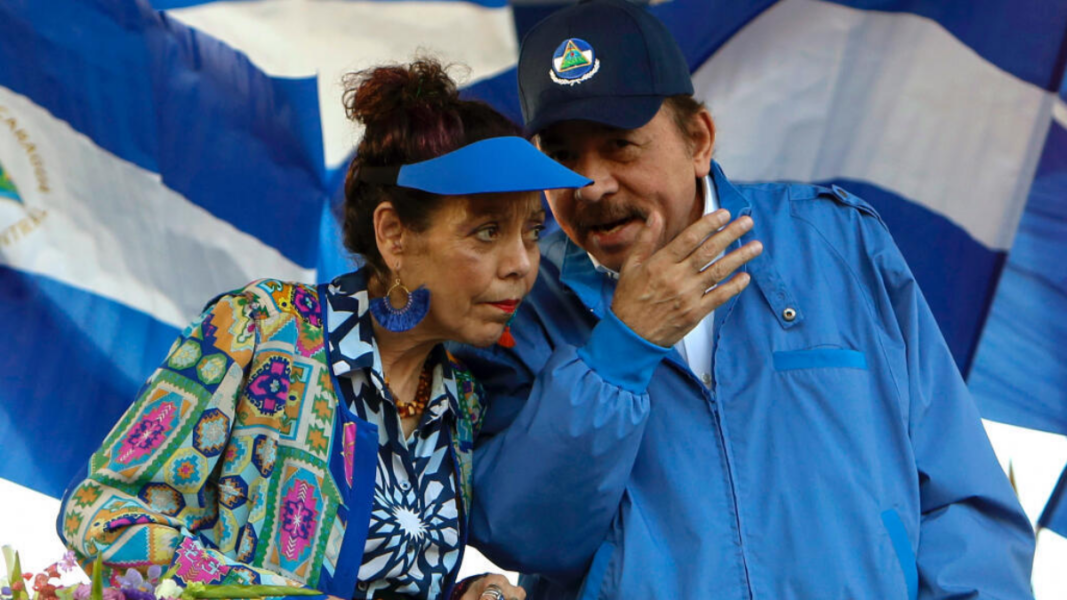
The dictatorship of Daniel Ortega and Rosario Murillo has expelled the priest José Concepción Reyes Mairena from the country, a trainer at the Major Seminary of León, according to Aciprensa. The measure occurred after an interrogation by migration officials at the Managua airport, when the priest was returning from a stay in Spain. The expulsion raises to 309 the number of religious who have been forced to leave the country or prevented from returning, concentrating the pressure on the Catholic Church in a new episode of institutional harassment.
Retention and interrogation at the airport
According to reports gathered by Nicaraguan media, Fr. Reyes was detained and questioned by Migration and Foreign Affairs personnel when attempting to enter the country. After questions about his trip and the reason for his return, the authorities denied him entry and returned him to Spain. The Diocese of León, for its part, has not issued an official explanation on this case as of the editorial deadline.
This procedure—detaining, interrogating, and expelling a priest at an airport—illustrates the use of state administrative mechanisms not to protect public order, but as a tool to limit the freedom of movement of religious ministers.
The ordination of new priests in jeopardy
Beyond the expulsion of already trained religious, it is noteworthy that the regime has blocked the ordination of new deacons and priests in several ecclesiastical jurisdictions. Researcher Martha Patricia Molina warned that pastoral turnover in dioceses such as Jinotega, Matagalpa, Estelí, and Siuna is practically paralyzed due to the lack of state authorizations.
Read also: In Nicaragua there is no respect for religious freedom
In these localities, the absence of resident bishops—several of them expelled in recent years—is compounded by the imposition of obstacles that prevent the normal continuity of priestly ministry. The decision to deny ordinations constitutes an indirect form of dismantling the Catholic presence in areas traditionally active in pastoral work.
A selective and prolonged pressure
While key sectors of civil society remain under supervision or control, the Church in Nicaragua suffers sustained pressure that goes beyond mere institutional tensions. The expulsion of religious is not an isolated phenomenon but part of a systematic pattern that combines the use of migration legislation with the suspension of sacramental activities and the cancellation of community spaces.
The official rhetoric of the regime—which at times refers to national reconciliation—contrasts with the concrete practice of increasingly broad restrictions on the exercise of ministry and freedom of worship. The recent expulsion of Fr. Reyes underscores that the state’s strategy does not end with administrative controls, but fully affects the organic structure of the Church and its capacity to sustain local communities.
Pastoral and community impact
The forced exodus of priests and religious not only reduces clerical presence in parishes, seminaries, or training centers, but also affects the sacramental life of entire communities. The impossibility of ordaining new ministers in a context of ongoing expulsions puts at risk the renewal of pastoral teams and sacramental care in regions that already faced shortages.
At the same time, the absence of clear institutional responses from some local ecclesiastical jurisdictions contributes to the perception of helplessness among the faithful and pastoral agents who remain in the country.
The Church in Nicaragua facing state measures
The expulsion of Fr. Concepción Reyes adds to a pattern of measures that restrict religious freedom and limit the ordinary functions of the Church. Although the regime claims to uphold discourses of tolerance and social harmony, administrative and migration practices reflect an approach of control and suffocation of critical or independent religious actors.
The way in which the Nicaraguan state has instrumentalized norms and procedures—such as migration and priestly ordinations—to condition ecclesiastical presence poses challenges not only pastoral, but also legal and human rights-related, in a context where religious freedom continues to be the object of deep tensions.