


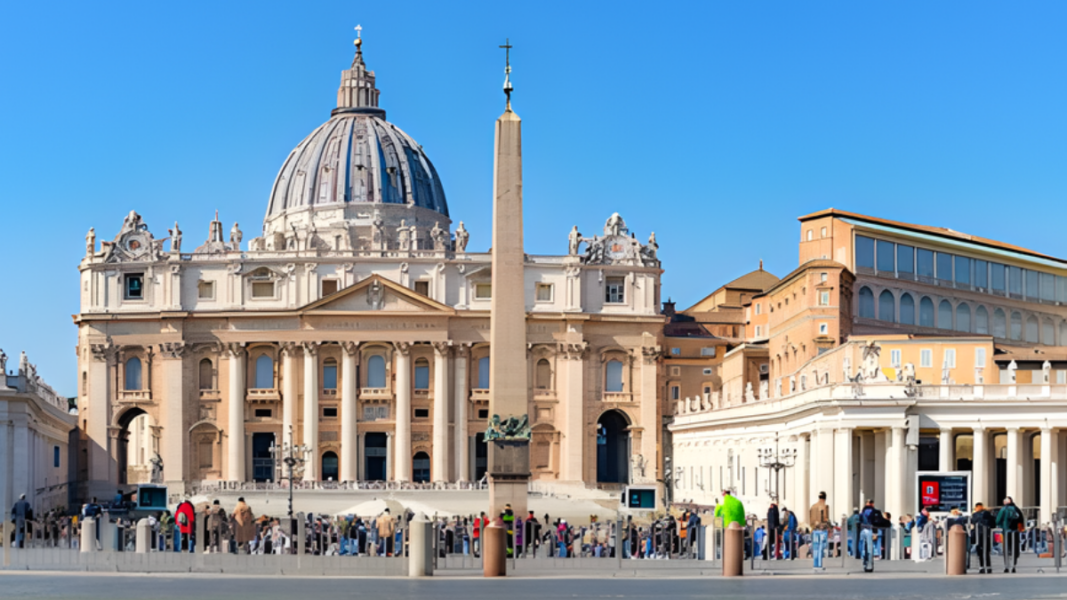
St. Peter’s Basilica is heading towards the fourth centenary of its consecration with a profound technological update aimed at ensuring its long-term conservation. According to ABC, the Vatican has installed the world’s most advanced permanent structural monitoring system, an initiative presented as part of the anniversary preparations and backed by the Italian company Eni.
The project will allow real-time monitoring of the temple’s structural behavior, detecting even inclinations of thousandths of a degree and minimal movements in walls and foundations. The goal is to anticipate any alteration before it can become an irreversible problem.
Technology to safeguard the temple
The system integrates geological, geothermal, and structural analyses following a previous documentary study that covered four centuries of interventions and historical plans, including drawings by Michelangelo and Bernini. For months, technical teams carried out thousands of hours of work using geophysics techniques and drone photogrammetry to map the subsoil and the surface of the monument.
Traditionally, the control of the basilica’s stability was carried out using artisanal methods, such as placing marble pieces in cracks to detect displacements. Now, digital monitoring will allow constant observation of the building’s “health” and preventive action.
Renovation with “creative fidelity”
Cardinal Mauro Gambetti, archpriest of the basilica and general coordinator of the 400th anniversary, explained that the commemoration seeks to combine historical memory and renewal. In his speech, he highlighted the need to safeguard the received legacy and, at the same time, update the way pilgrims experience spirituality in the temple.
Among the planned initiatives are the creation of the “Michelangelus” font, inspired by the Renaissance artist’s calligraphy; the premiere of a documentary on the site’s archaeological history; the incorporation of a new Stations of the Cross selected through an international contest; and the opening of new rooms to alleviate overcrowding.
Additionally, mobile applications have been developed that will allow following the ceremonies with simultaneous translation in more than 60 languages and managing real-time ticket reservations, in order to optimize visitor flow.
Protection of the temple and balance with openness
During the presentation, Gambetti also referred to the three vandalistic episodes recorded in the basilica in the last year and a half, the most recent when a man tried to urinate on the altar last October. The cardinal downplayed these events and explained that reflection is underway on how to protect certain spaces, although he insisted that the temple cannot become an excessively militarized place.
His words suggested that the current priority is mainly oriented towards the material conservation of the building through technological innovation, rather than a visible reinforcement of custody measures against possible profanations. The challenge, as he posed, lies in maintaining openness and the sense of freedom for visitors.
Read also: Profanations in St. Peter’s: alerts over repeated incidents and Gambetti’s responsibility
Nevertheless, the recent vandalistic acts leave doubt about whether the protection of the sacred space requires additional measures beyond structural modernization. While the technological investment focuses on preserving the temple’s physical stability for the coming centuries, the debate remains open on how to effectively ensure the due respect for the altar and the basilica’s most sensitive places.