


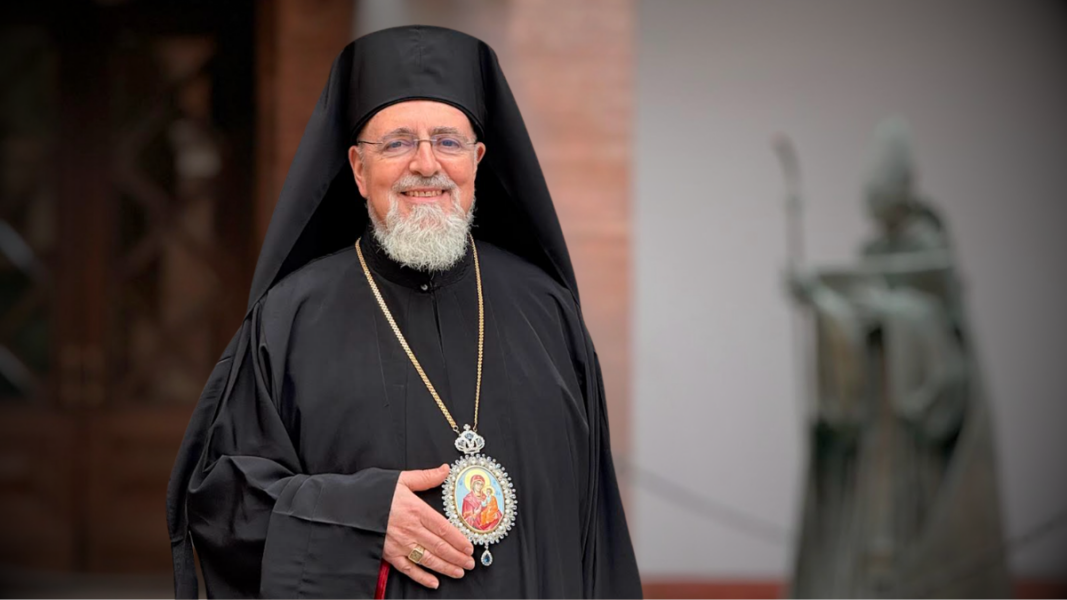
The Benedictine monk from Montserrat, in Catalonia, and until now apostolic exarch for Catholics of the Byzantine rite in Greece, Monsignor Manel Nin i Güell, has stated that “Spain has not only become highly secularized but has also become de-Christianized” in recent decades. He made this remark in an interview granted to the newspaper ABC, following his appointment by Pope Leo XIV as abbot of the Monastery of Santa Maria di Grottaferrata, located in the homonymous town about twenty kilometers southeast of Rome.
De-Christianization as the root of the vocational crisis
In the interview, Nin links the decline in religious vocations in Spain to a deeper social and cultural process than mere secularization. In his view, the problem does not lie in priestly celibacy, but in the religious transformation of the country over the last thirty or forty years.
The new abbot argues that the decrease in practicing Christian families has directly affected the transmission of faith, which impacts the lack of new vocations. In his analysis, the phenomenon is not limited to reduced religious practice, but to a broader loss of Christian references in public and private life.
From Montserrat and Greece to the gates of Rome
Manel Nin entered the abbey of Montserrat fifty years ago, the historic Benedictine monastery located on the mountain of the same name, in the province of Barcelona, one of the main spiritual centers of Catalonia and a place of great religious and cultural significance in Spain.
After a long period in Rome, where he was rector of the Pontifical Greek College—an institution dedicated to the training of Eastern Catholic seminarians—he was appointed in 2016 as apostolic exarch for Catholics of the Byzantine rite in Greece, with headquarters in Athens. From there, he worked in a context marked by the Catholic minority and dialogue with the Greek Orthodox Church.
Now he assumes responsibility for Grottaferrata, an abbey founded in the year 1004 by Saint Nilus of Rossano, before the schism between East and West. The monastery belongs to the Byzantine tradition and celebrates its liturgy in Greek and Italian, maintaining an Eastern identity in full communion with the Holy See. It is directly subject to the Vatican and constitutes a unique presence of Eastern Christianity in the Roman environment.
Renewing a millennial abbey
Leo XIV has entrusted Nin with promoting the renewal of the monastic community, which currently has five monks. Grottaferrata is known for its historic library, its editorial tradition, and its work in restoring manuscripts, considered one of the most important in Italy.
The new abbot has recalled that Leo XIII described the monastery as “a precious stone set in the pontifical tiara,” an image that he now aspires to recover through the strengthening of community life and the spiritual and cultural revitalization of the abbey.