


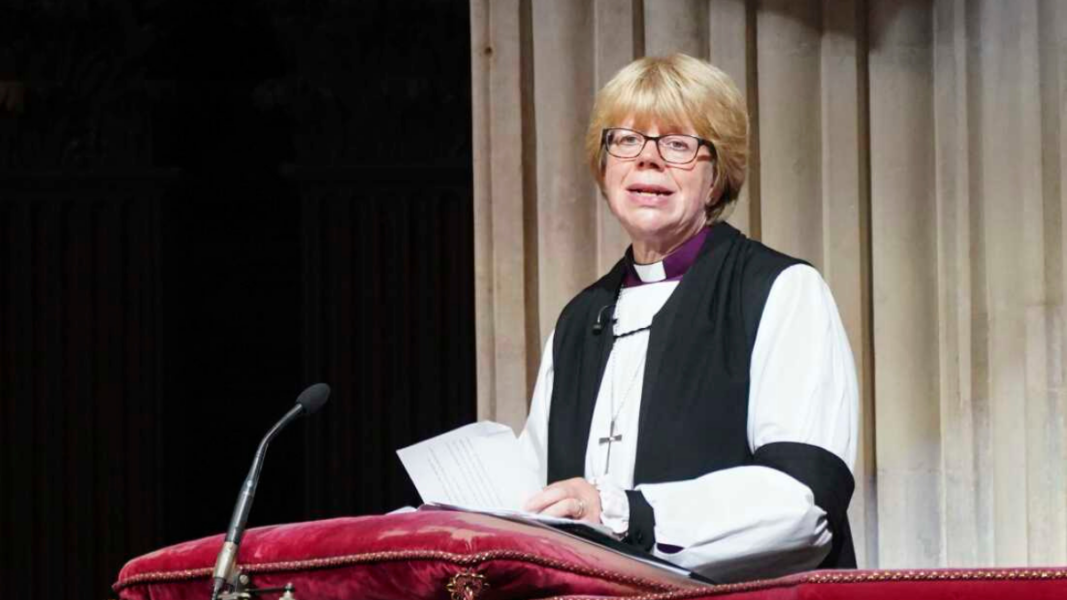
The Church of England has decided to formally end the “Living in Love and Faith” (LLF) process, initiated in 2017 to address the issue of sexuality and marriage. However, the closure of the program does not mean the end of the debate, but rather its reconfiguration under the leadership of the Archbishop of Canterbury, Sarah Mullally, who has promoted the creation of new structures to continue studying the matter.
The General Synod approved that LLF conclude officially in July, but at the same time supported the establishment of a new Working Group on Relationships, Sexuality and Gender, as well as a Pastoral Advisory Group that will advise the bishops in specific cases. The debate is not resolved; it changes format.
From the reflective phase to the legal phase
LLF was born as a broad process of reflection on identity, sexuality, relationships and marriage. In 2023, it led to the introduction of the “Prayers of Love and Faith”, public prayers for same-sex couples within ordinary services, without modifying the Anglican doctrine on marriage.
The new stage promoted by Mullally is no longer presented as an open dialogue, but as a structured analysis. The Working Group will have the mandate to study the canonical procedure necessary to authorize eventual specific blessing services and evaluate what legislative changes would be necessary to allow the ordination or ministry of clergy civilly married to same-sex persons.
The step is significant: the debate moves from the pastoral-discursive plane to the legal-institutional terrain.
Leadership in a fragmented scenario
During the synodal debate, Mullally acknowledged the accumulated wear and internal wounds. She admitted that the process has been difficult and that it has touched core issues of theological identity. Her intervention avoided both rupture and imposition.
The Archbishop of York, Stephen Cottrell, acknowledged that the Church remains “deeply divided” on issues of sexuality and marriage. The Synod approved a motion that recognizes “the pain that many have felt during the LLF process, especially LGBTQI+ people”, while thanking for the work done in these years.
The vote showed that there is not sufficient consensus either to expand liturgical recognition or to reverse what was approved in 2023. In the face of that reality, the leadership opts to reorganize the process instead of forcing an immediate definition.
Intact doctrine, latent tension
For the moment, the traditional doctrine of marriage remains unchanged. Independent blessing ceremonies are not authorized nor is same-sex marriage introduced. But neither is the future possibility of normative changes closed.
The adopted strategy avoids an immediate fracture within the Church of England and in the global Anglican Communion, where several provinces have shown concern about the doctrinal evolution in sexual matters.
LLF closes as a program. The underlying issue remains open. Under Mullally’s governance, the Anglican Church enters a more technical and less declarative phase, in which the debate does not disappear, but is channeled towards permanent study structures.