


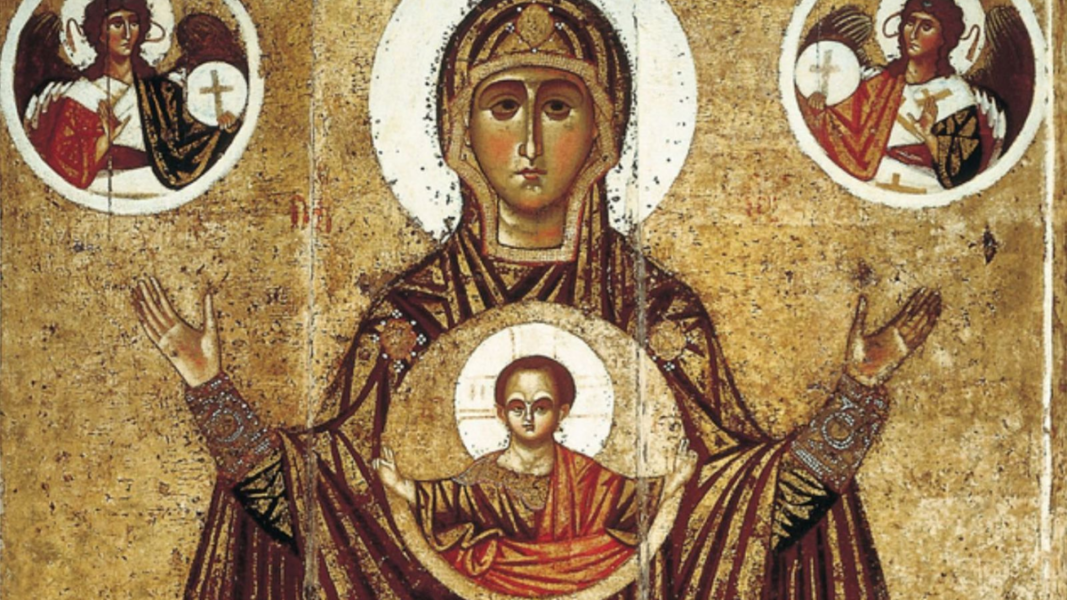
A few days after the presentation of the document “Mater Populi Fidelis,” a friend was dialoguing with some Pentecostal pastors about business matters. At the end of the conversation, one of the pastors, knowing that his interlocutor was Catholic, said to him with frenzy: “Have you seen? Finally, the Pope has put Mary in her place”… This joy of the Protestants, however, found no echo among Catholics; quite the contrary! In their pastoral work, priests have verified the confusion, sadness, and displeasure of a huge number of children of the Church. The question that arises from these pastoral experiences is: quid prodest? Who benefited from the recent document on Mary’s Co-redemption and Universal Mediation? Did it confirm the sheep of Peter’s flock in the faith? Or rather, did it consolidate in their error those who already antipathized with Her?
This reality, verifiable by anyone truly committed to pastoral work, led me to formulate a sincere and straightforward opinion regarding a factor that seems to be at the root of all the dust raised by the Document, and that is the fact that the Holy Father put his signature on it – an innovative gesture never before used in a doctrinal note – thereby elevating the text to the category of ordinary pontifical magisterium. Being Leo XIV the pope of unity, as his episcopal motto “in Illo uno unum” clearly proclaims, I think it would have been more appropriate to act with prudence, leaving sensitive matters and those with scandalous repercussions for a moment of maturity that has not yet been reached.
I would like to offer next some theological and pastoral observations for which I believe the Pope would have done well not to sign the document, and even better if he had not allowed it to be published in the terms in which it was drafted.
First of all, let us recall what is very well known. Indeed, many children of the Church consider it inopportune that the Holy Father endorsed a document on Our Lady authored by Card. Fernández, the sadly famous author of two libelous works whose inappropriate and crudely erotic content has scandalized a multitude of the faithful. The law of the flesh opposes the law of the spirit (cf. Gal 5:17), so verifying that the ever Virgin Mary, Immaculate Queen of heavenly purity, has been the object of considerations by someone so familiar with the most primary animal instinct wounds the sensitivity of those who love her. Most Holy Mary and Fernández, in that aspect, are two realities that present themselves to the eyes of the baptized as so antagonistic that, as is said in French, “ils hurlent de se trouver ensemble,” they scream to find themselves together. No one touches Our Mother, much less a specialist in what some have qualified as “porno-theology.”
On the other hand, this same Cardinal, from a theological point of view, does not possess the security and seriousness necessary to serve the Supreme Pontiff, called to confirm his brothers in the faith. His equivocal and confusing style easily obstructs the manifestation of the truth, which must be clear, beautiful, and luminous. Not to mention his disputed orthodoxy. His interventions throughout the previous pontificate showed his capacity to “make a mess,” but not only at the pastoral level, but doctrinal. It is striking and perhaps alarming that Pope Leo has not taken that fact into account. How not to recall the infinite discussions and divisions that followed the publication of Amoris Laetitia or Fiducia Supplicans? If it is true that by their fruits you shall know the tree, how to entrust Fernández with a document on such a delicate theme and not expect it to cause confusion, sadness, and disillusionment? That is what happened, and the explosion of negative and dissenting manifestations on social networks has demonstrated it. To seek the promotion and confirmation in unity in the Church – so polarized today – and to use Fernández as a trusted theologian is paradoxical.
***
The two preceding observations are public knowledge and have been mentioned in a thousand ways on the web; however, it seemed indispensable to synthesize them before proceeding. It is now a matter of pointing out some reasons related to the text that strongly advise against the Pope’s signature and its very publication.
***
With respect to the title of Co-redemptrix, the “note” is more direct than when dealing with Mary’s mediation. And it will be on Marian co-redemption that we will focus first.
The sentence issued against the title of Co-redemptrix is expressed in its numeral 22 as follows: “Taking into account the need to explain Mary’s subordinate role to Christ in the work of Redemption, the use of the title of Co-redemptrix is always inopportune to define Mary’s cooperation. This title runs the risk of obscuring Christ’s unique saving mediation and, therefore, can generate confusion and an imbalance in the harmony of the truths of the Christian faith.”
Before analyzing the text, it is necessary to bring to the fore three quotations omitted in the “note,” the first biblical, the second patristic, and the third magisterial. Such omissions could be justified by the need to limit the extent of the text, but given the volume of words used to disqualify the title of “universal mediator of all graces,” the question that arises is whether the omission was not caused by a bias in the use of sources, characteristic of Fernández’s sophistic-theological “skating.” Indeed, the “forgotten” texts would have caused great embarrassment to the author of the “note,” like a stick in the wheels in his desire to discourage (because in the end neither is it prohibited nor condemned but only discouraged from a prudential point of view) the term Co-redemptrix.
As we know, the theology of co-redemption draws its oldest and deepest roots in Pauline theology (Col 1:24): “Nunc gaudeo in passionibus pro vobis et adimpleo, ea quae desunt passionum Christi in carne mea pro corpore eius, quod est ecclesia,” in the Latin version of the Neo-Vulgate. In Spanish: “Now I rejoice in my sufferings for your sake: thus I complete in my flesh what is lacking in the sufferings of Christ, for the sake of his body, the Church.” This text of Scripture, inexplicably absent in Fernández’s doctrinal note (it is only cited as a biblical reference once in conferetur), demands a correct theological exegesis for the harmonious understanding of the truth revealed by St. Paul on the co-redemption of the faithful, in the light of the unique redemption wrought by Christ, also affirmed by Scripture in an indisputable manner. At first glance, it seems like an insoluble puzzle, but it is not. One must start from the fact that both Christ’s unique redemption and the cooperation of Christians in his redemptive work are two revealed truths, equally respectable one as the other.
In reality, Jesus, the unique Redeemer, did not want to carry out his work of salvation alone, calling men to the vocation of associating themselves with it, and both realities are attested in Revelation. It is necessary, therefore, that theology first and the magisterium afterward affirm Christ’s unique redemption, as well as lead minds to understand the way in which the faithful in general and Most Holy Mary in particular cooperate in Christ’s Redemption, being authentic co-redeemers, with the prefix “co-” understood as defined by dictionaries, namely, “together with” or simply “with.” In a forthcoming publication, we will return to this Pauline pericope, as a revealed datum of inescapable importance for the theme of co-redemption.
This biblical presupposition is the basis of the bold patristic intuition regarding Mary’s mission in the redemption from Eve’s guilt and that of the entire human race. Prominent figures, such as St. Justin, Tertullian, and St. Irenaeus, considered the Mother of Christ as the New Eve. In particular, the Bishop of Lyon, declared a Doctor of the Church by Pope Bergoglio and considered the father of systematic theology by Benedict XVI, was explicit and conclusive in determining her co-redemptive attributions. Here are his words:
“In correspondence we also find the Virgin Mary obedient, when she says: ‘Behold your servant, Lord: let it be done to me according to your word’ (Lk 1:38); whereas Eve was disobedient, for she disobeyed while still a virgin. For as the former had a husband, Adam, but was still a virgin […] having disobeyed, she became the cause of death for herself and for all humanity; so also Mary, having a man as husband but being a virgin like the former, by obeying became the cause of salvation for herself and for all humanity (Heb 5:9). […] The Lord, becoming the Firstborn of the dead (Col 1:18), received in his bosom the ancient fathers to regenerate them for the life of God, being he the principle of the living (Col 1:18), for Adam had been the principle of the dead. […] Thus also the knot of Eve’s disobedience was untied by Mary’s obedience; for what the virgin Eve bound by her unbelief, the Virgin Mary unbound by her faith. (St. Irenaeus of Lyon, Adversus haereses, III, 22, 4: PG 7/1, 959C-960A)
It is striking the title of “cause of salvation” attributed by St. Irenaeus to the Virgin Mary in relation to herself and the entire human race, as the new Eve, that is, the true mother of the living in Christ, as many Fathers of the Church recognize her. The expression “cause of salvation,” in Greek aítios sōtērías (αἴτιος σωτηρίας), is the same used by the Epistle to the Hebrews in reference to Jesus, who “brought to perfection, became, for all who obey him, the cause of eternal salvation” (Heb 5:9). This makes it well understood to what extent St. Irenaeus considers the existence of a common and inseparable causality – although subordinate on Mary’s part – in the work of salvation on the part of Jesus and Mary; both are causes of salvation just as Adam and Eve were jointly causes of ruin.
On the other hand, this doctrine of Irenaeus and the title “Cause of Salvation” were happily “magisterialized” by the conciliar fathers in Lumen Gentium: “The holy Fathers think that Mary not only was a passive instrument in God’s hands, but that she cooperated in the salvation of men by her free faith and obedience. As St. Irenaeus says, ‘by obeying, she became the cause of salvation for herself and for the whole human race.’” (LG, 56)
This title thus consecrated in the tradition and in the magisterium of the Church was surprisingly omitted by the “note,” in which, however, reference is made to the mariology of the Bishop of Lyon in footnote 11 where his doctrine is presented summarized and attributed, with some imprecision, to a group of Fathers of the Church: “if Eve brought perdition, Mary’s faith brought us salvation” (doctrinal note, note 11). Observe well, reader, that between “bringing salvation” and being “cause of salvation” there is a significant difference, just as anyone can bring water from the spring, but only the spring is the cause of water reaching everyone. Let us try to find out next the reason for that clamorous “lapse.”
In number 20 of the Doctrinal Note, Fernández mentions Ratzinger in an uncertain way, without direct quotation or conferetur, and makes him say, or Fernández says as if Ratzinger were speaking: “The then Cardinal mentioned the Epistles to the Ephesians and to the Colossians, where the vocabulary used and the theological dynamism of the hymns present, in such a way, the unique redemptive centrality and the fontality of the incarnate Son that the possibility of adding other mediations is excluded.” Still in the same paragraph, the note adds that the biblical texts alleged to confirm the preceding assertion, referring to the uniqueness of Redemption on Christ’s part, invite “to place any creature in a clearly receptive place and to a religious and delicate caution when posing any form of possible cooperation in the sphere of Redemption.” In this obscure and contradictory paragraph, typical of Fernández’s sophistic-theological style, first the possibility is denied and then caution is recommended before a possible cooperation of the faithful in the sphere of Redemption. Well, the denial alleged first is an erroneous datum in the light of the doctrine of St. Paul and St. Irenaeus, the latter sealed magisterially by Lumen Gentium, and the subsequent observation regarding “religious and delicate caution” is superfluous, since no Catholic mariologist is known who has treated Marian co-redemption without first having concerned himself with placing the Virgin’s cooperation as dependent and participated in that of Christ in the light of Col 1:24.
Attention must be called to the fact that in this confusing paragraph is contained the only theological argument – if it can be called that – adduced by the Note to disqualify the term “co-redemptrix”; the other reasons are circumstantial or prudential or of supposed authority. What theological consistency does the disqualification of the term “Co-redemptrix” have then? The answer is straightforward: none. It may be due to prudential motives, never to theological ones.
Still regarding the mentioned circumstantial or prudential arguments or of supposed authority, there are, on the one hand, those alleged by Ratzinger in his secret vote, now revealed, of a rather prudential nature, and we will return to them in a forthcoming publication. To those must be added those alleged by the “note” itself that attempt to summarize the mentioned prudential reasons. However, there are also some quotations from Francis, one of which could be adduced as an argument from authority. Indeed, Bergoglio said: “Christ is the unique Redeemer: there are no co-redeemers with Christ.” If that is taken literally and we do not discount the typical imprecision of the spoken language of a non-learned man, how to interpret Irenaeus’s theology regarding Mary’s saving role and the title coined by him of “cause of salvation”? And furthermore, what explanation could there be for St. Paul’s statement in Col 1:24? If Mary was the cause of salvation for herself and for the entire human race, how to deny that in some way she redeemed with Christ? If St. Paul completed what was lacking in the Lord’s passion for the Church, how to deny him a co-redemptive role? These questions become even more pressing if we consider the Pontifical Magisterium, especially the statement of Benedict XV in his Letter Inter Sodalicia, also omitted by Fernández: “[Mary] in communion with her suffering and dying Son, endured pain and almost death; she abdicated her maternal rights over her Son to obtain the salvation of men and, to appease divine justice, insofar as it depended on Her, she immolated her Son, so that it can be rightly affirmed that she redeemed the human race with Christ” (BENEDICT XV, Litterae Apostolicae, Inter Sodalicia, March 22, 1918, AAS 10, 1918, 182).
If She redeemed the human race, She can be considered in sound logic a redeemer with Christ. Redeemer is one who redeems, say the dictionaries. If the term co-redeemer means “redeemer together with” or “redeemer with,” and if Mary redeemed the human race with Christ, how to deny her the title of “co-redemptrix”? It would be a basic linguistic error… And if Mary is co-redemptrix in the strength of the term, how to deny that co-redeemers with Christ exist? In that sense, one must ask: would Francis and his theologian Fernández be in communion with St. Paul, St. Irenaeus, and Benedict XV? A positive answer would be more than rash. Therefore, we conclude that there are no valid reasons of authority to disqualify the title of “Co-redemptrix” as “inopportune”; on the contrary, there are well-founded theological and authority reasons to attribute it to her. Reasons these that remain valid, as we will have the opportunity to show.
It is now necessary to consider the pastoral value of the term “inopportune.” Indeed, from this point of view, the fateful qualifier should not even be taken into consideration in the light of St. Paul’s teaching in the second to Timothy: “praedica verbum, insta opportune, importune, argue, increpa, obsecra in omni longanimitate et doctrina” (2 Tim 4:2). It is clear that if a doctrine and the title that represents it are good in themselves, one must insist on them opportunely and inopportunely, and this is the word of God. On the other hand, the “inopportune” with which the title of Co-redemptrix is intended to be disqualified is only Fernández’s word.
It is possible to conclude therefore that the qualifier “inopportune” is neither theological nor pastoral; it is only prudential. And if it is prudential from a prudence that is neither theological nor pastoral, what kind of prudence is it?
Nevertheless, going to the etymological roots of the term, which still today determine its meaning in common language, “inopportune” means “that occurs outside the appropriate time.” To say that the title of co-redemptrix is inopportune is to affirm that this title is being said outside the appropriate time. And this does not affect the title itself, but the occasion to use it. This occasion, by nature mutable, since it refers to time, and as Ecclesiastes reminds us (3:1-2), times change: “There is an appointed time for everything, and a time for every affair under the heavens: A time to be born, a time to die.” In that sense, to affirm that the title Co-redemptrix is “always inopportune,” as the doctrinal note does, is a certain contradiction and indiscreet pretension, as if Fernández had foreknowledge of all past, present, and future times. And that even more when many popes, exercising their teaching function, used it; were they also inopportune?
To put the finishing touch to this first article on a theme about which there is still much ink to spill, it would be praiseworthy to recall a maxim that, so to speak, branded with fire the genuine members of the Vatican curia: “nunquam inducere in errorem Summum Pontificem.” For that very reason, the ancient collaborators of the popes studied the subjects with care, reviewed them with the sharpest attention, all to avoid the Pope erring because of his helpers. As we have seen and as we will see again, Fernández does not apply that maxim rigorously. His text, signed by Leo XIV, bears the seal of confusion, imprecision, partiality, a shifting formulation, clamorous omission, and a posture of imprudent discontinuity with the magisterial and theological tradition, which we will analyze more detailedly in the next publication.
It remains to supplicate the Most Holy Virgin Mary, Cause of Salvation and Redeemer of the human race with Jesus, that she enlighten the Pope in the choice of his collaborators, especially those who are to defend the Doctrine of the Faith, for it is around it that true ecclesial unity is built. In these times of division, in which talk is made of two Churches in confrontation, the Pope of “in Illo uno unum” was initially seen as a promise of peace. However, the unusual and unnecessary signature on Fernández’s “note” has been for many the first disillusionment. The lack of caution of a Pope not versed in theology, who in his first steps assumes toward the Virgin airs not very benevolent, must be promptly remedied. Only in that way will he recover the confidence of the people.
Miguel Guzmán, Pbro.
Doctor of Theology
***
Post scriptum: This article was finished when we learned of Fernández’s recent interview with Diane Montagna, in which the controversial cardinal “reinterprets” the text of Mater Populi Fidelis with respect to the “always inopportune” with which the title of Co-redemptrix is disqualified.
First of all, he affirms that “always inopportune” was used exclusively in reference to the current moment (!). And he attributes to the adverb “always” a meaning that is not found in any dictionary by saying that in the “note” it comes to mean “from now on” (!!). Fernández continues in his nonsense alleging that “at the bottom of that word [Co-redemptrix], there are elements that can be accepted and continue to be defended.” Despite this – he continues – the “expression [‘Co-redemptrix’] will not be used either in the liturgy, that is, in the liturgical texts, or in the official documents of the Holy See.” Finally, he affirms that many mariologists were consulted, thus contradicting previous statements by Fr. Maurizio Gronchi, consultant of the Dicastery for the Doctrine of the Faith, who assured that “no collaborating mariologist could be found” to work on the document. This last information has been confirmed to us by internal sources of the Dicastery.
Let us quickly analyze this sum of nonsense.
The first is linguistic and proves the supreme ignorance of the supposed theologian Fernández. To affirm that “always” means “from now on” goes beyond fiction. The adverb “always” comes from Latin (semper) and means in any dictionary “at all times,” therefore, it encompasses the past, present, and future. Fernández tries to wriggle out, explaining the inexplicable. This is serious. If he does not know the meaning of words in his mother tongue, how does he dare to sign a text of such gravity on such a sensitive theme? Even more, under what conditions does he pretend to be the Pope’s theologian? It is as if a painter did not know the difference between a brush and a spatula, mind-blowing! But Fernández not only dares to write, not only pretends to do theology, but induces the Pope into error by making him sign an equivocal, highly polemical document that has also discredited him before the people based on a term misused. If this is the Pope’s friend theologian… deliver him, Lord, from his friends!
In the second place, the shamelessness of affirming the opposite of his advisor… one says that no mariologist was consulted, the other that “many, many”; which of the two is indebted to the truth? This contradiction speaks to us of a disintegrated, poorly organized, and little honest team that, with all probability, has presented a document on the Virgin without the participation or support of the most competent mariological instances in the Church… And are these the defenders of the faith, the theological referents of Pope Leo?
In the third place, the embarrassment he has caused the poor Pope Leo. Indeed, “quod scripsi, scripsi,” what is written, written is, as Pilate said. In the document it is written “always inopportune” and a falsified interpretation by Fernández given in an interview cannot correct that error. With that “always” Pope Leo is disqualifying his predecessors and an important current of Catholic theology. It has been a rash gesture on the part of the current pontiff, without a doubt, and quite indelicate since, as was said, he is not a theologian, nor a distinguished intellectual, and, moreover, he has just arrived.
In the fourth place, it confirms what was affirmed in the article, that is, the avalanche of reactions contrary to the document. If it were not so, Fernández would not have backpedaled, at least partially. The one responsible for the Pope’s discredit now tries to solve the crisis ineptly, making it even worse. The remedy has been worse than the disease, as is popularly said.
In summary, Fernández’s recent interview only comes to confirm the main theses of the article: the Platense sophistic-theologian is not competent either as a writer or as a theologian and has had the audacity to induce the Pope into error, he has covered him with discredit and now tries to put out the fire by alleging the impossible, that is, making the term “always” a linguistic lie. Intolerable. May the good God will that this sovereign blunder cost Fernández his position, it would be for his good and for the good of the whole Church.
Note: Articles published as Tribuna express the opinion of their authors and do not necessarily represent the editorial line of Infovaticana, which offers this space as a forum for reflection and dialogue.