


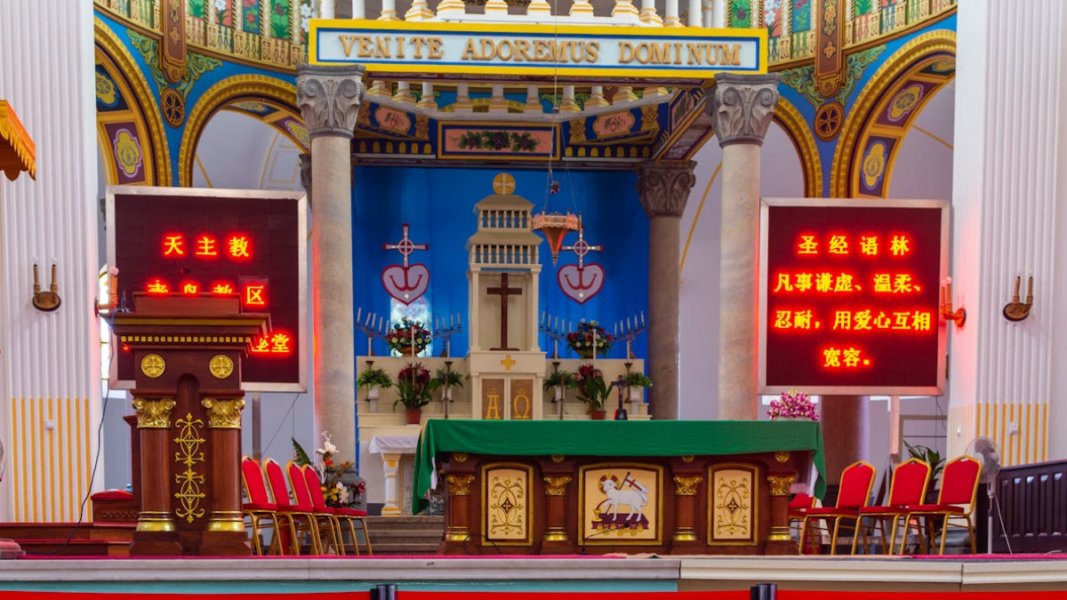
The Episcopal Conference of the Catholic Church in China, an organization recognized by the Government—but not fully by the Holy See—has expressed its explicit support for the recent measures adopted by Beijing that strengthen state control over the clergy, forcing Catholic priests and religious to surrender their passports to monitor their movements in the country. This is reported by the Italian media Il Timone, which highlights the institutional relevance of this stance.
The episcopal pronouncement introduces a significant element in the application of the new administrative provisions, as it represents not only a governmental measure but also formal endorsement from the state-recognized ecclesial structure.
Adherence to “national and public interests”
According to the published information, on February 4, the Episcopal Conference expressed its support for the state regulations and reaffirmed that religious practice must conform to the country’s “national and public interests.”
The statement is based on Article 40 of the Regulations on Religious Affairs, which states that collective activities must take place in officially registered places and under the exclusive direction of clergy authorized by the State, prohibiting ministerial exercise to those not enrolled in the official system.
This positioning consolidates the line of institutional cooperation between the official Church and civil authorities within the framework of the current religious policy.
Sinicization and pressure on unregistered communities
The episcopal support is inscribed in the “Sinicization” policy promoted by President Xi Jinping since 2013, aimed at integrating religions within the ideological and legal framework defined by the Communist Party.
In this context, Catholic communities that remain outside the state registry—traditionally linked to direct fidelity to Rome—face an increasingly restrictive scenario, with possible sanctions including fines, closure of places of worship, and detentions.
Various international organizations have pointed out the increase in pressure on religious freedom in China, placing the country among those with the highest levels of restrictions for Christians.