


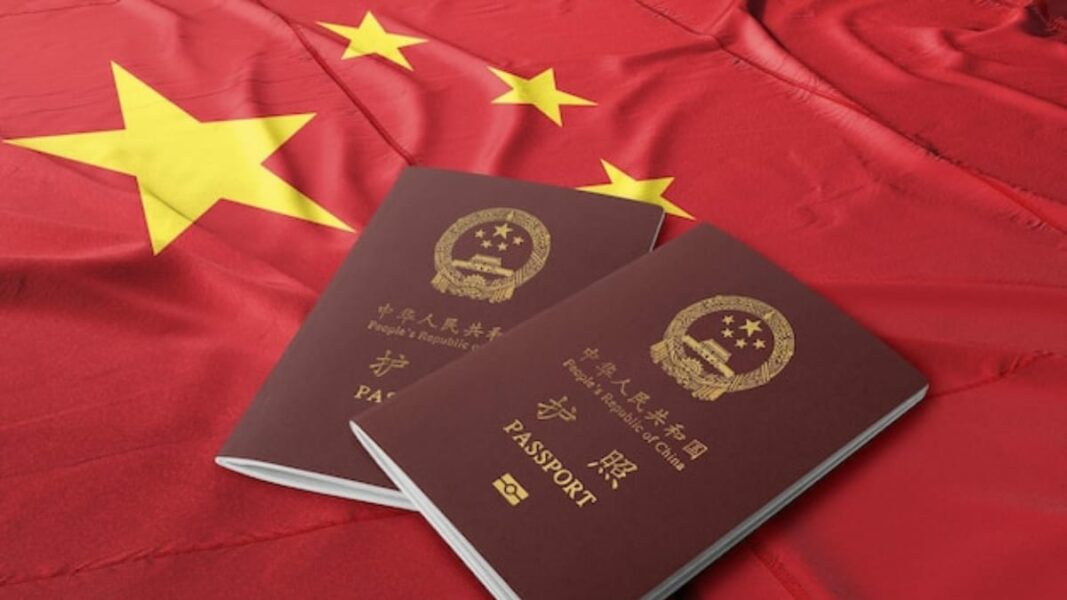
The Chinese regime has taken a new step in its policy of control over religious confessions by imposing the mandatory surrender of passports to all Catholic clergy and religious in the country. The measure, adopted by the official bodies of the State-recognized Church, strengthens the existing supervision system and once again places pressure on the controversial agreement between Beijing and the Holy See.
According to Per Mariam, the new regulations were promulgated in December by the Chinese Catholic Patriotic Association (CCPA) and the so-called Chinese Catholic Bishops’ Conference (BCCCC), entities that do not recognize the authority of the Holy See and operate under the direct supervision of the Chinese Communist Party.
Passports under state custody
The provisions require priests and religious to surrender their passports and travel documents—including those related to Hong Kong, Macao, and Taiwan—for storage by the authorities. Although different procedures are foreseen depending on clerical rank, the outcome is the same: the State retains the identity documents.
Those wishing to travel abroad for official reasons must submit an application accompanied by the corresponding approval documentation. Only after authorization can they temporarily recover the passport to manage visas and travel.
In the case of private trips, the requirements are even greater. The interested party must submit, at least 30 days in advance, a detailed application outlining the itinerary, purpose, duration, and list of participants. After approval, they must sign a written commitment. Any deviation from the authorized plan may result in sanctions, such as the suspension of travel privileges for both the individual and their institution.
Upon return, the religious must return the passport within seven days and, in some cases, complete additional forms and reports.
A framework of increasingly strict control
The new provisions fit into a broader policy of state supervision of religious life. In recent statements, official bodies insisted that religious activities must strictly comply with current legislation. Among other restrictions, worship services can only be held in authorized places and can only be presided over by officially registered clergy.
The Communist Party has maintained a process of «sinicization» of religions for years, aimed at ensuring that all confessions adapt to the State’s ideology and operate under its direction. Regulations approved in 2025 reinforced this line by requiring the promotion of communist principles and severely limiting the activity of foreign clergy.
The Sino-Vatican agreement under pressure
These measures once again call into question the provisional agreement signed in 2018 between China and the Holy See on the appointment of bishops, recently renewed until 2028. Although the content of the pact remains largely reserved, it is considered to grant Beijing a decisive role in episcopal selection, with an alleged right of veto by the Pope.
Leo XIV has approved episcopal appointments from Chinese authorities without explicitly commenting on the tightening of state control. In an initial intervention of his pontificate, he expressed his desire for Chinese Catholics to remain in communion with the universal Church, a statement that some interpreted as a sign of concern regarding the sinicization policy.