


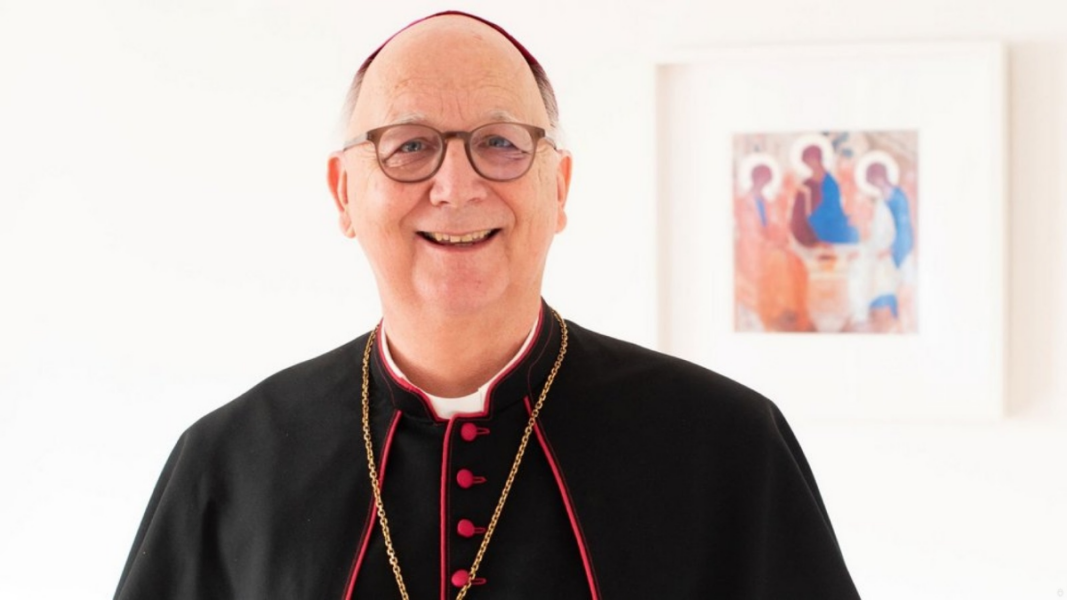
The emeritus auxiliary bishop of Chur, Mons. Marian Eleganti, has published on his personal blog a reflection titled “Und Dennoch bleibt es ein Schisma” (“And Yet It Remains a Schism”), in which he addresses the current situation of the Church, the possibility of new episcopal consecrations without pontifical mandate by the Priestly Fraternity of Saint Pius X (FSSPX), and the need to realistically address the internal problems that have arisen in recent decades.
In his analysis, the Swiss prelate maintains that an episcopal consecration performed without the Pope’s mandate entails automatic excommunication and constitutes a schismatic act. To support this, he cites canon 1382 of the Code of Canon Law, which states that the bishop who consecrates without pontifical mandate, as well as the one who receives the consecration, incurs latae sententiae excommunication reserved to the Apostolic See. Likewise, he recalls canon 1013, according to which “no bishop is permitted to consecrate anyone as bishop unless the pontifical mandate has first been ascertained.”
Jurisdiction and Visible Constitution of the Church
Mons. Eleganti asserts that the mandate for an episcopal consecration must be unequivocally established through a pontifical decree, and proceeding without it implies a practical refusal to submit to the jurisdiction of the Roman Pontiff. In his argumentation, he cites the encyclical Mystici Corporis of Pius XII, which emphasizes the jurisdictional foundation of the ecclesial ministry, and recalls the Council of Trent, which declared anathema those who supported bishops not “legitimately ordained or sent by canonical ecclesiastical authority.”
According to the emeritus bishop, the visible and juridical structure of the Church is part of its divine constitution and cannot be replaced by a practical autonomy based on unilateral decisions.
The Situation of the FSSPX
In his reflection, Mons. Eleganti considers that the FSSPX maintains a position of self-governance which, in the case of new consecrations without pontifical mandate, would imply a jurisdictional disconnection from the Pope. In his view, external gestures such as mentioning the Pontiff in the Eucharistic Prayer or expressing doctrinal adherence would not compensate for a practical rupture in the juridical sphere.
The prelate interprets such an eventual action as a real risk of schism, understood as the refusal to submit to the authority of the Roman Pontiff in the juridical order.
Recognizing Errors and Addressing the Crisis
At the same time, Mons. Eleganti does not limit his reflection to the disciplinary issue. He points out that the ecclesial authority should take seriously certain criticisms regarding the evolution of the Church after the Second Vatican Council. In particular, he mentions the liturgical reform, ecumenical and interreligious efforts, and the doctrinal situation in some European countries.
The bishop makes explicit reference to the German context, where the so-called “synodal way,” according to his assessment, would be promoting approaches distant from traditional Catholic doctrine. In this sense, he calls for addressing doctrinal deviations clearly and recognizing the errors committed.
Call to Prayer and Clarity
In the final part of his article, Mons. Eleganti expresses his desire that the Pope and the cardinals address the situation of the Church realistically and undertake doctrinal reforms and clarifications. At the same time, he distinguishes these necessary clarifications from the synodality promoted in recent years, which he considers insufficient to respond to the crisis of faith.
The prelate concludes by appealing to prayer and to authentic listening to the Holy Spirit, warning of the danger of confusing human will with the will of God.