


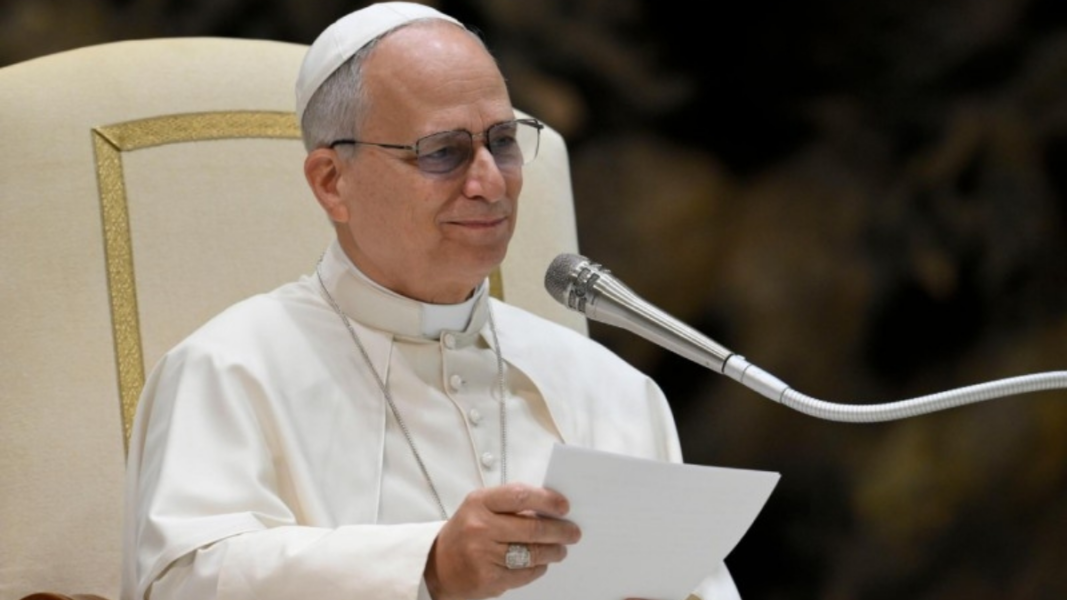
Pope Leo XIV celebrated the General Audience this morning in the Paul VI Hall, where he continued his cycle of catechesis dedicated to the documents of the Second Vatican Council. On this occasion, the Holy Father centered his meditation on the Dogmatic Constitution Dei Verbum, delving into the role of the Word of God in the life of the Church, with the reading of the first letter to the Thessalonians (1 Ts 2:13) as the biblical point of reference.
In his address, the Pontiff emphasized the inseparable bond between Sacred Scripture and the Church, stating that the Bible is born from the People of God and finds in the ecclesial community its proper sphere of interpretation and life. He recalled that the Church venerates the Scriptures as the Body of the Lord Himself and that, together with Tradition, they constitute the supreme norm of faith. Leo XIV also insisted that the reading of the Bible must be done in an attitude of faith and prayer, since its ultimate purpose is to make Christ known and to open the believer to dialogue with God, in an experience that nourishes sacramental life and evangelizing mission.
We now leave you with the catechesis of Leo XIV:
Dear brothers and sisters, good morning and welcome!
In today’s catechesis, we will pause to consider the profound and vital relationship that exists between the Word of God and the Church, a relationship expressed in the conciliar Constitution Dei Verbum, in its sixth chapter. The Church is the proper place of Sacred Scripture. Under the inspiration of the Holy Spirit, the Bible was born from the people of God, and it is destined for the people of God. In the Christian community, it has, so to speak, its habitat: indeed, in the life and faith of the Church, it finds the space where it reveals its meaning and manifests its power.
Vatican II recalls that «the Church has always venerated the Sacred Scriptures just as she venerates the Body of the Lord, never ceasing to take from the table of both the bread of life and to distribute it to the faithful, both from the Word of God and from the Body of Christ, especially in the Sacred Liturgy.» Moreover, «she has always considered and continues to consider them, together with Sacred Tradition, as the supreme rule of her faith» (Dei Verbum, 21).
The Church never ceases to reflect on the value of the Sacred Scriptures. After the Council, a very important moment in this regard was the Ordinary General Assembly of the Synod of Bishops on the theme «The Word of God in the Life and Mission of the Church,» in October 2008. Pope Benedict XVI gathered its fruits in the post-synodal Exhortation Verbum Domini (September 30, 2010), in which he states: «Precisely the intrinsic bond between Word and faith shows that the authentic hermeneutic of the Bible is only possible in ecclesial faith, which has its paradigm in Mary’s yes. […] The original place of scriptural interpretation is the life of the Church» (n. 29).
Therefore, Scripture finds in the ecclesial community the sphere in which to carry out its own task and achieve its end: to make Christ known and to open up to dialogue with God. «Ignorance of Scripture – in fact – is ignorance of Christ» [1]. This famous phrase from St. Jerome reminds us of the ultimate purpose of reading and meditating on Scripture: to know Christ and, through Him, to enter into relationship with God; a relationship that can be understood as a conversation, a dialogue. And the Constitution Dei Verbum presents Revelation precisely as a dialogue in which God speaks to men as friends (cf. DV, 2). This happens when we read the Bible with an interior attitude of prayer: then God comes to meet us and enters into conversation with us.
Sacred Scripture, entrusted to the Church and guarded and explained by her, plays an active role: with its efficacy and power, it sustains and strengthens the Christian community. All the faithful are called to drink from this source, especially in the celebration of the Eucharist and the other sacraments. Love for the Sacred Scriptures and familiarity with them must guide those who exercise the ministry of the Word: bishops, priests, deacons, catechists. The work of exegetes and all those who practice biblical sciences is very valuable; and in Theology, which has its foundation and soul in the Word of God, Scripture must occupy the central place.
What the Church ardently desires is that the Word of God may reach all its members and nourish their journey of faith. But the Word of God also pushes the Church beyond itself, continually opening it to the mission toward all. In fact, we live surrounded by a multitude of words; however, how many of them are empty words! Sometimes we also hear wise words but ones that do not touch our ultimate destiny. In contrast, the Word of God quenches our thirst for meaning and truth about our life. It is the only Word that is always new: revealing to us the mystery of God, it is inexhaustible, never ceasing to offer its riches.
Dear friends, living in the Church, one learns that Sacred Scripture refers entirely to Jesus Christ, and one experiences that this is the profound reason for its value and power. Christ is the living Word of the Father, the Word of God made flesh. All Scriptures announce His Person and His saving presence, for all of us and for all humanity. Let us open, then, our hearts and minds to welcome this gift, following Mary, Mother of the Church.