


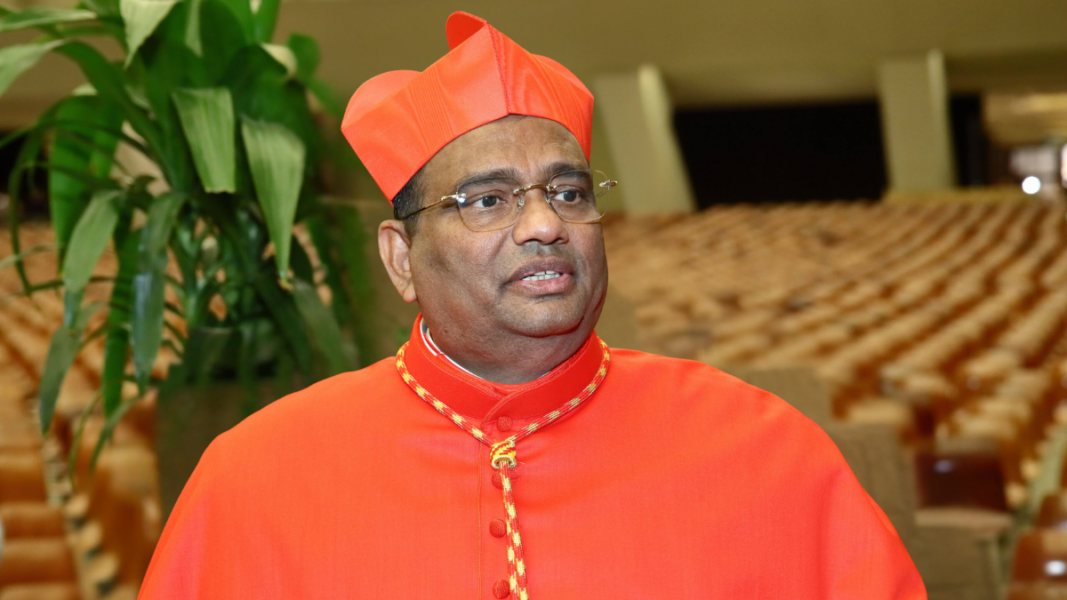
Cardinal Antony Poola, Archbishop of Hyderabad, has been elected as the new president of the Catholic Bishops’ Conference of India (CBCI), according to AsiaNews. His election, held during the general assembly in Bengaluru, carries particular significance: Poola is the first cardinal of dalit origin—a group historically situated at the lowest stratum of the Indian caste system—to assume the presidency of the country’s episcopate.
The CBCI brings together the bishops of the three rites present in India—Latin, Syro-Malabar, and Syro-Malankara—and coordinates the pastoral action of the Catholic Church in a country where Christians are a minority in a complex religious and social context.
An origin marked by social marginalization
Born in 1961 in Poluru, in the diocese of Kurnool, in the state of Andhra Pradesh, Antony Poola comes from a dalit family, a community traditionally considered «untouchable» within the caste system. Although the Indian Constitution officially abolished caste discrimination, social and economic inequalities remain a palpable reality in many regions of the country.
In 2022, he was created a cardinal by Pope Francis, becoming the first dalit cardinal in the history of the Church in India. Now, with his election as president of the CBCI, his figure gains new prominence both ecclesiastically and socially.
A message within and outside the Church
According to statements gathered by AsiaNews, some bishops have emphasized that his election sends a significant message in a country where the caste issue continues to influence public and private life. In the ecclesiastical sphere, Poola’s appointment is interpreted as a sign of recognition for traditionally marginalized communities also within the Church.
The Catholic Church in India has had to face, in recent decades, not only challenges linked to religious freedom and pressure from Hindu nationalist sectors, but also internal tensions related to the equality and social representation of its faithful.
The challenges at the helm of the Indian episcopate
As president of the Episcopal Conference, Cardinal Poola will have to coordinate the pastoral action of a Church that brings together more than 20 million faithful in a plural and often delicate context. Among the challenges are the defense of religious freedom, unity among the different Catholic rites, and the promotion of greater social cohesion.
His election represents a historic milestone not only because of his responsibility at the head of the episcopate, but also because of the symbolic weight of his origin in a society where caste affiliation has conditioned the opportunities of millions of people for centuries.