


By Robert Lazu Kmita
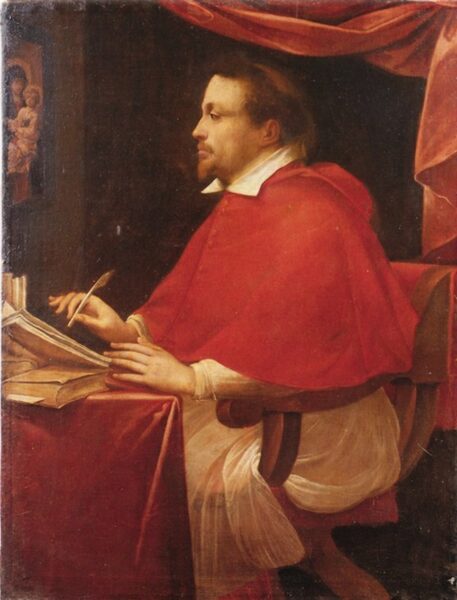
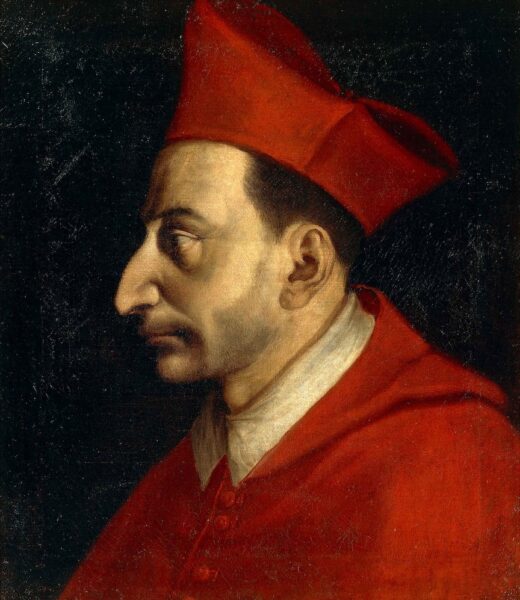
Among the countless saints of Italy, few enjoy the fame of Cardinal Saint Charles Borromeo (1538–1584). Alongside Francis of Assisi, Anthony of Padua, Rita of Cascia, and Padre Pio, he is one of those immortals whose icons still adorn numerous Christian churches and homes even today. The heroism of his pastoral work—especially during the tragically famous plague epidemic of 1576–1578, which decimated the population of Milan and its surroundings—was equaled only by another Catholic hierarch of the same moral stature: his cousin, Cardinal Federico Borromeo (1564–1631).
Members of one of the most illustrious families of the high Italian aristocracy, the two Borromeo cousins demonstrated the power of supernatural faith embodied by individuals who, in social life, occupied ranks and positions of the greatest importance. It is worth noting that neither of the two renounced their aristocratic titles; rather, they put them at the service of the good of the entire community. If Saint Charles was one of the main architects of the historic Council of Trent, making notable efforts in catechesis and Christian theological formation, Federico, for his part—besides founding the Ambrosian Library—left us an impressive treasure of writings.
Theology, philosophy, Christian moral and ascetical theology, biblical studies and exegesis of sacred texts, canon law and civil law: in short, all the essential disciplines were fields in which he demonstrated true mastery.
The surprise, however, lies in his writings on sacred art. The first of these, a treatise titled De Pictura Sacra (1624), is probably the most important work in the entire Christian tradition dedicated to the visual arts. Another of his writings, Musaeum (1625), is a genuine work of criticism, undertaken from both an aesthetic and theological perspective. In fact, this is the crucial point in Cardinal Federico’s vision: aesthetic beauty is inseparable from moral beauty.
For a work of art to be truly beautiful, it must satisfy both the demands of the craft that makes it possible and the demands proper to a content intended to elevate our souls toward God. The Apostle Paul asked Christian women to respect the primacy of interior, spiritual beauty, to which exterior beauty must be subordinated (1 Timothy 2:9). Federico Borromeo asks Christian painters and sculptors to respect not only the eyes of the spectators but also their souls.
He unifies aesthetics and morals through one of the most interesting notions in the history and theory of both art and metaphysics: decoro. This word, which we usually understand as referring to outward bearing and manner of dress, means something much deeper in the treatise De Pictura Sacra. Inspired by both Pythagorean thought and the Christianized Neoplatonism of Saint Dionysius the Areopagite, it points to the profound harmony of all the elements that participate in the creation of a work. The harmony of all the architectural elements of a Gothic cathedral allows the manifestation of its extraordinary beauty.
As Federico Borromeo understands it, decorum refers not only to the harmony of external elements but also to that of internal ones. What results from observing the rules that allow the creation of a harmonious painting is the manifestation of beauty. Cardinal Federico himself expresses it as follows:
An important part of good human conduct has been to seek the quality known as decorum. This brings a particular pleasure to the minds of spectators and can be described as a kind of luminous splendor, or perhaps as a flower that springs from every movement and activity and refreshes the spirit. This pleasure or delight can be implanted in everything that is charming or graceful and, through artistic skill, can inspire images.
The “flower” that blooms in the minds of those who contemplate a work in which harmony is duly respected is beauty itself, which shines like a discreet light that delights the eyes, the heart, and the intellect simultaneously. Therefore, the exhibition of nudity, severely criticized by both cardinals in the case of masters like Michelangelo, although it may meet the criterion of external beauty, cannot satisfy, due to the occasions of scandal it presents, the criterion of interior beauty. For, although the eyes and sensuality of the spectators may be pleased, their souls, on the contrary, are disturbed and darkened by the passions that provocative images can easily awaken.
In a culture that can rightly be described as “voyeuristic,” the modern world has more need than any other historical era for a healthy conception of both sacred and religious art and profane art. Cardinal Federico Borromeo offers us the foundations of such a conception, in which “beauty” is not simply an external, frivolous, and consumer good—often scandalous—but a profound reality rooted in God, who is Beauty itself. His thought developed a complete philosophy of art, gathering and distilling the essence of the most significant pagan and Christian thinkers who reflected on these great themes.
It is also worth noting that his invitation to discernment of authentic Christian art is directed, first and foremost, to the hierarchs of the Church. No one can do more than they can in preserving and cultivating the canons of sacred and religious art. Likewise, no one can have a more significant negative impact when said canons are ignored or rejected. The value and clarity with which both cardinals, Charles and Federico, confronted the scandalous trends of their time by criticizing artists like Michelangelo are virtues proper to true successors of the apostles.
Fortunately for us, Saint Charles has long enjoyed the veneration he deserves. Although Federico Borromeo was “canonized” in literature by Alessandro Manzoni (1785–1873) in one of the greatest Christian novels, I Promessi Sposi (The Betrothed, 1827), his canonization cause—closed due to political intrigues of the time—deserves to be reopened and brought to completion.
About the author
Robert Lazu Kmita is a novelist, essayist, and columnist, with a PhD in Philosophy. His novel The Island without Seasons was published by Os Justi in 2023. He is also the author and editor of numerous books (including an Encyclopedia of J. R. R. Tolkien’s world, in Romanian). He writes regularly on his Substack, Kmita’s Library.