


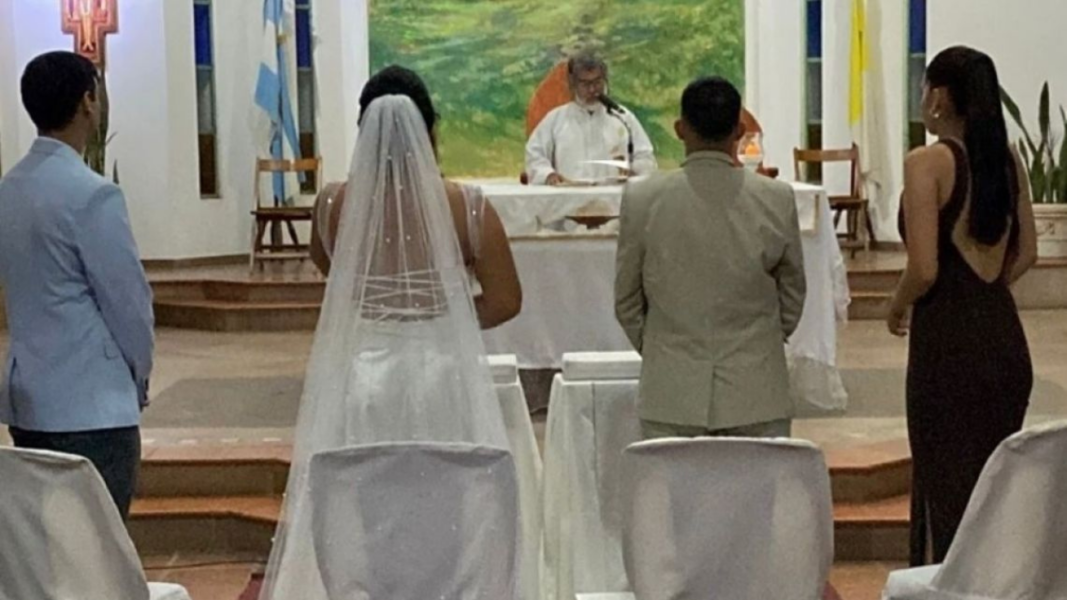
The celebration of a Catholic marriage between two people who publicly identify as transgender has sparked controversy in the Argentine archdiocese of Corrientes, after the Archdiocese confirmed the opening of an ex officio process to evaluate possible canonical disciplinary measures related to the ceremony.
The wedding took place on January 28 in the Nuestra Señora de Pompeya parish, and was officiated by a local priest. The marriage became public days later through interviews and graphic material disseminated in media and social networks, which prompted an official reaction from the local curia.
From man to woman and from woman to man
The couple consists of Solange Ayala, a man who publicly identifies as a woman, and Isaías, a woman who presents herself as a man. Both have publicly shared their gender identity and their involvement in LGBT activism.
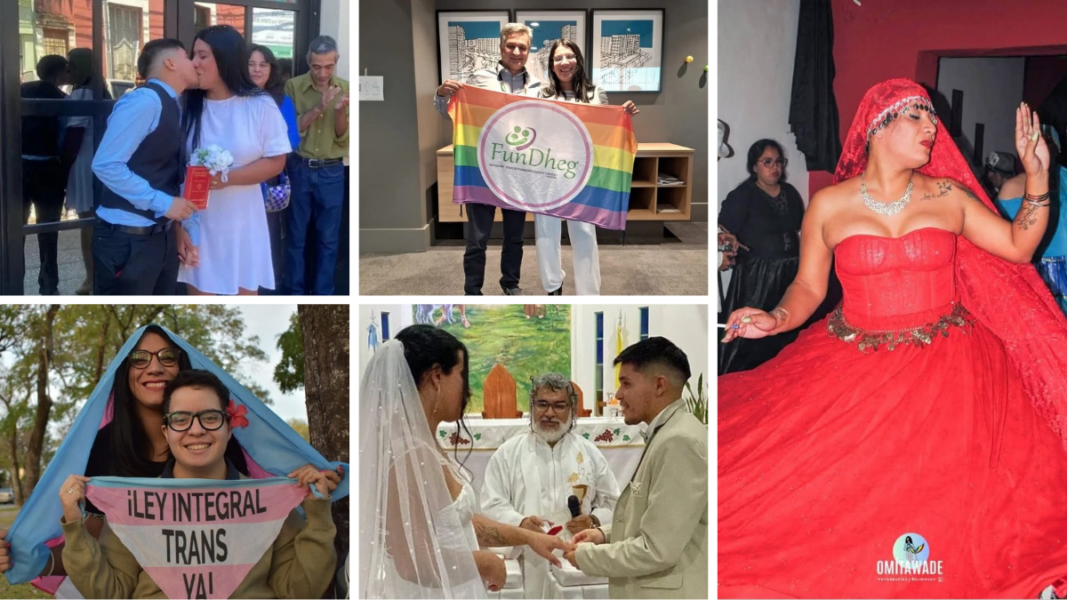
According to statements made by Ayala to Radio Sudamericana, the priest acted after consulting with the Archbishop of Corrientes, Msgr. José Adolfo Larregain, who reportedly determined that there was no canonical impediment based on the biological sex of the spouses.
Ayala stated that both underwent a standard marriage preparation process and that the priest was aware of their situation from the beginning. She also noted that, although the baptismal certificates were presented with their legal names, both the marriage register and the liturgical celebration used the names by which both currently identify.
Public dissemination and reactions
After the case was disseminated in local and national media, the marriage was presented by the spouses themselves as a gesture of openness toward the LGBT community. The public statements made in that regard contributed to amplifying the impact of the event.
The Archdiocese’s response
In response to the viralization of the event, the Archdiocese of Corrientes issued an official statement in which it indicated that at no time was the corresponding ecclesiastical documentation received at the archdiocesan headquarters for the required formalities for the celebration of this marriage.
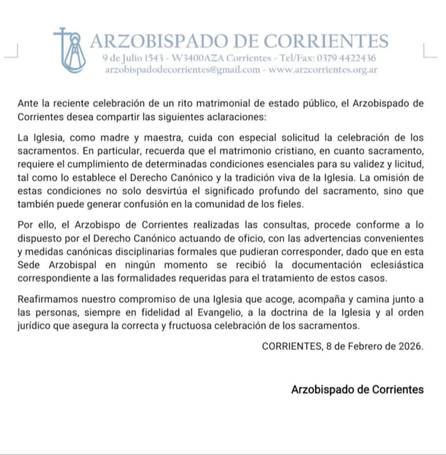
The statement warns that the omission of the essential conditions for the proper celebration of the sacrament «distorts its profound meaning» and generates «confusion in the community of the faithful«. For this reason, the archbishop confirmed the opening of a canonical ex officio process to analyze the facts and evaluate possible disciplinary sanctions for those responsible for authorizing or celebrating the ceremony.
The Archdiocese also emphasized that the Church is called to welcome and accompany all people, but that such welcome must be carried out in fidelity to the doctrine and to the canonical legal order that regulates the celebration of the sacraments.
The parish’s statement
For its part, the Nuestra Señora de Pompeya parish recalled in a statement that Christian marriage requires the absence of canonical impediments and a true consent, understood «as the Church understands and teaches it«.
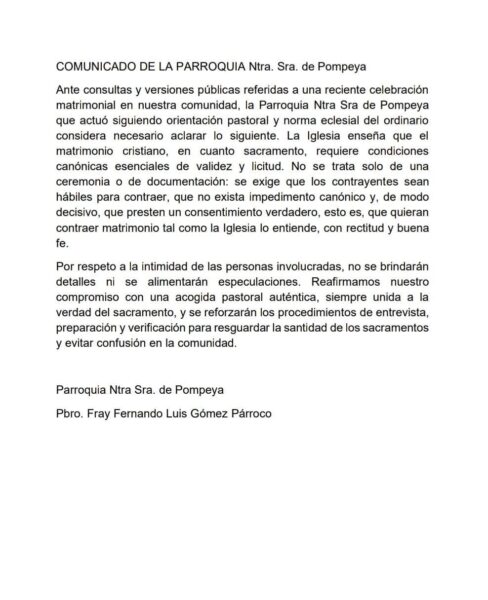
Without providing specific details of the case, citing respect for the privacy of those involved, the parish announced that it will strengthen the interview, preparation, and verification procedures for the spouses in order to avoid similar situations in the future.
Doctrinal framework
The Code of Canon Law defines marriage as a covenant between a man and a woman, ordered to the good of the spouses and to the procreation and education of children. Catholic doctrine teaches that biological sex is an objective and immutable fact, regardless of personal self-identification.