


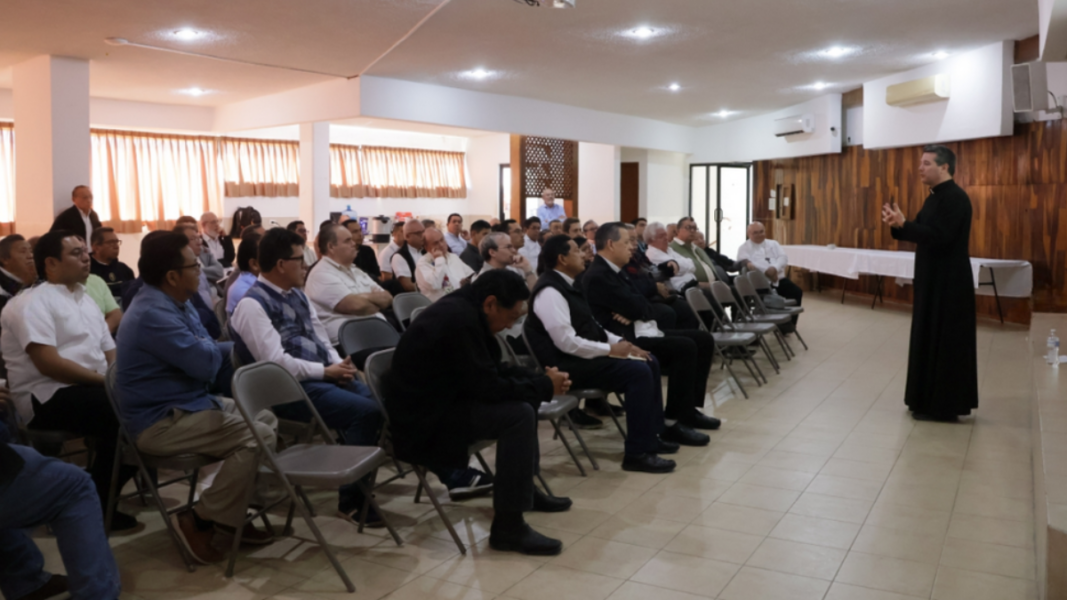
The city of Cancún (Mexico) hosted on February 7 a congress dedicated to the Cristero War, marking one hundred years since the beginning of one of the most significant episodes in Mexico’s religious history, characterized by state persecution against the Church and the firm response of thousands of Catholics in defense of their faith, as reported by ACI Prensa.
The event was held in the church of San José Luis Sánchez del Río, a young Cristero martyr canonized in 2016, and brought together priests, academics, and laity with the purpose of reflecting on the historical, spiritual, and current significance of the Cristero War, as well as on contemporary challenges to religious freedom.
An anniversary that challenges the Church and society
The Cristero War, which took place between 1926 and 1929, originated from a prolonged process of legal and political harassment against the Catholic Church, exacerbated by the 1917 Constitution and the implementation of the well-known Calles Law, which prohibited public worship, closed temples, and criminalized religious practice.
In the face of this situation, thousands of faithful—mostly peasants, humble families, and committed laity—rose up spontaneously to defend the right to live their faith. Although the armed conflict formally ended in 1929, the persecution continued for years and left a high number of victims, many of whom are now recognized as martyrs by the Church.
Lectures, reflection, and episcopal support
The congress featured the participation of the Mexican priest Juan Razo García; Uriel Esqueda, a reference in the defense of religious freedom; and Fr. Javier Olivera Ravasi, an Argentine priest, doctor in Philosophy and History, and author of various studies on the Cristero War.
The event was held with the endorsement of Bishop Pedro Pablo Elizondo Cárdenas, apostolic administrator of the Diocese of Cancún-Chetumal, who emphasized the importance of remembering the Cristero War with justice and historical rigor, not as an ideological exercise, but as an act of memory and truth.
“¡Viva Cristo Rey!”, a public confession of faith
One of the most emblematic elements of the Cristero War, remembered at the congress, is the cry “¡Viva Cristo Rey!”, which arose as a public confession of faith in the face of persecution and ended up becoming a symbol of spiritual resistance. This motto, frequently linked to devotion to Our Lady of Guadalupe, remains as a living expression of popular religiosity and of the affirmation of Christ’s sovereignty in the face of any power that seeks to relegate faith to the private sphere.
Religious freedom and secularism today
The congress’s reflections also addressed the concept of the secular state, emphasizing that authentic secularism does not consist of excluding faith from the public space, but in guaranteeing effective respect for freedom of conscience, religion, and expression.
From this perspective, remembering the Cristero War does not imply reopening wounds, but learning from history to strengthen social coexistence based on respect for fundamental rights and the recognition of the public role of faith.
Memory, faith, and future projection
One hundred years after the beginning of the Cristero War, the congress held in Cancún presented itself as a necessary initiative to recover historical memory, honor the martyrs, and reflect on the current challenges of religious freedom in Mexico.