


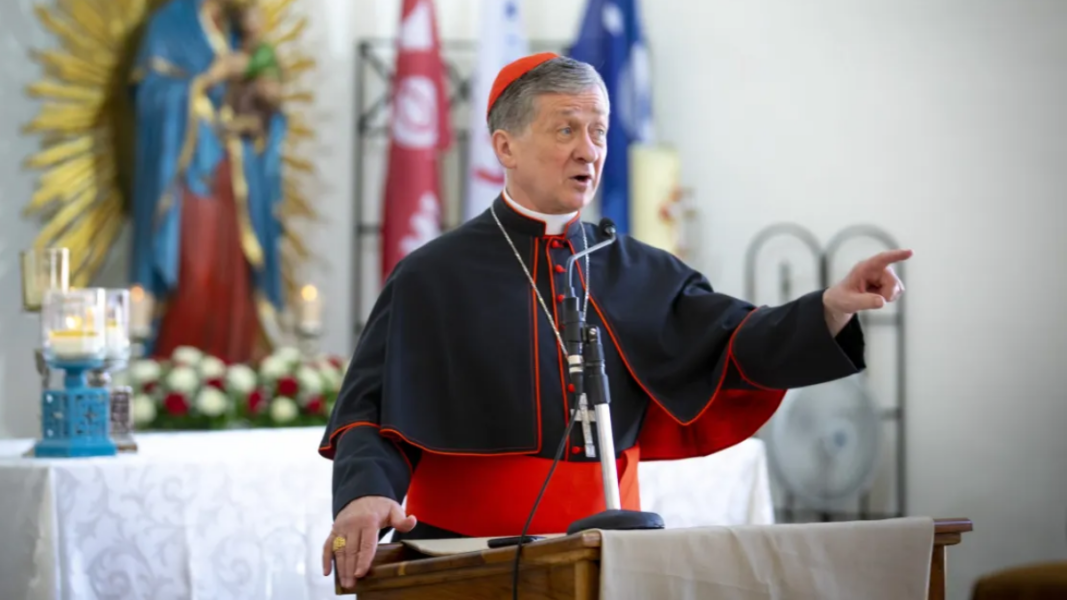
With the recent appointment of Ronald Hicks as archbishop of New York (United States), there are now four former direct collaborators of Cupich who have accessed top-level metropolitan sees in just over a year, along with the current archbishops of Milwaukee, Omaha, and Cincinnati. All of them share a common past: they held key positions in the Archdiocese of Chicago after Cupich’s arrival in 2015, and several were appointed auxiliary bishops under his governance.
According to an analysis published by the National Catholic Register, more than 12% of the Latin archbishops of the United States will have passed through the direct orbit of the cardinal of Chicago.
A strategically positioned cardinal
Cupich’s projection cannot be explained solely by his personal weight. For a decade, he has been part of the Dicastery for Bishops, the Vatican body that evaluates and proposes episcopal appointments, and he also maintained an especially close relationship with Pope Francis, who considered him one of his main interlocutors in the United States.
This dual position—in Rome and in the country—allowed him to influence decisively both in the promotion of former collaborators and in other high-profile appointments, such as that of Cardinal Robert McElroy in Washington, the result of intense support work within ecclesiastical channels.
Chicago as an episcopal breeding ground
Since Cupich’s arrival in Chicago, the archdiocese has become a true episcopal quarry. In three major waves—2018, 2020, and 2025—eleven auxiliary bishops were appointed, a figure that surpasses the sum of appointments made in historically larger dioceses such as Los Angeles and New York in the same period.
Rome has frequently turned to these auxiliaries to fill vacant sees, reinforcing the perception that Chicago’s governance model has been exported to the entire country.
The profile that Cupich promotes
According to sources knowledgeable about ecclesiastical life in Chicago, Cupich favors profiles that are effective in management, prudent in public matters, and not inclined toward cultural confrontation. He does not promote bishops who make media denunciation a priority, especially on sensitive moral issues such as abortion or gender ideology.
The goal, according to these sources, is to avoid internal divisions and negative media exposure. The result is a low-profile public episcopate, focused on administration and consensus, although not necessarily homogeneous in all its doctrinal positions.
Although Cardinal Cupich has submitted his resignation due to age, there is no doubt that his influence will continue. The bishops trained under his tutelage will continue to turn to him, especially in the early years of governance, when experience weighs more than formal positions.