


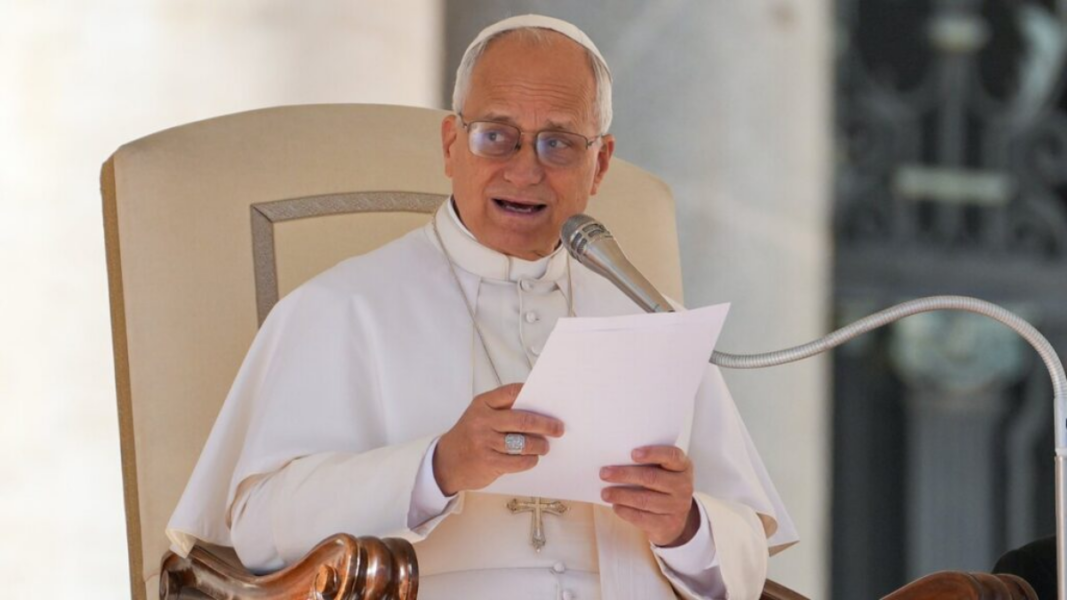
On the occasion of the 12th World Day of Prayer and Awareness against Human Trafficking, Pope Leo XIV has issued a firm call to the international community to address what he has described as a “grave crime against humanity.” In his message, the Pontiff has directly linked the fight against trafficking with the construction of authentic peace, based not on domination or force, but on the effective recognition of the dignity of every person created by God.
Leo XIV has warned that the same logic that normalizes armed violence and contempt for human lives is at the root of phenomena such as exploitation, modern slavery, and so-called “cyber slavery,” emphasizing that women, children, migrants, and displaced persons are the main victims of these criminal networks, fueled by conflicts, economic inequality, and moral indifference. In response, he has called for prayer, awareness, and a cultural renewal that places the person at the center once again, recalling the witness of Saint Josephine Bakhita as a sign of Christian hope.
We leave below the full speech of Leo XIV:
Peace begins with dignity:
a global call to end human trafficking
Dear brothers and sisters:
On the occasion of the 12th World Day of Prayer and Awareness against Human Trafficking, I firmly renew the Church’s urgent call to address and put an end to this grave crime against humanity.
This year, in particular, I wish to recall the greeting of the Risen Lord: “Peace be with you” (Jn 20:19). These words are more than a greeting; they offer a path toward a renewed humanity. True peace begins with the recognition and protection of the dignity that God has given to each person. However, in an era marked by increasing violence, many are tempted to seek peace “through weapons as a condition for asserting one’s own dominance” (Address to the Members of the Diplomatic Corps accredited to the Holy See, January 9, 2026). Moreover, in situations of conflict, the loss of human lives is, all too often, dismissed by the promoters of war as “collateral damage,” sacrificed in the pursuit of political or economic interests.
Sadly, the same logic of domination and contempt for human life also fuels the scourge of human trafficking. Geopolitical instability and armed conflicts create fertile ground for traffickers to exploit the most vulnerable, especially displaced persons, migrants, and refugees. Within this fractured paradigm, women and children are the most affected by this atrocious trade. Furthermore, the growing gap between rich and poor forces many to live in precarious conditions, leaving them exposed to the deceptive promises of recruiters.
This phenomenon is particularly disturbing in the rise of so-called “cyber slavery,” through which people are lured into fraudulent schemes and criminal activities, such as online scams and drug trafficking. In these cases, the victim is coerced into assuming the role of perpetrator, aggravating their spiritual wounds. These forms of violence are not isolated incidents but symptoms of a culture that has forgotten how to love as Christ loves.
In the face of these grave challenges, we turn to prayer and awareness. Prayer is the “little flame” that we must safeguard amid the storm, for it gives us the strength to resist indifference to injustice. Awareness allows us to identify the hidden mechanisms of exploitation in our neighborhoods and digital spaces. In short, the violence of human trafficking can only be overcome through a renewed vision that beholds each individual as a beloved child of God.
I wish to express my most sincere gratitude to all those who, like Christ, serve with delicacy and consideration when approaching the victims of trafficking, including international networks and organizations. I also wish to acknowledge the survivors who have become advocates, supporting other victims. May the Lord bless you for your courage, fidelity, and tireless commitment.
With these sentiments, I entrust those commemorating this day to the intercession of Saint Josephine Bakhita, whose life stands as a powerful testimony of hope in the Lord who loved her to the end (cf. Jn 13:1). Let us all unite on the path toward a world where peace is not simply the absence of war, but “disarmed and disarming,” rooted in the full respect for the dignity of all.
Vatican City, January 29, 2026
LEO PP. XIV