


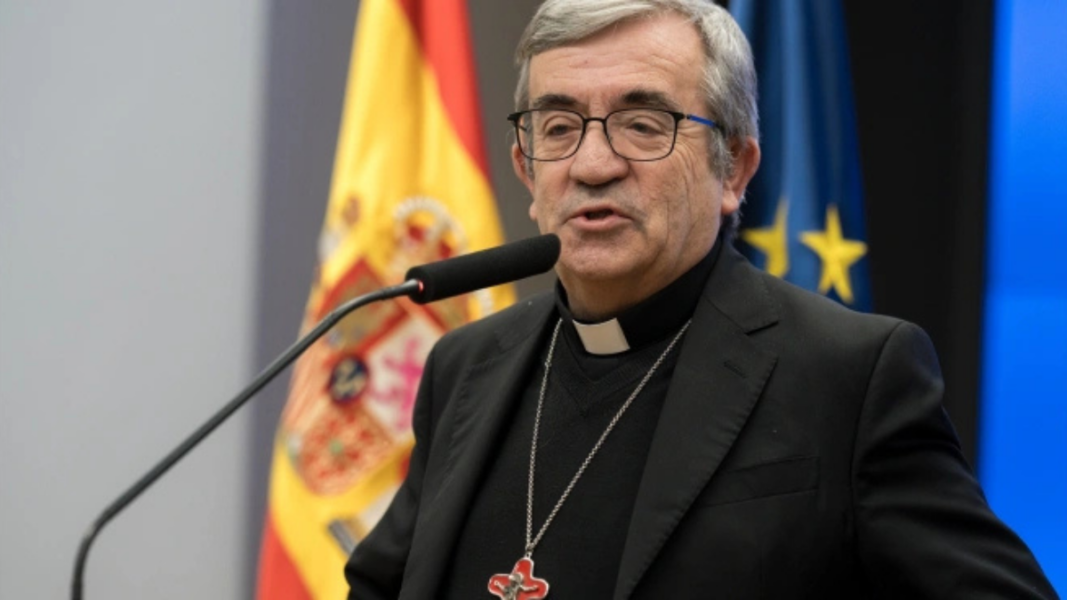
The president of the Spanish Episcopal Conference, Monsignor Luis Argüello, has introduced relevant nuances in his speech on migration—which he initially hurried to deliver—by warning of the risks of carrying out regularization without an integral approach and by emphasizing that States have the right to regulate migratory flows, always from respect for the dignity of the person and the common good.
Read also: Argüello aplaude al Gobierno mientras el pueblo fiel se escandaliza
In an opinion article published in Revista Ecclesia, Argüello reflects on the recent regularization decree approved by the Council of Ministers and on the previous process promoted from ecclesial spheres through a Popular Legislative Initiative. The prelate recalls that the Church knows firsthand the reality of many migrants through Cáritas, religious congregations, and diocesan delegations, and highlights that the lack of documentation pushes thousands of people into the underground economy and situations of abuse.
Argüello defends that regularization allows many to escape an “anguishing labyrinth” and recover a dignified life, but avoids a naive or exclusively humanitarian approach. Along with the recognition of rights, he also insists on the duties of those who arrive, called to collaborate in the common good and to accept the “basic rules of the social game” of the host country.
In addition, he openly recognizes the real problems of integration and coexistence, especially when there are large cultural differences or deep social and economic inequalities. Likewise, he links the migratory phenomenon with other structural issues such as employment, housing, and the sustainability of the welfare state.
Thus warning of the risk of addressing immigration as an automatic solution to the demographic problem. Argüello recalls that Spain suffers a serious imbalance between births and deaths and emphasizes that the response cannot be limited to immigration, but requires a “social alliance for hope” in favor of natality, also promoted by the Church.
The prelate concludes by calling for a great State pact and of the European Union that addresses immigration in an integral way, from the causes in the countries of origin to the fight against mafias, passing through responsible regulation of flows. He also warns that without broad agreements on critical issues, partial measures can end up being counterproductive.